E, F, G: Exhausted, Fatigued … Gelsemium

Joette Calabrese

Have you ever been dog-tired?

I love old English expressions. Do you wonder about this particular one’s origin?

Well, here you go. From theidioms.com, dog-tired is “an adjectival phrase meaning to be physically exhausted, it derives from an ancient tale of Alfred the Great, who used to send his sons out with his widespread kennels of hunting dogs. Whichever of his sons, be it Athelbrod or Edwin, were able to catch more of the hounds would gain their father’s right-hand side at the dinner table that evening. These chases would leave them ‘dog-tired’ yet merry at their victory.”

But I digress.

I have been dog-tired after my recent morning walks, even without a kennel of hunting dogs or a competitive king.

You see, my husband Perry and I go for a 45-minute walk on the beach every morning. Even though we commence in the early morning, this is Florida. It’s already hot! And lest you think this is simply a pleasant, gentle stroll, I say, “Oh, nay-nay!”

Our morning walks are rigorous exercise.   
Joette Calabrese

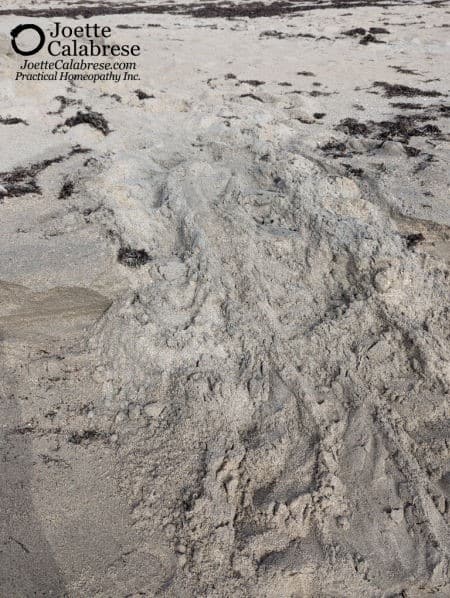
The sand on this particular beach is uneven. It’s often so soft that you sink in and practically have to climb out of each step. And the turtles have been climbing up to the beach, leaving behind sand moguls for me to navigate laboriously. 

When we would get home from our walks, I felt like I could literally FLOP down, prostrate on the floor.

I. Was. BEAT!

Initially, I assumed my exhaustion was due to dehydration. So, I employed the homeopathic medicine Cinchona officinalis (China), which is great for loss of fluids. But it made no difference.

I drank water before, during and after my walk to ensure proper hydration. But no change. I was incredibly fatigued and couldn’t shake it all day long.

So, if my condition wasn’t aided by drinking water or China, what could help?

That’s when I realized I was somewhat overcomplicating my case. What I was experiencing was just plain ol’ garden-variety fatigue. My exhaustion may have stemmed from overwork. (It really is a rigorous walk.) My condition could also have stemmed from the sun or heavy perspiration. But regardless of the specific cause, I needed to base my medicine choice on this grander picture rather than the etiology.

And I remembered my ABCs. Most specifically: E, F, G. Exhaustion, Fatigue … Gelsemium!

Indeed, after a couple of doses of Gelsemium sempervirens 30, I not only perked up but also suddenly had new ideas! My creative juices started flowing again.

Now, I take Gelsemium 30 before I go out on my walk and am able to return home without collapsing on the floor in a puddle.

I’ve previously discussed Gelsemium in blog posts as a well-documented homeopathic response to cases of influenza — both past and present. It’s also often displayed success in addressing anticipatory anxiety. And now you have one more reason to add it to your well-curated homeopathic medicine kit. I am living proof that Gelsemium sempervirens 30, twice daily until very much better, has been shown to act with aplomb for garden-variety exhaustion and fatigue.

Pass on the good news of homeopathy!

Warmly,

Joette Calabrese

P.S. As you know, my mission has always been to spread the word about Practical Homeopathy® to as many families as humanly possible. So, I’ve created a private enclave as a safe space where I can speak candidly. It’s called Joette’s Mighty Members!

Membership provides you with an exclusive, comprehensive and enjoyable homeopathy community, extra weekly blog posts, short videos from me to you, and a social center where you can develop relationships with other like-minded folks without fear of social media’s prying eyes. And all my Mighties qualify for a 10% discount on course purchases.

My Mighties receive so much more than I can offer here.

In fact, next week, I plan to treat my Mighties to a video interview I conducted for my Mastery™ students with internationally renowned homeopathic pharmacists! If you’d like to see this interview, why not join our exclusive group now?

Members get printable collections of all my Remedy Cards. Plus, annual subscribers receive free Remedy Reference Guides — downloadable e-books of prior blog posts dating all the way back to 2013. They’re indispensable in hardcopy if your internet service goes down and a condition arises.

Consider joining us and becoming MIGHTY!
7/16/23 E, F, G: Exhausted, Fatigued


If You Can’t Stand the Heat … Grab the Belladonna

Joette Calabrese

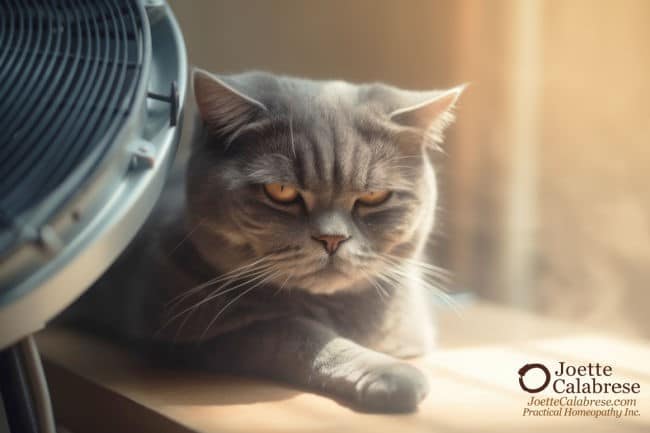
Whew! Summer has come with a vengeance, hasn’t it? Indeed, as most of the United States bakes in a meteorological oven, it’s hard to get my mind off the subject of heat.

So, what homeopathic medicine do we think of when we think of painful symptoms involving redness and extreme heat?

Why, Belladonna, of course!

I’ve written about Belladonna many times before, and what all of those posts have in common are symptoms with significant components of heat and pain.

Keep in mind that Belladonna is not a moderate medicine. So, I’m not talking about a bit of warmth; I’m talking about extremely HOT! (Yes … all caps with an exclamation point!) Plus, a case for Belladonna is generally not just a little ouchy; it’s downright PAINFUL! (Again, with all capital letters and a big ol’ exclamation point!)

Let’s review what we’ve already discussed in blogs past. Belladonna is generally considered for the pain associated with cases affecting soft tissues, such as tonsilitis or strep throat, otitis media (ear infection) or swimmer’s ear, pressure-induced ear pain, conjunctivitis, tooth pain, sinus pain, gout, boils, violent eruptions of prickly heat, skin infections, ingrown toenails, headaches and even migraines.

And, of course, Belladonna is a premier medicine for fevers. (Remember, HOT! and PAINFUL!) But don’t fall prey to commercial medicine’s viewpoint that every fever should be reduced. No. Fevers are a natural reaction to disease and illness — a necessary reaction! I urge you to re-read my blog post “Get Your Kids High: Fever Is Good” to refresh your memory on my opinion on fevers, based on the work of several excellent conventional doctors.

So, I could just close out this blog post now, having made a fairly impressive case for including Belladonna in one’s homeopathy kit in the 30th potency.*

However, let’s get back to the subject at hand. It’s hot outside!

Joette Calabrese

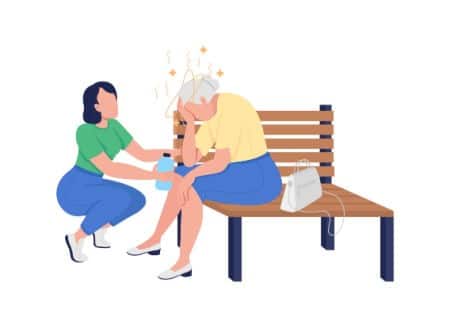
When heat creeps into the triple digits, the vulnerable among us are often susceptible to hyperpyrexia, otherwise known as heat stroke, heat prostration, sunstroke or heat exhaustion. No matter what one calls it, the symptoms can be any combination of weakness, dizziness, redness and severe headache.

Obviously, we approach this condition with common sense solutions, such as rehydrating and getting out of the heat and sun. However, homeopathy, as always, is a good adjunct to prudent self-care.

Keeping in mind our clues of HOT! and PAINFUL!, Belladonna 30 has been shown to address hyperpyrexia when employed every 2-6 hours, gradually expanding the time between doses to twice daily until very much better. However, if the effects of the heat have created a more severe, acute situation, then perhaps utilizing this medicine every 15 minutes for the first hour is worth consideration before stretching it out to 2-6 hours, then twice daily.

There’s also more information on heatstroke in an older blog I wrote called “Sickening Summer,” which provides a few other considerations and differentials.

It’s important to always keep in mind that homeopathy is medicine — not a vitamin or herbal supplement. Belladonna is not used because it’s hot outside, but rather for specific pathologies that arise after becoming considerably overheated.

Additionally, the chosen dosing schedule should reflect our respect for homeopathy as a medicine. We employ homeopathics only when needed and only as often as needed. Then we back off as improvement ensues, halting the medicine completely when we are very much better.

And as each Remedy Card clearly states (scroll down to get your free Remedy Card for this condition), as always, halt the use of any homeopathic if there’s no improvement.

But when the condition displays extreme pain and heat — with capital letters and exclamation points — we know where to turn. Indeed, if we can’t stand the heat, we grab the Belladonna. So, keep it handy in your homeopathy kit, especially in this broiling summer.

Try to stay cool, my friends. You might want to try my sons’ homemade electrolyte rehydration beverage. It’s a yummy way to avoid heat prostration in the first place.

Pass on the good news of homeopathy!

Warmly,

Joette Calabrese

*Some of the older blogs may mention lower potencies of Belladonna that are now very challenging to purchase because of the FDA’s recent assaults on homeopathy … at the behest of Big Pharma, I’m guessing. But generally, the 30th potency will suffice if that’s all one can procure.

P.S. Annual subscribers to Joette’s Mighty Members, your free gift is available now. Yes, it’s another downloadable eBook, a “Remedy Reference Guide” of all of my blog posts from 2022. Add it to your Mighty Members collection of previous years’ blog posts, all the way back to 2013!

The power grid often succumbs to weather as hot as this. So, storing my blog posts offline will allow you to look up conditions and medicines even when the internet is down. It’s a great way to remain self-reliant and Mighty in any circumstance.

And remember — all my Mighties qualify for a 10% discount on course purchases. If you need assistance getting your discount, email [email protected] for more information.


Freedom Comes in Many Forms

Joette Calabrese

Today is a special day in the United States. We celebrate our freedom!

Indeed, our Founding Fathers eschewed external control. They fought and died for autonomy!

But lest we forget, freedom comes in many forms — not the least of which is HEALTH freedom. Have you claimed your health autonomy yet, or are you still under the external control of the medical-industrial complex?

If you’re ready to declare independence, you won’t even have to throw tea in a harbor or form a militia!

You might want to do it the way I did decades ago when I reclaimed my family’s health by utilizing two methods:

  1. Skilling up! Becoming a pro at using the safest and most effective medical model —homeopathy — instead of the stuff that’s promoted by the pharmaceutical cartels.
  2. Becoming part of a dynamic real-life group of like-minded others by starting a homeopathy study group.

So, what do I recommend you do? Follow in my footsteps using Practical Homeopathy®. 

With families in mind, I wrapped the whole big idea into a tidy package so you could have it at your fingertips and make a gobsmacking change in your life the way I did in the 1980s.

And here it is … my Gateway to Practical Homeopathy®: A Guided Study Group Curriculum!

My curriculum is all laid out to help you start your own study group or join a group led by an experienced study group leader. (You can find one on Joette’s Study Group: Find your new Study Group Friends’ Facebook page.)

Are you worried that learning homeopathy is too complex? Do you have qualms about investing in your education? Well, here is an inspirational email I received from a recent study group participant that addresses both those concerns:

Joette Calabrese

“The Practical Homeopathy class experience was excellent. I expected it to be super complicated, but it was broken down so well that I was able to begin using remedies right away with my sick and injured children. It’s always heartbreaking to watch them be sick or in pain, but seeing the remedies working without antibiotics and all kinds of tests and x-rays was incredible!!

The amount I spent on the course and book has already been an unbelievable savings from doctor visits and tests from 2 kids with strep and one with a sprained ankle.

Truly remarkable medicine, truly remarkable course, what an opportunity and experience so far! Looking forward to Gateway II! 

“Thank you so much for getting the word out and being so generous with this information!

“God bless you always! 

“Peace in Christ” 

— Jennifer L.

Joette Calabrese

Do you want that? Jennifer did, and I did.

Do you want the self-reliance, autonomy and health independence that Jennifer described?

Of course, you do! Who wouldn’t?

My friends, it’s yours for the taking. Just gather up your own fife and drum corps or join an existing one. Then, step through the Gateway to Practical Homeopathy®!

Over 18,000 happy study group members can’t be wrong! I hope you will join their ranks and keep this freedom movement rolling! As our forefathers proved, when people join together, there is nothing they can’t accomplish!

So, enjoy all the family fun and festivities today. But remember, your canine family members may not enjoy the fireworks tonight as much as you do.

There are several homeopathic medicines for dogs who suffer from anxiety as the loud booming noises intrude on their sensitive ears. In order of common usage, those medicines are Phosphorus 200, Aconitum napellus 200, Coffea cruda 200 or Ignatia amara 200.

They often need to be repeated every few hours during an attack, or they may even be employed as a prophylactic when you know the event is forthcoming. (Or should I say, more appropriately, FOURTHcoming?)

Read more about my son’s use of Phosphorus 200 with his girlfriend’s dog last year in Flynn and the Not-So-Fun Fireworks. You can also download a free Remedy Card associated with the condition while you’re there.

Plus, Argentum nitricum 200, has also shown to be successful with some animals, such as in my blog post, A Dog with Anxiety? There’s a Homeopathic Solution.

My fellow lovers of freedom, homeopathy is polite, efficacious and free from the dangerous side effects of conventional medicine. Indeed, this medicine returns control of health care to the family — right where it belongs!

With that, I wish you and yours a Happy (Health) Independence Day!

Warmly,

Joette Calabrese


*Lightly edited for clarity.


The Hummingbird Effect

Joette Calabrese

Have you heard of the Butterfly Effect? If not, a simplistic definition of the theory is that seemingly small events can have huge impacts elsewhere because of the complex system in which we live. Many folks sum it up in an illustration something like this:

If a butterfly flaps its wings in Indonesia, the resulting air currents could contribute to a tornado in Oklahoma.

Now, I’m not an expert in meteorology or chaos theory, so I can’t speak to butterfly consequences. But I can assure you that seemingly small victories in homeopathy can have HUGE impacts on global health care.

Why? Because people are sick and tired of the medical-industrial complex control over their lives. They are disillusioned with conventional medicine, Big Pharma and government interference. Stories illustrating homeopathy’s successes not only inspire but also influence people to learn more.

One homeopathy success story from Topeka can result in a groundswell of new homeopathic interest in New Zealand.

Believe me, my team and I are watching it happen!

So, today, I want to take a brief detour from our project this year of building out our homeopathy kits to share a stellar success story from a Gateway to Practical Homeopathy® student. Along with her study group, she managed to nurse a tiny hummingbird from the brink of death to flying away with renewed vim and vigor!

Yes, my friends, I believe this story will initiate “The Hummingbird Effect.”

“Good morning, Joette!

“A few hours before my Gateway I & II class, I found a dying and probably dehydrated female hummingbird in my garage.  The only way I knew it was still alive was by its tiny toes gripping my finger as I gently held it in my hand.

 “I quickly tried to give it sugar water by dipping its beak in and out of a hand-held feeder with no response.

 “So, I put her in a box and tried again later, no response. 

 “Just before my class started, I had an idea to add a couple pellets of Aconite to the sugar water.  I heard a tiny chirp and knew I was on to something. 

 “I told my class what I was doing, and [another member] suggested I try Arnica.  So, I added a couple pellets of Arnica to the sugar water and again dipped the weak hummingbird’s beak in and out.

 “Within a minute or two, the bird’s tongue started drinking up the mixture on its own! 

 “Another five minutes went by, and it started struggling in my hand to tell me, ‘Hey! I am alive and doing very much better!!!’ 

 “I took her to the door, opened my hand, and she lifted off and flew away to live another day, all thanks to homeopathy! 

 “The whole class witnessed this miracle!”*

— Lisa O.

Joette Calabrese

Joette Calabrese


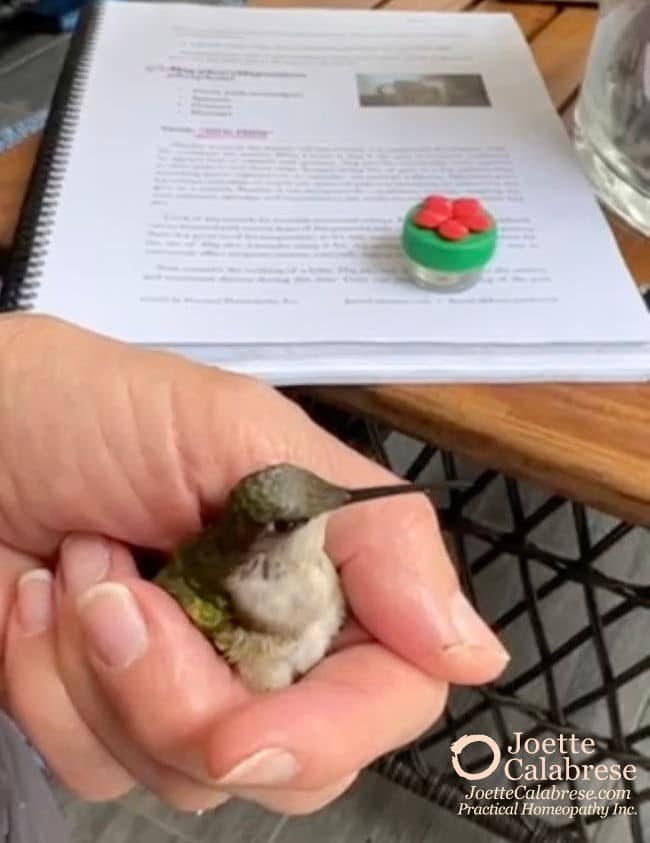
Bravo, Lisa! Your success — especially accompanied by the adorable photo of the tiny hummingbird as you were treating it — speaks volumes as to the efficacy of homeopathy.

I’ve mentioned before that Arnica montana 200 is the premier homeopathic medicine for first aid, especially for soft tissue, bone and head injuries. In fact, my husband and I have used it for our own little injured bird.

My friends, in case you were wondering, this method of homeopathy — Practical Homeopathy® — is the best medicine in the world, and I simply won’t hear another word about it.

Let the Hummingbird Effect begin!

Warmly,

Joette Calabrese

P.S. Have you joined a Gateway to Practical Homeopathy® study group yet? Wouldn’t you like to know exactly what to do in situations requiring first aid and more?

Wouldn’t you value a support group such as the one that gathered around Lisa during this delicate and profound moment in her life?

For less than the price of going out to dinner, you can invest in yourself and your family’s future. Just like Lisa, you too can become more proficient in homeopathy.

But don’t wait. Emergencies happen when we least expect them. The time to prepare is now! Everything you need to get started is right here: Gateway to Practical Homeopathy®: A Guided Study Group Curriculum.

*Lightly edited for clarity.


Summertime and the Ledum Is Easy

Joette Calabrese

You know how much I love singing, so you’ll forgive me for changing the lyrics of “Summertime and the Livin’ Is Easy.” Indeed, summertime is when I think of Ledum the most often, so doesn’t it deserve to be in the title?

My friends, let’s just cut to the chase. The next medicine we should all have in our homeopathy kits is Ledum palustre (in both 30 and 200 potencies).

I’ve discussed Ledum on several occasions before, especially for insect stings and bites — bites actually from any animals, not just insects:

Ledum is also useful for snake bites. Last week, my Mighty Members enjoyed a lengthy article I wrote containing detailed information from a graduate of The Academy of Practical Homeopathy® (and current Mastery student) who addressed a 5-foot rattlesnake’s bite on a dog’s paw … with homeopathy. Her entire community now has seen the proof that homeopathy works! It’s inspirational!

Ledum is known for addressing puncture wounds. That’s exactly what animal and insect bites are, right? So, let’s not forget Ledum’s usefulness in any type of puncture situation, especially in areas of the body that are rich in nerves (such as hands and feet).

For instance, it’s summer. Who needs shoes? Allen was out walking in his backyard when, suddenly, YEEE-OUCH! Somehow, he managed to step on a nail!

Having studied my magnum opus, The Survivalist Guide, Allen chose to employ Ledum 200, every 4 hours or so, until the puncture wound appeared very much better. Then, he continued to utilize Ledum 200, once daily for three weeks post-injury, as some literature has shown that Ledum can help guard against tetanus.

Allen also recommended Ledum to his mother, Edna, who had been suffering from rheumatism of her lower extremities. Now, while it is not considered a specific medical diagnosis, rheumatism is a common, informal term used in instances of inflammation and joint pain caused by any disease or syndrome.

Edna’s pain was — pardon the pun — nerve-wracking. She was unable to work in her garden or play with the grandkids on the swing set. Here it was summer, and she was having no fun at all — just severe pain.

While there is no particular protocol for Ledum with cases of rheumatism, it has been shown that Ledum 30 or 200 (depending on the severity), utilized twice daily, can uproot the condition over time. (Scroll down, as this week’s free Remedy Card provides this information.)

Allen bought his mom a tube of Ledum 200 and made sure she knew how to pop the appropriate number of pillules that make up one dose (as shown on each manufacturing pharmacy’s label) into her mouth and allow them to dissolve.

That’s right, Edna! It may sound too easy, but that’s what we love about homeopathy. It’s inexpensive, easy to utilize and efficacious, yet it doesn’t usher in the dangerous side effects that conventional medications can.

Another beauty of homeopathy is that there is often more than one way to shear a sheep. That’s why one should always confer with a repertory (to find common ailments and their associated medicines) and a materia medica (to read up on the characteristics of each suggested medicine).

For instance, we often think of Rhus toxicodendron for joint pain. But Ledum palustre is also a viable choice. In a nutshell, sufferers whose joints feel better from warmth generally consider Rhus tox. On the other hand, sufferers who prefer cold applications might do well to consider Ledum.

We make our choices based on the specific symptoms as they present.

Another example: Ruta graveolens is known to be especially useful in sprains of the lower extremities such as the ankle. But Ledum is well regarded as an alternative, especially when the sufferer desires to dunk their foot in cold water for pain relief.

It’s such a simple differential (cold vs. warmth), but recognizing that distinction may make all the difference!

In case you’re not yet in awe of the power of Ledum, I also have mentioned utilizing it for eye orbit injuries in Baseballs and Black Eyes and also for gout (in combination with Belladonna) in The Disease of Kings and Commoners.

Joette Calabrese

But right now — summertime — we often closely identify with Ledum’s handling of tickborne diseases, most notably the hot topic of every summer, Lyme Disease. If you’ve not read these blog posts, they may interest you.

However, let me add this clarification. Determining which microorganism may be at play in our condition can be useful, but that’s not where we start. In Practical Homeopathy®, we first ask ourselves, “What are the symptoms?”

So, if a tick bite is causing fibromyalgia, then we use the medicine for fibromyalgia!

And now is a good time for a reminder: We’re not treating symptoms. We are doing the exact opposite of that. We are using those little gifts we call symptoms to determine which homeopathic medicines might be useful.

Certainly, fibromyalgia can come from Lyme disease, but it can also come from other sources, such as hormonal shifts, overuse and food intolerances. It matters not!

Now, if we’ve used the appropriate medicine for our symptoms — in this case, let’s say fibromyalgia and fatigue from Lyme Disease — and they are not helping, then at that point we might consider the etiology or the microorganism. But we don’t start by chasing after one of a million different microorganisms. Indeed, if we start down that rabbit hole, we will miss a cathedral of good homeopathic medicines that could successfully address the condition as its presenting.

So, I’ll say it again, when choosing our medicines, we start with the symptoms!

We don’t treat a lab result.

If a client comes to me with their blood work, I generally say, “That’s useful, but put it to the side. Now, tell me what’s really happening with you. Oh, there’s fatigue and fibromyalgia. Then, we’ll use this medicine for fatigue and this one for fibromyalgia.” (You might be interested in How I Cured My Fibromyalgia with One Simple Medicine.)

We choose our medicines according to what is happening in real-time.

Before many sufferers began looking for alternatives to the conventional medical paradigm and discovered naturopathy and functional medicine, we didn’t have this conundrum.

If a sufferer told a conventional doctor they felt fatigued all the time, he would simply tell them, “That’s called chronic fatigue.”

Or if a patient went to the doctor and said, “These joints hurt right here at the thumb,” the doctor would reply, “Well, that’s arthritis!”

“Every fiber in my body aches” would be answered with “That’s called fibromyalgia.”

You know what I mean. Doctors simply took the description of the symptoms and couched it in a medical term. It was actually easier for me as a homeopath in those days.

But in the last 20 years, I’ve seen a significant shift with sufferers placing importance on myriad lab tests that may be useful to the naturopathic or functional paradigm but not necessarily to homeopathy. It can be. But it’s not the first, secondary, or even the tertiary way we look at a condition.

So, observe symptoms carefully and appreciate the signs they provide, especially with blanket diagnoses such as Lyme Disease, chronic fatigue or adrenal fatigue. Sometimes a name can cloud our judgment when only the symptoms — what’s happening right now — are all we need to begin our research to find the most appropriate homeopathic medicine.

Enjoy summertime and pass on the good news of homeopathy!

Warmly,

Joette Calabrese

P.S. Feeling a bit left out that you didn’t receive the fascinating and educational article on my student’s rattlesnake bite experience? Well, there’s one simple solution, you know. Join Joette’s Mighty Members!

My Memos to Mighty Members are extra blog posts on topics I feel more comfortable discussing in a private setting where I can be more candid (unlike in a public blog). You’ll receive a new one each week. Plus, all my previous memos are archived (so you can still learn about the rattlesnake case).

There are all sorts of extra benefits to Mighty Membership, so take a look! And remember — all my Mighties also qualify for a 10% discount on course purchases!


Great Men of Homeopathy (and a Great Homeopathic for Men)

Joette Calabrese

Let me climb up this ladder, and … whoops, missed a rung … ah, here I go. I’m shouting from the rooftop:

Happy Father’s Day!

My dear dads, granddads and men who care for others, this is your day! We humbly thank you for all that you do.

Often, my teachings are more weighted toward my female audience because moms and grandmoms make up the overwhelming majority of my readers. But I hope you don’t interpret that to mean I appreciate you any less.

Men are our builders, inventors, warriors, partners, protectors, strength when we are depleted, and the love that fills our hearts. Indeed, we celebrate you!

So, today, I would like to mention a few of the incredible men who helped create this living paradigm of homeopathy. (Plus, I will share an equally incredible homeopathic medicine that many men may find useful.)

Joette Calabrese

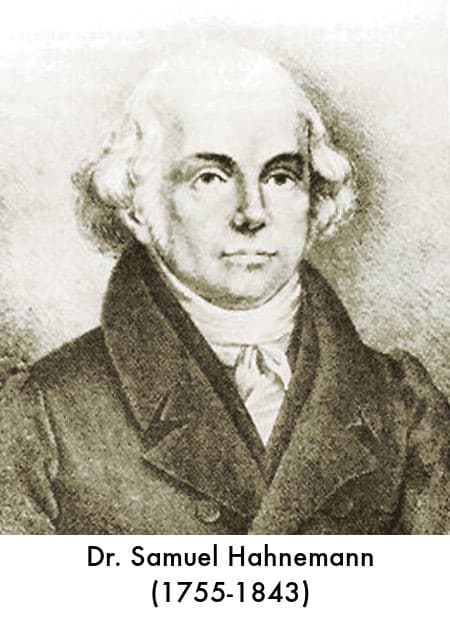
No digital list of great men in homeopathy would be worth its pixels without first crediting Dr. Samuel Hahnemann for discovering, researching and refining this unparalleled medical paradigm.

Dr. Hahnemann was a German physician and scholar whose practice served aristocracy and royalty. Disappointed in the results of the medicine he and his colleagues were using at the time, Hahnemann left his prominent practice. He discovered a profound natural law, The Law of Similars, which became the foundation for homeopathy.

The Law of Similars asserts any substance that can cause symptoms when given to a healthy person can help to heal those experiencing similar symptoms when given in a very minute amount.

Until around the 1940s, homeopathy occupied a central place in American medicine. In fact, in Washington, D.C., only one memorial is dedicated to a physician — the founder of homeopathy, Dr. Samuel Hahnemann.

Joette Calabrese

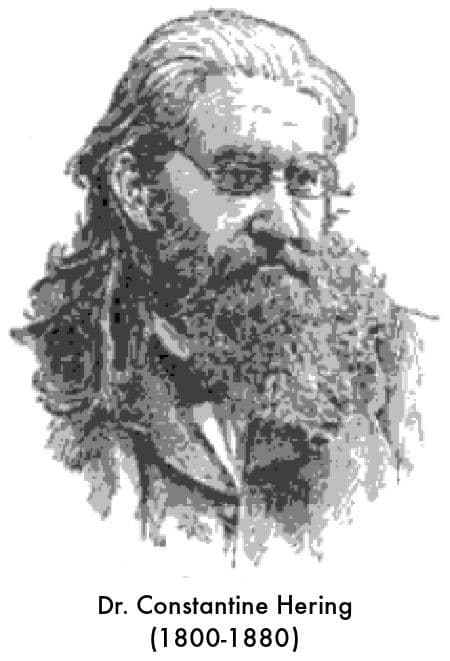
German doctor, Constantine Hering, was charged with writing a book to discredit homeopathy. However, the more he investigated, the more he became convinced that homeopathy was a valid, effective medical paradigm. He then became one of homeopathy’s most ardent champions.

In the 1830s, he emigrated to the United States and became the Father of American Homeopathy. Yes, upon scientific investigation, a “non-believer” became the Father of Homeopathy! In concert with several other doctors, Hering founded the first homeopathic medical school in the United States and also published several homeopathic journals.

Joette Calabrese

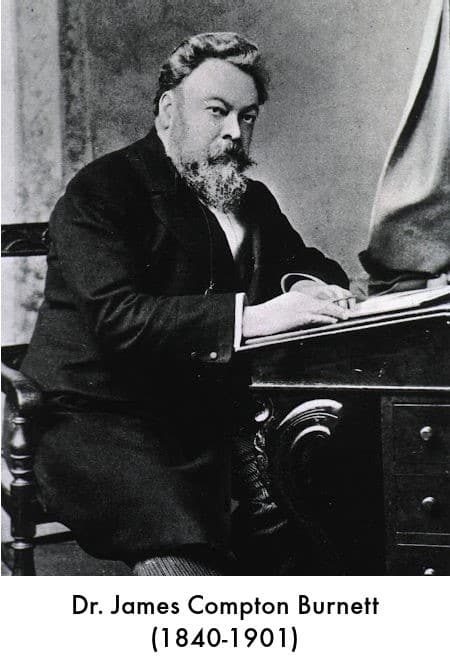
Dr. James Compton Burnett began his medical career in Great Britain as a conventional doctor; however, after trying homeopathic methods, he was converted. He was also one of the first medical professionals to address concerns that vaccination may trigger illness!

Dr. Burnett was a prolific author, and his book “Fifty Reasons for Being a Homeopath” is one of my favorite reads. In fact, I am reading — and commenting — on it now in videos I create for my Mighty Members. In this work of literary and educational excellence, Dr. Burnett records letters written to an allopathic doctor who was particularly skeptical of homeopathy.

Indeed, his fifty reasons for being a homeopath still hold true today.

To quote, Dr. Burnett, “Believe me, we homeopaths are not what you have been taught to think; we have no secrets; we aim all of us, each according to his ability and in his own way, to advance the true interest of our beneficent art, and our most earnest desire before God and man is to teach all we know to all knowledge-seeking lovers of truth.”

Dr. John Henry Clarke, the author of “A Dictionary of Practical Materia Medica” and a renowned homeopathic doctor in his own right, said of Burnett, “It is not too much to say that during the last twenty years Burnett has been the most powerful, the most fruitful, and the most original force in homœopathy.”

Joette Calabrese

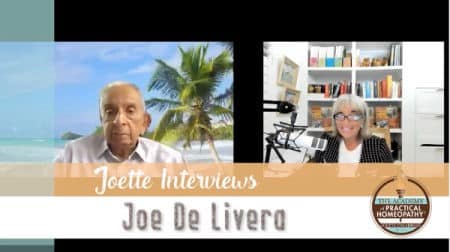
At the age of 93, the indomitable Joe De Livera — known by the moniker “Joepathy” — lives in Sri Lanka, which allows him familiarity with epidemics and conditions that don’t always affect the Western hemisphere. He is a unique, well-regarded figure in the world of homeopathy and has a stellar reputation for helping tens of thousands of people across the globe through his online presence.

His highly successful technique differs slightly from our usual method of placing pillules in the mouth. Joe De Livera recommends placing a dose of liquid homeopathic medicine in about two cups of water and then utilizing about one tablespoon as a dose. He discusses his technique thoroughly in an interview lesson for The Academy of Practical Homeopathy®, but you can read more about his method for free in my blog post When in Doubt: Arnica.

And my Mighty Members can also learn about his successful approach to the recent pandemic in Memo to Mighty Members #63, archived on your members-only page.

Banerji's

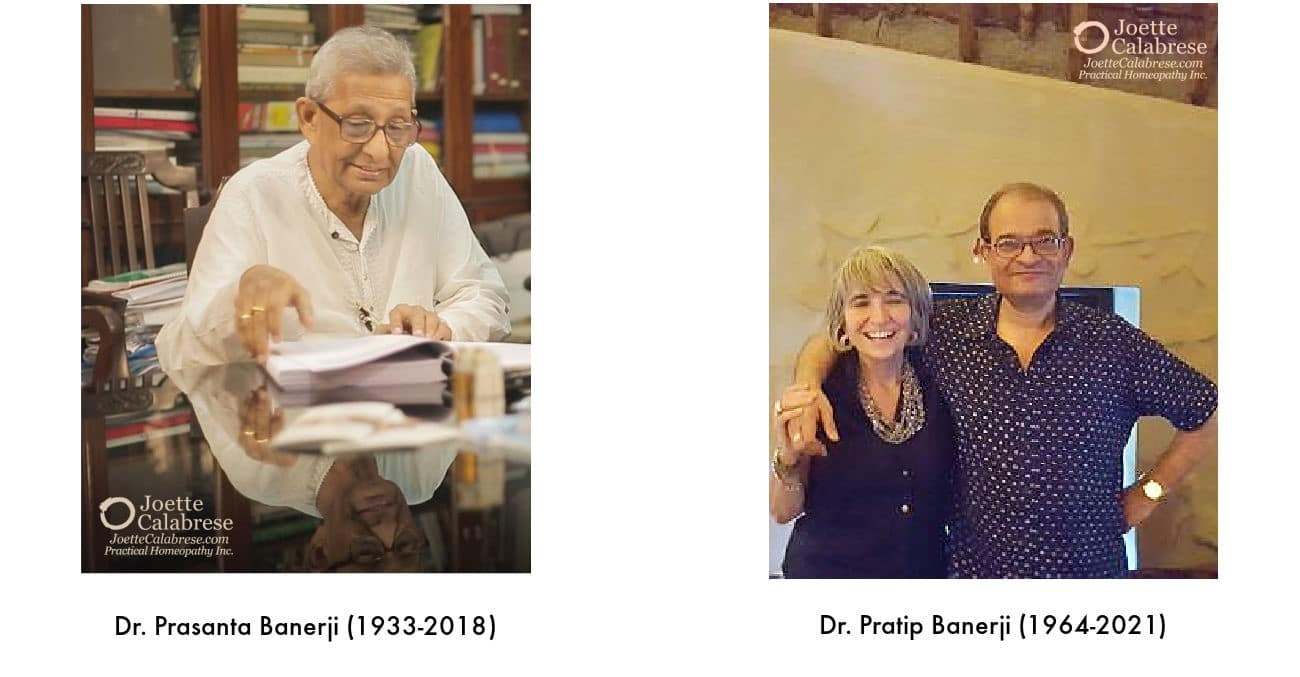
I cannot close this list of Great Men of Homeopathy without my dear mentors and friends, Drs. Prasanta and Pratip Banerji of Kolkata, India. Their immense body of work resulted in the development of reproducible, condition-specific homeopathic medicines, which have revolutionized homeopathy: the Banerji Protocols.

Indeed, their scientific research spans well over 150 years, encompassing their lifetimes and also the lifetimes of the familial generations preceding them. This data collection center is unrivaled in the world today, not only in the homeopathic world but the world of medicine in general. When I studied with them, their patient database had more than 40,000 cases with over half-a-million visits recorded!

They’ve presented their findings at the National Institute of Health, Anderson Cancer Institute, Roswell Cancer Institute, Columbia University, The University of San Diego, St Luke’s Hospital and other distinguished institutions across the globe.

Assisted by their senior doctors, the Banerjis saw approximately 1,200 patients a day in their clinic, from royalty and heads of state to the poorest of India’s citizenry. No one was turned away.

I invite you to read the tributes I wrote to both Dr. Prasanta Banerji and Dr. Pratip Banerji. 

Especially today, on Father’s Day, I think of Dr. Prasanta, who was affectionately and reverently referred to as “Baba,” meaning esteemed father. And then my mind turns to Dr. Pratip whose entire countenance would light up when his young daughter came into his office.

Indeed, they were admirable fathers as well influential homeopaths.

Joette Calabrese

Well, my friends, I promised to share a great homeopathic medicine for men, didn’t I?

Berberis vulgaris is a valued kidney remedy. Consequently, it’s another homeopathic medicine to consider for kidney conditions caused by gout (elevated uric acid).

They used to say that gout afflicted men who drank too much beer, ate too much meat and were sedentary. But updated information has indicated that’s not necessarily so! (Although, too much beer may contribute to gout because alcohol causes inflammation and other issues. Sorry, Dad!)

I’ve already discussed homeopathic considerations for the painful joint pain caused by gout in The Disease of Kings (and Commoners). However, pain located in the kidneys, ureters and even the lower back may indicate gout-induced kidney stones! Then Berberis vulgaris 6 (or in mother tincture) — employed twice daily — may be a solid homeopathic choice for sufferers to consider during these painful events.

However, as always, we halt the medicine if no improvement is observed after giving it due time to act, and we certainly stop utilizing the medicine once the condition becomes very much better.

Indeed, thanks to these great men — and many others not mentioned — homeopathy is the best medicine in the world, and I simply won’t hear another word about it!

Pass it on to all the great men in your life!

Warmly,

Joette Calabrese

1 See page for author, Public domain, via Wikimedia Commons

P.S. Men, my Gateway to Practical Homeopathy®: A Guided Study Group Curriculum is not just for moms and grandmoms. Indeed, we have wonderful men — fathers and even boys — who have joined our growing ranks. If you’re interested in joining a study group or forming your own, please reach out to my office through this form. We’ll connect you with an experienced group leader who will be happy to assist you!


Bryonia: Breast Pain Is Breast Pain

Joette Calabrese

What is a list of must-have homeopathic medicines without Bryonia alba? It’s an incomplete list, I’d say!

Bryonia probably should have been at the top of the list we are creating together. Talk about burying the lede! But I’m trying to keep you intrigued for 52 weeks, so I’m sharing my favorites in no particular order.

If you’ve been following me for any length of time, you probably already own Bryonia. I’ve often discussed the efficacy of Aconitum napellus 200 mixed with Bryonia alba 30  (a Banerji Protocol) taken at the first inkling that a respiratory condition is coming on.

Most recently, you may recall my mentioning that hallmark Banerji Protocol in my blog post, The Alphabet Soup of Viruses. Now, It’s RSV. You also learned about its use (along with other essential protocols) in Ferocious Flu Fears, published in March, 2020. (That specific date is a clue to the underlying topic … if you know what I mean.)

I’ve also written about Bryonia’s customary use for joint pain that is worse with movement in Ouch! My Back, Joint and Bone Pain is Killing Me!

We’ve also discussed employing Bryonia for mastalgia (breast pain) in Breast Pain: When Even Hugs Hurt.

But recently, this question came in: “Do you know of a homeopathic remedy for my adolescent son who has swollen, tender breasts?”

If you know anything about homeopathy, you know this:  Bryonia in Practical Homeopathy® provides a condition-specific protocol for breast tenderness and pain.

When boys like this young sufferer approach puberty, their hormones shift. They can become unnerved by breast pain and wonder, “What the heck is happening to me?”

But had this sufferer gone through the classical case-taking method, the best homeopathic medicine for breast tenderness might have been overlooked. 

As you know, the Practical Homeopath™ would simply respond to the condition as it presents.

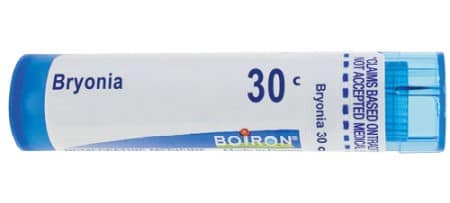
Consequently, we would generally turn to a condition-specific protocol that has been shown to act in cases of breast pain or tenderness: Bryonia alba 30, twice daily, until very much better.

Let me repeat in case you are skeptical: Yes, the question did involve an adolescent boy’s breast pain! That’s a critical elucidation I may not have discussed before in this venue.

My friends, breast pain is breast pain, whether the sufferer is a premenstrual woman, pubescent girl, postnatal mom, adolescent boy or even a newborn.

Indeed, newborns of either gender can experience breast tenderness “due to exposure to maternal hormones in the womb.”1 It’s natural, and so is our customary homeopathic response to the condition. We’d still consider Bryonia alba 30, no matter the age or gender of the sufferer.

However, let me be clear. As with any condition, we generally address pathologies when utilizing homeopathy. Homeopathic medicine is just that … medicine! We don’t use it willy-nilly like a supplement.

So, if the breasts are merely mildly tender but not inordinately painful, that’s not a pathology. Just buck up and move on. However, if the breasts are causing significant discomfort, then Bryonia is worth consideration.

Joette Calabrese

If you don’t already own it, now’s the time to secure a place for this all-important medicine, Bryonia alba 30, in your homeopathy kit. And if you order from Boiron’s website by following that link, remember to use my name, “Joette” (without quotation marks) to receive a discount at checkout. And I might add that I have no affiliate program with Boiron.

Isn’t homeopathy exquisite?

No matter the age, gender or even species, homeopathy is an equal opportunity health paradigm, providing peace of mind and health autonomy to all! And that’s certainly some good news to pass on!

Warmly,

Joette Calabrese

P.S. Have you ever wondered what you’re missing by not participating in a Gateway to Practical Homeopathy® study group? Let me tell you, you’re missing a LOT! Over 20,000 mothers and others — just like you — have joined one of my study groups.

That’s a lot of people honing their homeopathy skills, meeting other like-minded people and having fun doing it. I began my journey into homeopathy by belonging to a study group. So, I guarantee you will never regret creating or joining one yourself.

But allow me to let you in on a little secret: Your study group companions will assist you in much more than just homeopathy. You’ll make lifelong friends with whom you can confide and share information.

Start on the path of finding your new best friends on my dedicated Facebook page: Joette’s Study Group: Find Your New Study Group Friends.

  1 https://www.webmd.com/parenting/baby/your-newborn-baby-breast-lumps


Is It Hot in Here? Sulphur and Hot Flashes

Joette Calabrese

Is it hot in here?

How many times do perimenopausal and menopausal ladies check the setting on the air conditioner only to discover that the room is not hot — it’s just them? Plenty!

Hot flashes can range from annoying to downright debilitating! So, here’s something of a follow-up on last week’s blog post, Death, Taxes, and Menopause.

(But men, don’t turn away yet! This blog post holds some educational tidbits for you as well!)

Last week, we added Boiron’s Cyclease® Menopause to our list of must-have remedies. However, as you’ve come to expect from homeopathy, there’s more than one way to cook an egg! (I thought I’d give my feline friends a break from the age-old “skin a cat” proverb.)

Today, let’s discuss another must-have homeopathic medicine that addresses hot flashes as well as numerous other conditions: Sulphur.

Sulphur occupies a significant entry in the materia medica because it has so many uses. Even in A Materia Medica: Practical Homeopathy® for Busy Families (my abbreviated materia medica written in everyday language for moms and dads), the entry for Sulphur takes up two pages!

I’ve discussed it before in Podcast 76 as a medicine to consider for skin eruptions, especially when one has tried many other remedies and nothing is acting.

Sulphur 30 may also be worth considering for anyone who exhibits unusually foul body odor — even animals. For example, I employed Sulphur successfully with a sickly little smelly cat named Carmelina adopted by my family back in 2012.

Sulphur may also be a choice for folks who are pathologically messy, especially those who suddenly begin doing their bathroom duties in inappropriate places. (Read more about these conditions in my blog post, Living with a Pig.)

Certain gastrointestinal ailments may benefit from its use. Plus, Sulphur is my go-to inside trick for lingering colds and flu.

The depth and breadth of homeopathic medicines are astounding.  But you already know that.

Even for hot flashes, we have several choices from which to choose. There’s Cyclease® Menopause, Glonoinum and Lachesis mutus, to name a few. But let’s get back to our featured medicine of the day.

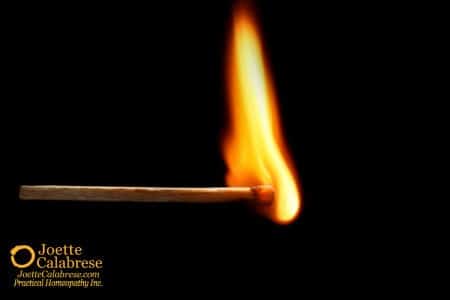
Sulphur’s keynotes are “hot and smelly,” which makes sense when we consider the substance from which homeopathic Sulphur is derived. So, what’s a clever way to remember this? Why, with the common match tip (made in part with the chemical sulfur). The sulfuric odor, the heat and the burning capabilities of the match are all qualities of Sulphur as a potentized remedy as well.

Joette Calabrese

In keeping with those keynotes, Sulphur 30 has been shown to address hot flashes, particularly when the sufferer notices any unusual odors emanating from the body, hair or breath. Odor doesn’t have to be part of the picture, but its presence confirms we’re on the right track with our medicine choice.

For this condition, Sulphur 30 is generally employed twice daily, until very much better. However, as always, if no improvement is noted, halt its use and reconsider a different medicine.

You know, sometimes people know just enough to be dangerous, yet they forge ahead as though they’re experts. Case in point: Many folks think one should get worse before getting better. To a certain extent, a sufferer may infer that idea from classical homeopathy. Classical homeopathy often states that an aggravation (or a distinct worsening of symptoms) in a condition indicates that a medicine was well-chosen.

Then there is the Herxheimer reaction, in which it’s considered a good thing when the condition gets worse (especially in skin conditions) because that means it’s going to get better. The body is purging, cleansing itself of toxins. This is especially notable in the naturopathic paradigm.

Now, I’m not saying those practitioners are wrong; I’m simply stating that it doesn’t apply in Practical Homeopathy®. Instead, if no improvement is observed, the wrong medicine may have been chosen.

But it’s a matter of degrees. For instance, if a sufferer addresses a skin issue, it’s one thing if a pimple or two pops up. It’s quite another to have a rash everywhere that’s so itchy it’s maddening.

Yet, those two paradigms confuse people by declaring that a condition has to get worse to get better. Their tacit advice? “Just put up with it.”

No, no, no. In Practical Homeopathy®, when there is no improvement after giving the medicine an adequate amount of time to act, or if a worsening of the condition to a high degree is experienced, we’ve likely chosen the wrong medicine, and it should be halted.

And while we’re on the subject of “degrees,” let me add this. An occasional hot flash now and then is not a pathology to be addressed. Instead, I say we should just ride the wave. It means we’re moving through to the next stage in this glorious life God created.

However, if hot flashes become debilitating to the point that they impair our ability to accomplish our daily duties or sabotage our sleep, homeopathic medicines can be an appropriate response.

Again, it’s all a matter of degree.

I have been where you are now. I’ve dieted and taken supplements, essential oils and herbs, but nothing — nothing — has ever come close to the reproducible, safe, and effective results I and my clients have achieved with homeopathy. To read the syllabus for my Feminopathy course and the testimonials of other women who have been helped by my Practical Homeopathy® methods, click here.

And pass on the good news of homeopathy!

Warmly (but not hot, thanks to Sulphur 30),

Joette Calabrese

Joette Calabrese

P.S. Tick tock, tick tock! The alarm is just about to sound …

Tomorrow, June 5, is the last day to submit an application to join

The Academy of Practical Homeopathy®.

Over the last several weeks, I’ve provided behind-the-scenes looks into the unique lectures, interviews, teaching and training included in this one-of-a-kind curriculum. Plus, I’ve shared glimpses into the special Academy culture — where you will be inspired, supported and create lifelong friendships.

Don’t wait until next year! Now’s the time … whether you want to join the next graduating class or set your sights on joining in the future.

There’s no obligation to learn more. Just join my Founders’ List to receive additional information. 

The Academy of Practical Homeopathy® may be precisely what you’re looking for to raise your skills and abilities to an exceptional level. You will be ready.

Over 300 graduates are now Practical Homeopaths™. You can be too! Sign up on the Founders’ List to determine if you have what it takes.


Death, Taxes and Menopause

Joette Calabrese

Wise elder statesman Benjamin Franklin said, “In this world, nothing can be said to be certain, except death and taxes.”

With apologies to our dear Mr. Franklin, half of the population can easily spot that he missed something.

Nothing is certain except death, taxes and menopause!

Yes, menopause is an event in every woman’s life. It’s a matter of when, not if. And it not only affects the women themselves, but indeed menopause has repercussions in every aspect of their lives: family, friendships and even work. 

So, are we expected to grin and bear the hot flashes, night sweats, sleeplessness, mood changes, irritability and throbbing headaches?

Unless we want to jump on the conventional medical conveyor belt and begin a regimen of hormonal prestidigitation, what do we do?

Monkeying around with hormone replacement therapy can cause iatrogenic diseases (diseases resulting from medication). Reading the medication insert regarding increased cancer risk can strike fear in one’s heart. Plus, the therapy must continue for life, or else the menopausal symptoms will begin again.

Is that really the best way to go?

“But Joette, I’m thinking of bioidentical hormone therapy. Isn’t that safer?”

As you know, I’m not a medical doctor. So, let’s defer to how the experts at the Mayo Clinic answer that question:

“… the hormones marketed as “bioidentical” and “natural” aren’t safer than hormones used in traditional hormone therapy. There’s also no evidence that they’re any more effective.”

Bam! I’d say they just lowered the boom on the whole bioidentical hormone industry.

However, it doesn’t help to know what NOT to do; we need to find a safer, more effective alternative. And we don’t have to look far …

Joette Calabrese

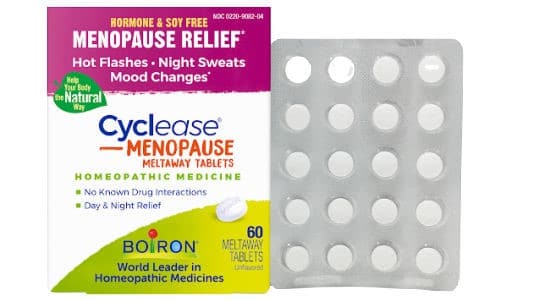
Our trusted friends at Boiron® have created a proprietary combination remedy called Cyclease® Menopause that “works naturally with the body to temporarily relieve hot flashes, night sweats, and mood changes associated with menopause and perimenopause.”

In fact, it’s so effective — and appreciated — that it just won a Women’s Essentials award from Taste for Life Magazine.

But although awards are a nice affirmation, skeptics are generally more impressed by research study results. Boiron® has that, too! Listen to this:

“An open, multinational, noncomparative observational study conducted among 99 physicians in eight countries with 438 patients showed that hot flashes and the quality of life in menopausal women were improved with homeopathic treatment. The study revealed a 56% reduction (p<0.001) in the frequency and intensity of hot flashes by day and night, as well as a significant reduction in the daily discomfort the hot flashes caused.”1

Gobsmacking, isn’t it?

The monograph for Boiron’s Cyclease® Menopause contains additional clinical and pharmacological information I found impressive. So, I’ll share those extra details — and even a coupon for $2.00 off — with my Mighty Members* later in the week. Cyclease® Menopause’s well-documented clinical studies certainly substantiate my belief that homeopathy is a much preferable approach than the synthetic or “bioidentical” hormone balderdash.

And who can take issue with the convenience of this carefully curated combination remedy? ONE tablet that melts in the mouth contains:

Arnica montana 4C — Relieves red, blotchy face associated with hot flashes

Cimicifuga racemosa 4C — Relieves mood changes, irritability and occasional sleeplessness associated with menopause

Glonoinum 4C — Relieves sudden hot flashes with profuse sweating and throbbing headache associated with menopause

Lachesis mutus 5C — Relieves hot flashes, night sweats, irritability and mood changes associated with menopause

So, let’s add Cyclease® Menopause to our list of must-have medicines in our homeopathy kit. All women will benefit from having it handy, whether for yourself or as a stellar way to pass on the good news of homeopathy!

Warmly,

Joette Calabrese

*Remember Joette’s Mighty Members receive in-depth, more candid information than is generally published in my public blog. We learn; we share; we even laugh! It’s our private playground, away from the prying eyes of social media. Join us. Don’t let us have all the fun without you!

P.S. I encourage women to consider my online course, “Feminopathy,” where this condition and its specific remedies with protocols is covered in detail. 

P.P.S. Can you hear that? It’s time ticking away … and it’s getting louder!

The enrollment window for The Academy of Practical Homeopathy® only opens once a year, and now’s the time.

Whether you want to join the next graduating class or set your sights on joining in the future, now is the perfect time to learn more. There’s no obligation. Just join my Founders’ List. The Academy may not be suitable for everyone, but you won’t know if it’s for you unless you find out more.

The Academy of Practical Homeopathy® may be precisely what you’re looking for to raise your skills and abilities to an exceptional level. Over 300 graduates are now Practical Homeopaths™. Sign up on the Founders’ List to determine if you have what it takes to join them.

1 Bordet MF, Colas A, Marijnen P, Masson JL, Trichard M. Treating hot flushes in menopausal women with homeopathic treatment—Results of an observational study. Homeopathy. 2008;97(1):10-15.doi:10.1016/j.homp.2007.11.005.

*Claims based on traditional homeopathic practice, not accepted medical evidence. Not FDA evaluated. 


Cantharis for Burns

Joette Calabrese

Burns.

Many folks head for the aloe, but I’d love to see a world where everyone first thinks of Cantharis.

We have discussed its use when burning symptoms signal a urinary tract infection. We’ve also given examples in which it has been shown to relieve sunburn.

However, Cantharis is an incomparable remedy for burns. Period.

Joette Calabrese

Helen and her husband, Ralph, were traveling in the tropics. Ralph was feeling sweaty and uncomfortable and asked Helen for a baby wipe to refresh himself a bit. Helen really should have been a bit more attentive when she reached into her bag. Instead of handing Ralph a baby wipe, she gave him a bleach-laden disinfectant wipe!

Poor Ralph rubbed the caustic chemical all over his neck skin, and that night, the pain of the chemical burn kept him awake. It wasn’t their favorite vacation memory!

Joette Calabrese

Agnes was cleaning up her elderly mother-in-law’s yard. She wasn’t familiar with the Dictamnus plant and rubbed up against it. Now she knows why its nickname is “burning bush.” Who knew such a pretty plant could cause a chemical burn? 

Joette Calabrese

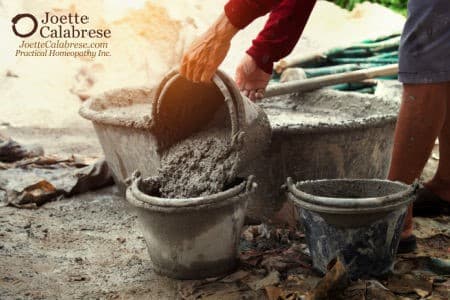
Sandra’s husband was well-known for being handy around the house — but not famous for reading instructions. He didn’t realize that mixing cement with bare hands could cause chemical burns. Next time, he’ll take the “wear gloves” warning seriously.

As will Mary Sue, who splashed a caustic drain opener on her hands as she tried to unclog her toilet!

And then there were the kids at camp. Toasting marshmallows is grand until inattention results in fingers briefly getting too close to the fire.

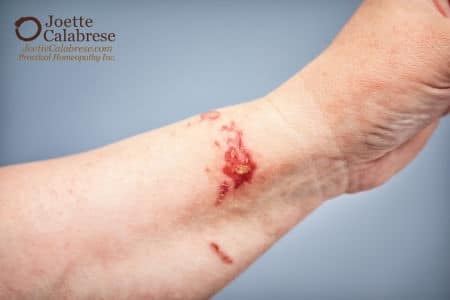
But cause matters not! Whether the minor burn results from exposure to the sun or chemicals, electrical contact, steam, or direct exposure to fire or heat, Cantharis can speed recovery, minimize the chance of infection, reduce pain and swelling, and promote healing.

Generally, Cantharis 30 or 200 (depending on the severity of the condition) may be used every few hours until improvement is observed. For more vexatious burns, it can be employed every 30 minutes until the pain begins to settle down, then used less frequently.

For serious (second- and third-degree) burns, Cantharis can even be used in conjunction with conventional medical treatment by giving Cantharis as soon as possible on the way to the emergency room.

Joette Calabrese1

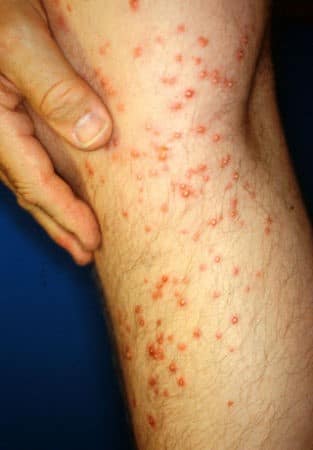
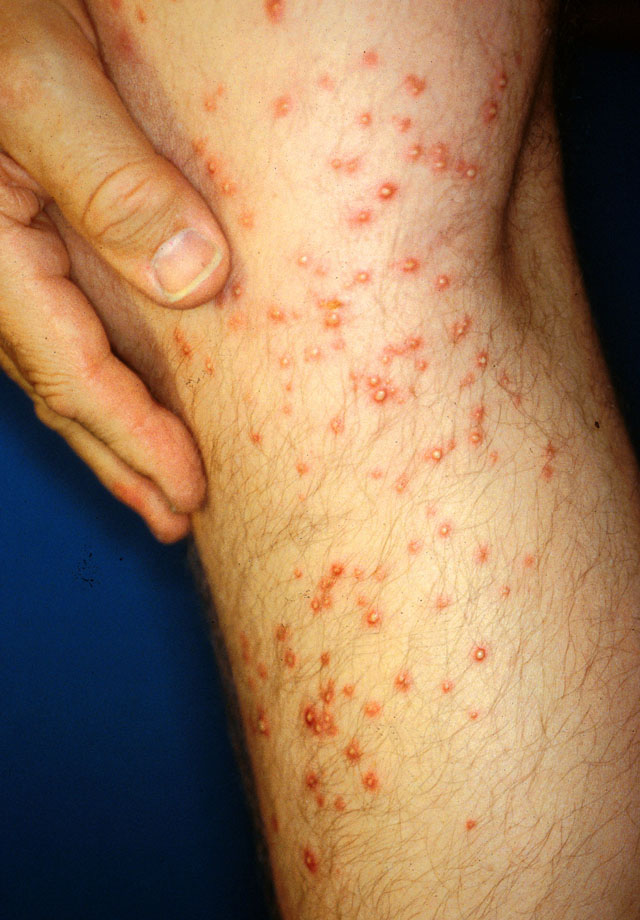
But here’s a situation also worth consideration: Cantharis for fire ant bites! The clue is right there in the name, isn’t it? Fire ants produce a much different reaction than other insect bites and stings. When vesicles form after exposure to fire ants, along with the tell-tale burning and itching, one might consider Cantharis (especially if Ledum palustre — generally, our first thought for insect bites — doesn’t fully act).

So, this week, we should have a “burning desire” to add Cantharis 30 or 200 to our list of must-have homeopathic medicines. It will serve us well in so many situations!

Want to learn more about homeopathy and remedies like Cantharis and how to be the hero in your home? Why not join a study group and learn alongside others?

Utilizing my newly revised curriculum, Gateway to Practical Homeopathy®, Second Edition, the Gateway study guide makes it easy for you to start your own group! However, if you’d prefer to join others, new study groups are forming all the time. You can find a leader on my Joette’s Study Group: Find your new Study Group Friends’ Facebook page.

Also, once you’ve purchased your Gateway to Practical Homeopathy® curriculum, you’ll receive access to an online learning portal with a list of upcoming study groups hosted by our most experienced Global Leaders.

Believe me, studying with others in the Gateway setting is THE effective, time-tested way to begin employing Practical Homeopathy®.

Pass on the good news of homeopathy!

Warmly,

Joette Calabrese

P.S. “But Joette, I’m ready for a deeper dive into homeopathy! I want to commit to getting “skilled up” for my family, friends and perhaps even my broader community as a career.”

My friend, I have the answer.

The next class of The Academy of Practical Homeopathy® — my year-long, immersive Academy — will soon begin.

The Academy is not for everyone. It’s not intended to be. Admission is by invitation only. However, you can learn more by joining my Founders’ List now (with no obligation).

If, after learning more, your passion for homeopathy calls you toward The Academy, you’ll be guided through the admissions process.

But now’s the time! This will be the ONLY enrollment period during 2023. Don’t miss out.

Join my Founders’ List now and see if The Academy of Practical Homeopathy® is a good fit for you.

1 Fire Ants: Photo by Daniel Wojcik https://www.ars.usda.gov/ARSUserFiles/oc/graphics/photos/sep99/k8575-31.jpg
This image or file is a work of a United States Department of Agriculture employee, taken or made as part of that person’s official duties. As a work of the U.S. federal government, the image is in the public domain.