Three 4 Cs for Pain, Part 4: Colocynthis

Joette Calabrese, Practical Homeopathy® Pain, Colocynthis

Over the last three weeks, I have taught three homeopathic medicines — all beginning with the letter C — that are excellent choices to consider when addressing various pain complaints. So, I bet you thought we had finished our series on the Three Cs of Pain.

Well, you haven’t gone crazy; we were finished. But I’d like to share one more C-medicine for pain: Colocynthis.

Anyway, who’s counting? Let’s make it FOUR Cs for pain, shall we? You deserve a bonus!

We previously discussed:

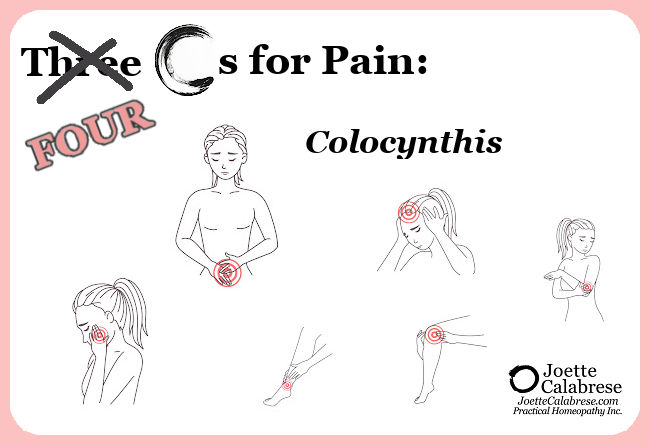
Homeopathically prepared Colocynthis carries its own collection of Cs. It has historically been shown to address constrictions, contractions and cramp-like pain.

For instance, one might consider Colocynthis for tummy pain causing the sufferer to double over from agonizing abdominal cramping. This includes colic in babies when consistent pressure to the area is the only comfort.

In much the same way, Colocynthis would also be a consideration for menstrual cramps — especially those that prompt the sufferer to draw up in a ball.

Joette Calabrese, Practical Homeopathy® Pain, Colocynthis

Painful muscle twitching or cramps, including excruciating charley horses, should also elicit the idea of Colocynthis.

What’s more, Colocynthis is also noteworthy as an excellent choice for the harrowing pain from neuralgias in general, especially around the head and face (for instance, trigeminal neuralgia).

While certainly not fun to endure, we love symptoms because they help us narrow down our choice of homeopathic medicine. However, in the absence of a tried-and-true Practical Homeopathy® protocol, we must do a bit of research to find the tightest fit possible of homeopathic medicine to the symptoms presenting.

That’s why I encourage all sufferers to read more about a particular medicine in their materia medica before deciding on which they will choose to employ.

If Colocynthis is found to be a good match, it is generally used in the 30th potency, twice daily. However, if the pain is really severe, one may choose to utilize one dose every 15 minutes for the first hour, and then every few hours after that, until very much better. (A dose comprises the number of pillules indicated by the manufacturing pharmacy on the medicine’s label.)

So, there you have them: FOUR Cs of Pain for the price of three (still free).

Be sure to go back to each of these blog posts in the series and download the free Remedy Cards. You can print them out and start developing your own Remedy Card rolodex. The next time pain strikes, you’ll be prepared … provided it’s a pain I’ve written about here in the free blog.

Unfortunately, though, there’s not enough time or space to give you a truly thorough education on all of the homeopathic medicines that have been clinically shown to address pain and uproot the causes behind it.

However, I want you to be more thoroughly prepared for any eventuality. For that level of instruction, I suggest my course, “Make It Stop! Escape From the Prison of Chronic (and Acute) Pain Using Practical Homeopathy®: Learn Effective Methods to Uproot Pain for Good.”

Pain is inevitable in the human experience. So, shouldn’t we be forearmed with the competence and confidence to utilize this natural, gentle, time-tested medicine with reproducible results?

If we develop a homeopathic mind, we will benefit from the knowledge that the body is still capable of doing something marvelous, even in a state of pain.

Through the symptoms of pain, the body is communicating an intelligent message.

If heeded and met with homeopathy rather than suppressed with synthetic pharmaceuticals of commerce, that message will ultimately lead to healing.

Pass on the good news of Practical Homeopathy®!

Warmly,

Joette Calabrese, Practical Homeopathy®

P.S. And remember — all my Mighties (Joette’s Mighty Members) qualify for a 10% discount on course purchases. If you need assistance getting your discount, email [email protected] for more information.

6-8-24 3-4 Cs for Pain, Part 4: Colocynthis


Podcast 119 — YIKES! Emergencies and Aconite

Joette Calabrese, Practical Homeopathy® Emergencies and Aconite

IN THIS PODCAST, WE COVER:

01:30   Introduction

02:50   Know the Medicines for the Most Common Emergencies

07:20   Quick Onset Emergency: Aconitum Napellus
Emergency Remedy Series: Aconite in My Purse

09:01   Aconitum Napellus for a Fright That Has Been Held for a Lifetime

12:51   Example: Anxiety Erupts Years After Trauma

15:18   How Often Is Aconitum Napellus Utilized?

18:09   The Survivalist Guide to Homeopathy
The Emergency Remedy Series
JoettesLearningCenter.com

ADDITIONAL RESOURCES:

Gateway to Practical Homeopathy®: A Guided Study Group Curriculum

The Academy of Practical Homeopathy®

Joette Calabrese on YouTube


Kate:

This is the Practical Homeopathy® Podcast, episode number 119, with Joette Calabrese.

Joette:

This is Joette Calabrese, and I welcome you to our health care movement — yours, mine and the countless women and men across the globe who have re-taken control of their families’ health with Practical Homeopathy®.

So, for the next few minutes, let’s link our arms together and embrace health care freedom.

Join me as I demystify homeopathy — what was once considered an “esoteric” paradigm — into an understandable, reproducible, safe and effective health care solution available to everyone. This is the medicine you’ve been searching for – my unique brand of homeopathy — PRACTICAL Homeopathy®.

Whether you have tried homeopathy in the past and were frustrated, or you are examining the possibilities of caring for your family yourself for the first time — you’re in the right place.

In this podcast, I will offer you my decades of clinical experience as a practicing homeopath and years of teaching tens of thousands of students, so that you can become the hero of your family and community.

This is true health freedom, my friends. This is my PRACTICAL Homeopathy®.

INTRODUCTION

Kate: (01:30)

Hi, Joette.

Joette:

Hi, Kate.

Kate:

Hi. We’ve got so much information to cover today. So, let’s get going. Today, we’re going to talk about emergencies and a great remedy to have on hand.

So, Joette, I think we should start out by first talking about what is an emergency — or how are we defining an emergency?

Joette:

When you think about the very nature of an emergency is that you don’t know it’s coming. You don’t know when it’s going to happen. It comes out of the blue. And given that makes it an unknown, it requires something important. What is that? That we plan in advance? That we’re prepared in advance.

So, if there’s anything we know in life is that we will encounter an emergency at some time. Someone is going to get a burn, a stomach flu, someone’s going to sprain their ankle. So, it would behoove us to not only know the medicines for the most common emergencies but also to own them in the corresponding potencies. Know exactly what the medicine is and have the right potency on hand.

Kate:

So, Joette, yeah, how can people do that? I mean, that’s the next question, right?


KNOW THE MEDICINES FOR THE MOST COMMON EMERGENCIES

Joette: (02:50)

Yeah. The way they do that — the way I did it when I was first learning homeopathy — was that I figured what were the most likely emergencies to occur with my family at that time with only one child, and then I chose medicines accordingly.

So, until we get to that point, though, when we’re unprepared, we worry all the time: that the child will get sick, that the child will get strep throat or chickenpox or conjunctivitis or something like that. But we should not worry because these illnesses — especially childhood diseases — are not what the most concerning aspects of childhood are.

The real concern that mothers should have are the dangers to babies and children due to accidents. So, we’ve got two categories that I like to look at.

Number one: regular childhood illnesses. And we need to know how to deal with these to make the mother less worried. You just have to learn how to … you have to know how to do this.

Now, we’re not going to be talking about regular childhood illnesses today, but instead we’re going to talk about the concern of accidents, emergencies, because those are the true greatest threat to children and babies. Most people think that it’s infections; it’s sore throats, et cetera. No, it’s emergencies, accidents, burns, et cetera.

So, as I said, where do we begin? You asked me, where do we begin? Well, it’s with the composition of your family and those around you. So, if you live in a retirement home or those around you are older, you should know the homeopathic medicines for issues such as insomnia or grief or urinary tract infections or even lacerations, arthritis, preparation for surgery. You need to know this.

So, if you’re a grandparent that frequently watches your grandchildren, you need to know the remedies, for example, injuries from falls.

But if you’re a middle-aged woman and you’ve finished with menopause, you want to know the remedies — how to use them — for, say, allergies or ailments from disappointments or menopause. You want to know the remedies that are specific for weight gain or hair loss or insomnia.

You see, each one of these are categories depending on your life, your lifestyle, where you are in your life, who you’re caring for. So, if you’re a middle-aged man, for example, there might be gut issues, ED, those kinds of things. You want to know those medicines and how to use them … homeopathic medicines.

Kate:

And I want to add in there that if you are someone who is very active and, say, you go to … maybe you do scuba diving, or you’re in the ocean a lot. Those might be another set of emergency medicines to know versus if you are a golfer and/or if you like to be out in the woods, and you hunt.

So, there’s different remedies to have. For instance, you’re in the ocean, and you might get stung by something there, than if you’re going to sprain your while you’re golfing. Right?

Joette:

That’s exactly so. I live by the ocean, and there was a time when I would swim in the ocean every single day. I swam one hour. (I’m bragging, but now I’m going … taking it all back because I haven’t done it in a few years.) But I actually did that. And I had to know the medicines specific for jellyfish stings … for man o’war stings. Because they were in the ocean and people would have problems with them, and I needed to know what those medicines were and have them on hand.

And I don’t get sunburned, but people who come and stay with me often do. So, I need to know — because I’m in southeast Florida — what are the medicines for sunburn and what potency? And own them! Not only know what it is — what the best one is or what the top two are — but own them as well.

So, it all depends on the stage of life, your lifestyle, where you live, that we need to have those medicines on hand.

But today, we want to talk about medicines for emergencies. Specifically, I think we’re going to talk mostly about injuries of sorts, right, Kate?

Kate:

Right? Yeah. I think that’s our focus today is helping people to be prepared for an emergency situation.

Joette:

Yeah.

Kate:

So, give us one of the top homeopathic medicines for emergencies that people can just get right now and have on hand.


QUICK ONSET EMERGENCIES: ACONITUM NAPELLUS

Joette: (07:20)

And own it. That’s right. Not only own the medicine but own the knowledge.

So, the top medicine that I always think of for the onset of an injury or something that has come on quickly — or it may not even actually be a physical emergency, it might be even a psychological emergency — is Aconitum napellus. Aconitum napellus: two words.

I actually keep this in my purse. Because should my husband or I be in an accident, we might use something else for the pain later or broken bone or laceration. But Aconitum is great for a shock.

It’s also one of our best medicines for a vascular event.

It’s a great medicine for when something comes on hard and fast, even if it’s just a cold. One minute, you’re fine. The next minute you feel, “Oh my gosh, I feel like I’m going down fast!” Aconitum napellus.

And so, as we know in homeopathy, there’s a number. It tells us the potency that needs to be considered. We’re not going to use plain old, garden-variety, gross Aconitum napellus. We’re going to use it in a 200C.

So, I keep that in my purse at all times. It can be useful for so many unexpected, almost shocking incidences.

Kate:

Joette, we have a blog that you did, and it’s titled Emergency Remedy Series: Aconite in My Purse. So, if you’re listening and you want to read a little bit more, you can go to that blog, and we’ll have it linked for you on your website as well.


ACONITUM NAPELLUS FOR A FRIGHT THAT HAS BEEN HELD FOR A LIFETIME

Joette: (09:01)

Yes. So, yeah, but we also want to know many different ways to use this. But there’s a whole classroom of students and everyone has the same paints, the same light, the same canvas, the same teacher, the same model. But in the end, it’ll be slightly different because we all have a slightly different point of view.

So, I’m going to read to you from Roger Morrison’s materia medica called “The Desktop Guide,” and this was such a valuable statement when I read it back in 1996. It’s when — around the time, shortly before that — I just purchased this book, and it gives a description of Aconitum napellus.

I’m going to read directly. He penned, “Anytime that a violent or frightening event occurs (such as an earthquake or a car accident) we often must give Aconite first, even if we will need other specific acute remedies later.”

And here’s the statement that really took me to the next level of understanding this. “Aconite,” says he, “can release a shock or fright that has been held in the body or mind for a lifetime.”

Now, what does that mean? Does it mean that if someone had an experience such as witnessing an atrocity or, getting stuck in an elevator for three days, or being stuck in the basement during a hurricane for a few days? And it’s so frightening, but it was 30 years ago. Now, it’s a distant memory. It doesn’t bother them.

But! If it’s stuck — held in the mind or body for years … In other words, now, ever since that time 30 years ago, that person is now having panic attacks. They don’t even think about that event in the elevator. They don’t even necessarily make that association. But for some reason, now they’re having anxiety attacks, sleepless nights ever since that event. “Aconite,” says he, “can release a shock or fright that has been held in the body or mind for a lifetime.”

That was so profound to me that I actually wrote down in the book the date that I found this to be useful, not only for myself but also for many others — for my clients and my students. So, that’s a very meaningful statement.

That means that homeopathy can release a shock or a fright that’s been held in the body — body, too — or mind for a lifetime. Not only is that exciting for me, but it’s exciting to know that I can teach that. It can release so many people of anxiety attacks or insomnia or feeling worried about things that are not even that worrisome, or believing that somebody’s going to break into the house and worry about it all the time — even though it’s not very likely because they’re on the 12th floor or something.

So, this can be a medicine that we can use to help uproot something that’s turned into a chronic, such as what we’re describing, or it can be used at the moment of an event that presents itself such as an automobile accident or witnessing an atrocity or being hit very strongly with a shocking (so to speak) a shocking respiratory infection that’s at hand.

Kate:

I think you have a story about a woman in her 80s who had panic attacks and how she used Aconite. Can you tell us that?


EXAMPLE: ANXIETY ERUPTS YEARS AFTER TRAUMA

Joette: (12:51)

Yes. This was a woman who came to me; she was in her 80s, as you said. And during World War II, when she was a teenager, she had been raped. And she didn’t talk about it to me. She just was telling me that she couldn’t sleep very well. She was having panic attacks. And she’d had these panic attacks for years, and they precluded her being able to fall asleep comfortably.

So, I tried a couple of medicines. She hadn’t said anything about this event so many years — 70, 65 years — previously. I asked her, however, “Was there ever anything in your life in which there was such an extreme situation with fear or panic that you associate with this or that feels like this kind of panic?”

And she relayed the story to me that when she was 17 years old, she had been attacked, and she was certain she was going to die, and she was very frightened. And through the years, it was a distant event of her past.

But once she hit menopause, something shifted. And from that time forward, she was having these panic attacks. And she relayed that these panic attacks were very similar to the feeling she had when she thought she was going to be killed that night and, indeed, had gone away for a while but now were back presenting themselves.

So, I suggested the medicine Aconite 200 once a night before bed for several nights in a row. And when she reported back to me, she said the panic was gone for the first time in about 30 years. She no longer had panic attacks. She no longer had insomnia associated with anxiety — even though during those panic attacks, she wasn’t thinking about what happened back when she was 17 years old. She was simply having panic, and she couldn’t even explain why.

“I don’t understand why,” she would repeat to me. “I don’t have any reason to believe that I should be panicking. All I want to do is go to sleep.” Yet, it was held in her body and her mind for nearly a lifetime, and it released her of that. Aconitum napellus, 200C. And she took it for several days until she felt better.


HOW OFTEN IS ACONITUM NAPELLUS UTILIZED?

Kate: (15:18)

That’s what I was going to ask you, Joe. What do people usually do as far as frequency of taking it? Is it just one time, or is it over several days, or how is it usually used?

Joette:

It can be used only once. Some people report to me, “Oh my gosh, just one dose, and I’m right as rain!”

Other people report to me, “I feel better when I take it, but you know what? The next day I need it again. It feels like, can I take it again is the question?”

Yes, indeed. You may take it again.

And so, we take it according to the need. We would not take this medicine for long, long periods of time. We would use it until it’s no longer needed. It’s not a bad idea to test it out. Kind of give it a real test.

On Friday night, sleeping better; panic is gone.

Saturday, “How are you doing?” “I’m doing better. I feel good.”

Okay, Sunday night, “Uh-oh, I feel it again.” Okay, take it Sunday night.

And so, you might want to find that tipping point. Or simply use what I suggested earlier, which is once a night before bed for several days and see how it goes.

And if it comes back? Let’s say you stop using it because there’s no need to use it any longer. The medicine has acted.

Now, let’s say six months later, had she come back to me and said, “Oh my gosh, it’s back again! Oh no, the medicine’s no longer working!”

No, that’s not what it means. It means the medicine did act according to what it’s supposed to do, but it’s needed again. We’re not done.

So, she starts it up again. Aconitum 200 once a night before bed, for example … and for a few more nights and see how it goes. And each time she needs the medicine in another episode of need, it generally shows up as a milder version.

So, the panic is no longer panic. Now, it’s just some worry. The insomnia is not hours and hours of inability to fall asleep. Now, it takes a little bit longer, but she can fall asleep.

So, the medicine is going deeper and deeper each time, each episode in which it’s needed.

So, instead of saying, “Oh no, it’s back again,” instead, we are excited to teach this woman — or anyone who needs this — that they can use the medicine again. This is an opportunity to use it again and go deeper.

Because these medicines, as they’re used — not all of them, but most of them, depending on how they’re being used and for what condition — often go deeper as there is repetition.

Now, it does not mean, however, that we use it willy-nilly. These are medicines, my friends. These are not essential oils or supplements or vitamins. They need to be used with great respect. And we stop when there’s improvement, and we commence again when it’s needed again.


THE SURVIVALIST GUIDE TO HOMEOPATHY

Kate: (18:09)

So, if you want to know more about using Aconite or other homeopathic medicines for emergency situations, a good place to start is that blog post series. And you would just take a three-by-five card and write down the remedies that are listed on that series and how they should be used and carry that with you along with the medicines that are required for emergencies.

And if you want to go even further, Joette, I think a great place would be the Survivalist course. Is that what you would recommend?

Joette:

Yes. My course titled Survivalist Guide to Homeopathy offers information, the remedies, the potencies, the frequencies most often used for specific conditions that are extremes.

So, for those who are interested in survivalist methods, or even for those who aren’t even thinking that way but want to know medicines and how to use them — what potency, what frequency for common and very uncommon situations — you might want to check out my Survivalist Guide to Homeopathy.

And the way to do that is to go to JoettesLearningCenter.com. (There’s no apostrophe for Joette’s). J.O.E.T.T.E.S L.E.A.R.N.I.N.G. JoettesLearningCenter (C.E.N.T.E.R) .com. And scroll down to homeopathic “Survivalist Guide.” And from there, you’ll learn not only how to use Aconitum in other ways but other medicines for specific extreme conditions.

Kate:

Thank you, Joette, for talking to us today about emergencies. And I’d like to wrap up by saying that homeopathy gives you the wisdom and the tools that you need so that you don’t have to be afraid of “what if” an emergency happens, right, Joette? I think it’s been …

Joette:

No doubt about that.

Kate:

Yeah, you’ve heard your students say over and over again that students no longer fear.

Joette:

That’s one of the great aspects of using homeopathy. It’s more than just treating that panic attack for someone. It’s also you’re not having the angst and fear of not knowing what to do in the future.

We live in a society that’s loaded with synthetics and chemicals and additives and fake fragrances. It keeps going that we’ve lost track of what’s pure. Homeopathy is pure. That’s why I call it “God’s medicine.”

Kate:

Well, thank you, Joette. We look forward to the next time when we meet again.

Joette:

It is my honor to share as many Practical Homeopathy® protocols for simple conditions as I can — for free, without affiliates or advertising — here in my podcasts, blog posts and Monday Night Lives.

But it’s critical that you learn how to use these medicines properly. These podcasts should serve as only the beginning of your training. Peruse JoettesLearningCenter.com to find fun study group opportunities and in-depth courses developed by subject.

With the proper training, you can join the thousands of students before you in developing the confidence and competence to protect the health of your family and loved ones with my brand of homeopathy — Practical Homeopathy®.

Kate:

You just listened to a podcast from internationally acclaimed homeopath, public speaker and author, the founder of The Academy of Practical Homeopathy®, Joette Calabrese. Joette’s podcasts are available on all your favorite podcast apps.

To learn more and find out if homeopathy is a good fit for your health strategy, visit PracticalHomeopathy.com.


3 Cs for Pain, Part 3: Coffea

Joette Calabrese, Practical Homeopathy® Pain

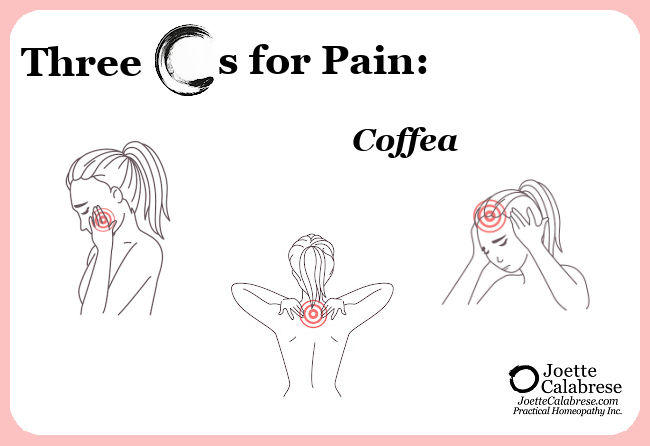
No series on homeopathy for pain would be complete without mentioning Coffea cruda.

I’ve written about Coffea before as an effective medicine for Exquisite Tooth Pain. That alone is worth making Coffea a part of your well-curated homeopathy kit.

But it’s also great for pain that keeps the sufferer awake at night, especially if accompanied by sensitivity to light, noise and motion.

Coffea cruda is also a top consideration for periodic headaches — including migraines — in women who are typically nervous. That may come as no surprise, as we discussed Coffea’s use for anxiety in a previous blog.

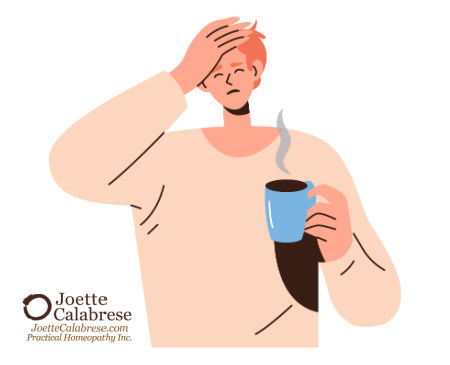
While we’re on the topic of headaches, I’d like to teach you about using Coffea for a very specific type of headache — the caffeine headache.

Joette Calabrese, Practical Homeopathy®

Paul can’t start his morning without coffee. (We all know a “Paul.” Heck, some of us are Paul.) But if Paul doesn’t get his morning coffee by 10 a.m., he’ll suffer a splitting headache. In his case, this headache stems from a lack of caffeine. He’s trained his body to expect that dose of caffeine every day. When it doesn’t arrive on schedule, the wheels fall off the cart — or, more specifically, Paul’s head hurts.

Angela has never met an energy drink she doesn’t like. Despite looking like poisonous antifreeze, Angela tilts back a couple of energy drinks a day. But her limit is two. If she drinks more than that, the caffeine jolt hits her head like a lightning strike. In Angela’s case, her headache stems from too much caffeine.

This is where homeopathy shines.

The medicine that has been historically shown to address caffeine-related headaches is Coffea cruda 200, generally utilized twice daily or so, until very much better.

“But Joette! One person didn’t have enough caffeine, and one person had too much. How can one homeopathic medicine cover both lack and excess?”

My friends, homeopathy is not like conventional drugs. Homeopathy is not bludgeoning one’s system, altering our bodies in a specific, pre-determined direction like synthetic pharmaceuticals.

Homeopathy stimulates the body’s natural ability to correct what’s causing the pain from either direction — too much or too little.

Homeopathy works with our bodies, gently nudging them to return to homeostasis.

However, as with anything in life, there are caveats. As always, we stop utilizing a medicine if we observe no improvement after giving it due time to act. If there’s no improvement, it’s time to pivot — to consider an alternative medicine (which means delving into your repertory and materia medica).

Equally important is that we stop employing our homeopathic medicine once we are much better. Homeopathy is medicine, not a supplement. We only call upon it when necessary.

Learn more in my blog post, When to Stop.

Well, that’s the last of our Cs for pain … or is it? Come back next week, and you may be surprised to find a fourth!

Pain is a common complaint, and homeopathy provides many excellent choices for addressing the different types of pain. There are more than just three medicines … or even four <wink wink>.

To truly become the competent go-to caregiver for your family, you need more than just a few short blog posts. I encourage you to look at the syllabus for my course, Make It Stop! Escape From the Prison of Chronic (and Acute) Pain Using Practical Homeopathy®: Learn Effective Methods to Uproot Pain, Often for Good. I assure you, there is no better place to invest than in your education and homeopathic medicines. You and your family will benefit for generations.

Pass on the good news of homeopathy!

Warmly,

Joette Calabrese

P.S. I talked more about pain in my recent Monday Night Live event. What? You weren’t there?

Well, worry not, my friend. Mighty Members can find it on their private website. Facebook users can also watch the video recording in the archives on my page. Or check out my channel on YouTube! While you’re there, please like and subscribe. Your positive feedback will encourage YouTube’s algorithm to present the message of Practical Homeopathy® to more people in need.


3 Cs for Pain, Part 2: Cimicifuga

Homeopathy for headache pain: Cimicifuga

Utilizing homeopathy for pain is not like taking a painkiller.

Painkillers — ibuprofen, acetaminophen, naproxen sodium, or opioids — are, at best, like Band-Aids. They cover up the symptoms just long enough to allow us to ignore them.

One might be able to function temporarily. However, because they do nothing to address the underlying condition causing the pain, one generally must take them again and again and again during the inevitable recurrences of the pain.

Instead, homeopathy works diligently to correct the problem causing the pain. It’s not disguising the symptoms or suppressing the condition. Instead, homeopathy gently, politely and naturally triggers the body to make the necessary corrections.

No one wants an infant screaming their heads off every time a tooth comes in because they were given Tylenol, which has a reputation for triggering asthma and liver conditions. Or, as pediatricians used to employ, Morphine in syrup. 

No. We want the teething pain to be so well resolved that the next time a tooth comes in, we won’t even notice it.

No woman wants to take painkillers every single month to assuage her painful menses. She doesn’t want to get through one month, barely, only to start the painkillers all over again in a few short weeks. No, no, no!

With Practical Homeopathy®, we’re fixing these conditions over time instead of simply masking them. My friends, that’s one of the best parts of homeopathy. Utilizing homeopathy is so much nobler. It’s a loftier medicine with a much bigger purpose behind its use: correcting the problem underlying the symptom.

The next in our list of three Cs for pain is Cimicifuga racemosa.

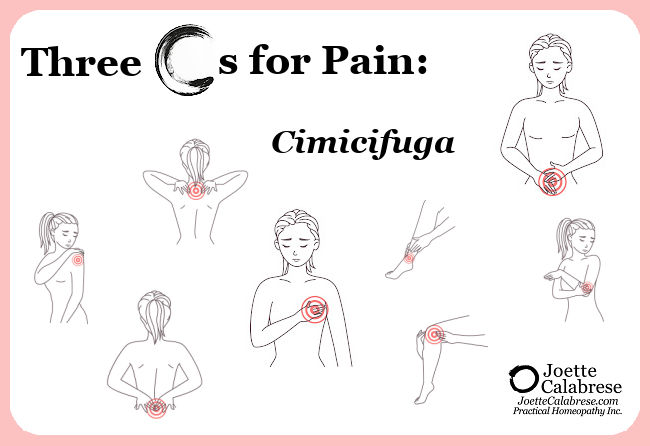
It’s one of my best medicines for angina. My father kept Cimicifuga on hand for angina that plagued him. I felt confident that it would not only relieve his pain but also minimize the condition as it was occurring. Many sufferers have experienced improvement in their conditions even while their prescribed nitroglycerin remains in their pocket.

Robin Murphy’s “Nature’s Materia Medica” describes angina as “Needle-like pains at heart … pain spreads all over the chest to the back and down the left arm, which feels numb and as if bound to the side.”

One should not ignore angina. Happily, this medicine is remarkable to utilize on the way to the hospital. It may even act by the time one arrives in the parking lot, perhaps eliminating the need to enter the building. I’ve seen it work that fast!

In addition, the Meta Repertory mentions that homeopathic Cimicifuga racemosa is a consideration for the following conditions:

  • Rheumatism of the back and neck
  • Sciatica
  • Shooting, throbbing pain in eyes; intense aching in the eyeballs
  • Labor pains felt in the back of the thighs (We assume labor pains are natural, but perhaps not when they’re extreme or go on too long. Then, we may have to intervene and help our bodies out. Shooting pain during labor — especially in the lumbar area or across the hips and behind the thigh — would be a call to consider Cimicifuga.)
  • Uterine prolapse with cramping
  • Menstrual cramps made better by lying down
  • Pains like electric shocks in limbs
  • General bruised feeling all over, made worse by touch

Just look at the broad spectrum of pain that Cimicifuga has successfully addressed. This is most definitely a medicine you should add to the well-curated homeopathy kit we’ve been developing over the last year and a half. I’m not offering precise protocols for each condition; however, Cimicifuga is generally employed in the 30th potency, twice daily, until very much better.

As I run my finger down the pages of my Materia Medica: Practical Homeopathy® for Busy Families while preparing this blog post, I am overcome by how enamored I am with this medicine.

I’ve been using, practicing and teaching homeopathy for nearly 40 years. How long can a person remain enamored? Well, when it is a paradigm this gorgeous, this graceful, this effective, one can — and should be — enamored for a lifetime.

Pain touches us all at one time or another. For some, pain can become a way of life. However, homeopathy can ease the pain by going deep to root out the cause of the pain. If you or someone you love is in pain, consider my course, “Make It Stop! Escape From the Prison of Chronic (and Acute) Pain Using Practical Homeopathy®: Learn Effective Methods to Uproot Pain for Good.”

Our bodies are truly miraculous. Sometimes, they simply need the gentle nudge that only homeopathy can provide.

Pass on the good GREAT news of homeopathy!

Warmly,

Joette Calabrese

P.S. Remember, all my Mighties (Joette’s Mighty Members) qualify for a 10% discount on course purchases. If you need assistance getting your discount, email [email protected] for more information.


3 Cs for Pain, Part 1: Chamomilla

Pain

You can hear a sufferer’s cough. You can see a sufferer’s eczema. But pain is invisible.

How many people do you know who are suffering from pain? It may be more than you think. Luckily, there is homeopathy.

It has been reported that 20.9% of Americans experience chronic pain. More often than not, these folks suffer in silence. Their daily routines are affected and, in some cases, severely limited. Their relationships deteriorate; their mental acuity diminishes; their joie de vivre often disappears.

The standard of care in conventional medicine is, of course, synthetic drugs of commerce, otherwise known as pain medication. Even if they work in the short term, the long-term risk of addiction is commonly worse than the initial condition.

Homeopathy for pain

Homeopathy has historically been shown to address pain in a polite, gentle and natural way, with no risk of requiring higher and higher dosages or of developing an addiction. So, over the next few weeks, let me introduce you to a short series: 3 Cs for Pain.

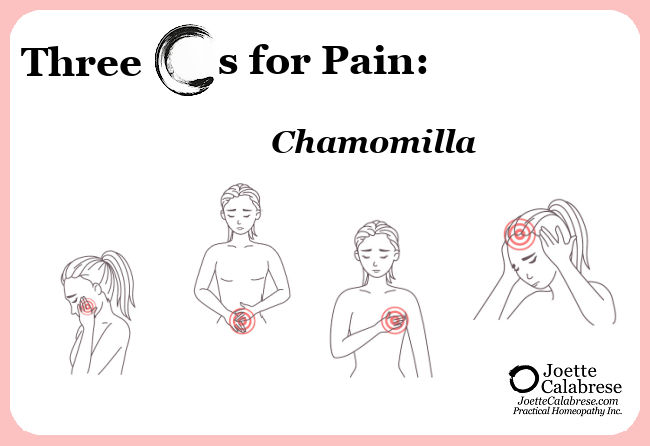
First up this week is homeopathically prepared Chamomilla.

Chamomilla is well-known to moms who use homeopathy for their children’s teething pain, but it is so much more than just for teething or dental pain. It has a grander ability, as it can also be used for general pain, particularly when the sufferer demonstrates the same characteristics as a teething child.

Joette Calabrese

The pain sufferer for whom Chamomilla would be a reasonable consideration is over-sensitive and can’t be appeased … just like a teething infant. The sufferer is irritable, fractious, and displays a “Don’t touch me; don’t get near me” attitude.

Do you understand the comparison?

Let me give you an example. I once had a case of a teenage girl with painful menses. We’ll call her Molly. During our consultation, Molly was rude and abrupt when her mother interjected pertinent information. She was oversensitive to an extreme, rolling her eyes and being generally insufferable.

This was not merely typical teenage behavior. I could tell Molly could barely contain herself. At one point, her mother said, “Aw, honey,” and ever so gently touched Molly’s shoulder. Molly pulled away and winced, simply from being touched!

(Ahem … Molly’s mother needed to provide a good dose of what I call “Parental Discipline 200c,” but that’s a matter for another time.)

But do you see the similarities? Her behavior was tantamount to a teething infant arching their back and trying to kick their mother away. She was quarrelsome and obstinate. 

In Molly’s case, Chamomilla vulgaris 200, twice daily during her menstrual cycle, was the answer. Molly slowly returned to the typical behavior expected of her age group. She became a normal “teenager,” a little difficult but not uncivil.

Indeed, Chamomilla is an excellent consideration for painful menses as well as for labor pain. In fact, in Robin Murphy’s “Nature’s Materia Medica,” he mentions its use for “Intolerable labor pains, sends the doctors and nurse away, then calls again.”

Once again, it’s an example of the person requiring Chamomilla having a pain-induced meltdown.

Keep in mind that I’m not talking about mild pain. Pain calling for Chamomilla is severe; the person can be found screaming and demanding relief, perhaps even with anger and rage. As we mentioned earlier, because we can’t hear or see pain, we use the symptoms (as described by the sufferer) and our observation of their behavior.

When an individual of any age mirrors the fractious behavior of a teething infant by displaying hypersensitivity to an unendurable pain, consider Chamomilla. So, read more about it in your materia medica and add it to your well-curated homeopathy kit.

Be sure to check back for my blog next week when I’ll discuss the 2nd of the 3 Cs for pain: Cimicifuga.

(And Mighty Members, I’ll have a follow-up for you later in the week regarding Chamomilla and coffee.)

Pass on the good news of homeopathy!

Warmly,

Joette Calabrese

P.S. I’ve discussed Chamomilla in several blog posts in the past:

Dental pain

Teething pain

Ear pain when flying

Pain from ear infections

Pain from contractions during birth

Colic

Extreme irritability

But, my friend, the most effective way to understand the complete picture of pain and develop the competence to know which remedy to choose is to take my course, “Make It Stop! Escape From the Prison of Chronic (and Acute) Pain Using Practical Homeopathy®: Learn Effective Methods to Uproot Pain for Good.”

In it, I offer a solution to physical pain that works — a solution free of risky surgeries, injections and drugs with their adverse side effects. Could there be a better resource for your family? Don’t allow anyone you love to suffer in silence, go through needless surgeries or take dangerous drugs. There is no better way to help them thrive than by introducing them to well-chosen homeopathic medicines.

And remember — all my Mighties (Joette’s Mighty Members) qualify for a 10% discount on course purchases.


Podcast 118 — Moms with Moxie: Freaking Mom Helped by Homeopathy Study Buddy

IN THIS PODCAST, WE COVER:

02:13   Introduction

07:43   Why Join The Academy of Practical Homeopathy®?

11:13   The Power of Study Groups: A Dramatic Success Story

21:36   Freedom From Fear

23:42   How to Join a Study Group
The Academy of Practical Homeopathy®
Gateway to Practical Homeopathy®: A Guided Study Group Curriculum
Joette’s Study Group, Find Your New Study Group Friends

ADDITIONAL RESOURCES MENTIONED IN THIS PODCAST:

JoettesLearningCenter.com

Kate:
This is the Practical Homeopathy® Podcast, episode number 118.

Joette:
Hi! This is Joette Calabrese. My Practical Homeopathy® is transforming lives all over the globe by offering health freedom!

They say a picture is worth a thousand words, but I say a podcast is priceless.

I want you to hear — in their own words — how regular people just like you have reshaped their lives using the practical protocols I teach in my Practical Homeopathy®.

So, with the help of my reporter Kate, I bring you this podcast series featuring interviews with moms, dads, teens, health care practitioners and Academy of Practical Homeopathy® students from all walks of life.

With education, you can follow in these students’ footsteps. You can eliminate your fear of illness and injury by learning how to care for yourself and your family. Like them, YOU can be in control — without acquiescing to authority — to live healthier, more autonomous lives. Indeed, you, too, can heal yourself and your family through my brand of homeopathy — Practical Homeopathy®.

INTRODUCTION

Kate: (01:30)
Hi, I am Kate, and I want to welcome you to today’s podcast. I am super excited to talk today about connection. That’s one of the things that we’re going to share with you today, and it’s been one of the most important parts of my life throughout the last, I would say, 5 to 10 years. Because I’ve met dear friends from all over the world, and these women — these beautiful women — have become a part of my life — an integral part of my life, actually. And I don’t know what I would do without them.

I met many of my dearest friends through Gateway to Homeopathy study groups, and it’s just been an amazing relationship that I’ve had. And it sounds funny to say, but some of my closest friends are really all over the United States and the world.

And so today I want to introduce you to two beautiful women who have met in study groups, actually through the Academy of Practical Homeopathy®. And so, I want to welcome you to the podcast. Robin and Katie, welcome.

Robin and Katie:
Thank you. Thank you. Great to be here.

Kate:
So, I want to get to know you just a little bit. Robin, tell us a little bit about yourself.

Robin:
So, my husband and I, our two boys, we are in southeast Idaho. Picked up and moved from California about three years ago and randomly showed up in a town called Pocatello. Love it here and love being able to dive into homeopathy.

We are very much of a people who like to take ownership of our health and of our lives, and so we take the time to really dig into that.

But for a while, I just didn’t know why we were even here. And here we are, and I’ve been able to meet Katie, and it’s been a blessing to be here.

Kate:
Yeah. So, now you know one of the reasons that you ended up there, maybe.

Robin:
Exactly. It was so random, but here we are.

And with that, too, Academy of Practical Homeopathy® — both Katie and I joined last year. So, it has been a fun ride. We’ll dig into that a bit during this podcast.

Kate:
Okay. Katie, tell us a little bit about you.

Katie:
I grew up in a very remote town in Idaho. We didn’t have a doctor. We didn’t have a hospital anywhere nearby. The nearest large town that we could even go Christmas shopping was three hours away.

Kate:
Wow!

Katie:
And so we learned to be our own doctor, to tend our own things, our own injuries, our own illnesses. And I’m so glad that we learned not to rely heavily on the medical system.

Sometimes I’ve had relatives that have had to be taken by Life Flight because of emergencies. Really glad that we have it when it’s needed. But for the rest of the time, we just learned how to be self-sufficient for our health, and I’m so grateful for that.

So, I didn’t know what to study in school. I tried massage. And then I got a degree in sports medicine and tried to learn more about supplements, herbs, essential oils. And finally, finally, I was introduced to homeopathy, and I have found the ultimate medicine, and it’s wonderful, and I love it so much.

Kate:
Never looked back, right?

Katie:
That’s right. That’s right.

Kate:
Yeah, I hear a lot of people say that. That’s what happened for me, too. You go through all of these other natural healing paradigms and when you get to homeopathy — which, unfortunately, is usually last (I don’t know why that is) — but it’s like: This is home. This is what I’ve been looking for.

I know Joette talks about that. This is the medicine we’ve all been looking for, and it’s really so true. It’s so much more efficacious, I have found, than any other healing paradigm. So, yeah.

Well, one of the things that I wanted to ask you about today is what really got you into homeopathy? What medicine really worked that sold you on homeopathy?

Katie, you want to share that with us?

Katie:
Sure. After I took my first Gateway class with my sister, I bought a small kit, and it didn’t have very many remedies and certainly not in very big amounts. And so, it was small enough to fit in my purse.

We went to the beach, my family, and one of my daughters got stung on her leg by a jellyfish. After a quick panic, thinking, “What can I do about this?” She was screaming in pain. She was in so much pain and so upset.

And then I remembered my homeopathy kit, and I gave a remedy. And it was Apis that comes from a honeybee, and that really worked for the jellyfish sting. Within five minutes, she was back playing in the waves.

After that, I wanted to know everything about this medicine. I don’t know a single other medicine that I had ever heard of that could have done that.

Kate:
Yeah. So quickly and so efficacious. Right?

Katie:
That’s right.

Kate:
So, from then on, you were gung-ho into studying homeopathy.

Katie:
Yes, I was.

Kate:
All right. Robin, what about you? What really stood out in the beginning for you?

Robin:
So many stories. I would have to say one of the key stories was when one of our kitties who was coming down the hill, and my husband took a look at her and said her entire arm was swollen.

We didn’t know at first what had happened — if she had been bit by a snake, what the injury was — but it was completely swollen. She had a pretty massive limp. And even though my husband took Gateway to Homeopathy, and he believed in the power of it, I think he had a moment of doubt of like, “Well, is this going to work?”

Because she was in such bad shape with labored breathing, and so we gave her a combination of three different medications — you know, homeopathy — and Arsenicum, Hypericum … there’s a third one. And within the third dose, it was later that day that she was up walking around, back to her old self. When it returned a month later, for some reason, we re-dosed her. She was fine. It was incredible to see.

So that’s just one of many stories. I love homeopathy in that it treats the root cause. It’s just so simple, and yet it is God’s medicine. It’s like what Joette talks about all the time.

Kate:
Yeah. Well, those are great.

Katie:
So gentle.

WHY JOIN THE ACADEMY OF PRACTICAL HOMEOPATHY®?

Kate: (07:43)
Yeah. Yes! Yes, exactly.

So, you both recently have joined The Academy of Practical Homeopathy®, and I would love to hear a little bit about what prompted you to join and what you’re finding with The Academy. What you love about it, and what you want to tell people about it? Robin, you want to share with us?

Robin:
I have been a believer in homeopathy for the last couple years; my husband joining a study group. And then when it came for The Academy, I think overall, again, diving into different courses and the different medicines, having that opportunity to have an in-depth study is important because I think that knowledge really is power and being able to equip ourselves with it.

And then I think probably Katie for you, too, being able to funnel that information down to the kids of, “Hey, in the event that something happens, here’s what you need: Aconite, Arnica, whatnot.”

So, I think a lot of it is just making sure that we have the information that we need. It’s really the toolbox, I think.

Kate:
Yeah. So, what prompted you to join The Academy? Because I know you’ve done Gateway 1, and so what really made you take that leap?

Robin:
It was just the need for jumping into the material and being able to take that ownership. I think otherwise, you’re always dependent on other people.

If you have that knowledge and you have that understanding, then you’re able to turn to your loved one in a time of need and say, “Here’s what you need.” Instead of, “I don’t have the knowledge; I’m sorry.”

It was that time to realize if it’s not now, when is it going to be? And sometimes we can get in that mode of it’s not ever convenient … and it’s not. But at some point, you’ve got to realize, just jump in.

For anybody out there listening who feels like it’s not the right time … you’re overwhelmed. There’s no better time than right now. And you’ll figure it out, and you’ll make the time for it because it’s a priority. But this knowledge is too important to let it just sit there for another year until it’s going to be a better time. We’re going to always be busy.

Kate:
Yeah. We have a mama with 10 kids in The Academy. And I mean, if … I always think if she can do it. I mean, that’s pretty incredible.

Katie, what about you? Tell me what your thoughts are about The Academy, and what you’ve been excited about.

Katie:
I actually got into The Academy because I had so many family members. I come from a very large family, and I had so many people all the time coming to me and wanting to know what to do for gout and what to do for heartburn and what to do for a broken leg and what to do for this and that, and I have a headache today. And I just felt like my knowledge that I had was insufficient, and there was nowhere for me to turn.

There aren’t homeopaths everywhere. And certainly, I don’t know any in this area. And I just felt like maybe I just need to do it. Maybe, you know? And so that I can be that point of contact — that reference — for all of these people that are already coming to me anyways, and I have to do all this research. Why am I holding myself back by not rounding out my education? And so that’s why I decided to get into it.

I actually joined The Academy late. I was four weeks late getting in, so I felt like I was so behind, and I didn’t know if I was ever going to catch up. But I’m so glad that I was put into a study group … where I was allowed to join a study group. They hadn’t solidified those study groups yet, and I got into the one that I was in, and I’m so glad.

THE POWER OF STUDY GROUPS: A DRAMATIC SUCCESS STORY

Kate: (11:13)
So that leads us to a really key part of why you guys are here today, and that’s to also share your story about what happened and how being in this study group together really was a lifesaver in a way.

So, go ahead, Katie. Tell us what happened, and you guys came together into the study group. I know because one of our team members said, “Hey, Katie, you should join the study group because you live in the same area as Robin.”

So, since you guys lived in the same area, you were kind of suggested to be in the same study group. Tell us why that was important and what happened. Katie,

Katie:
In the middle of October, my one-and-a-half-year-old got sick. When she has a fever, she has seizures with her fever, and it’s very scary. I’ve taken her in at my husband’s urging —taken her to the hospital now that we live near one.

And the doctors tell me, “It’s a febrile seizure; there’s not really anything we can do. Just try and keep her comfortable and safe and don’t worry about it. Just keep her temperature low, make sure that you’re keeping her on Tylenol and ibuprofen and keep that temperature down so that she doesn’t go into these seizures.” And that was as good as they could tell me.

So, when she got sick again … and it was just a fever. There was no runny nose; there was no cough; no nothing to suggest that it was a cold or a flu of some kind. It was just a fever and extreme fatigue. She was just very weak, tired, but she had a hard time sleeping. And so, it was a worrisome time. She wasn’t eating, but she at least was drinking, and she would have these seizures.

So, I was giving her just a basic flu remedy for the kind of symptoms that she was having with being so weak. And that was helping, but it was not … I don’t think that it was shortening the disease.

And so, I looked up in one of my reference books about fevers of unknown origin. The Drs. Banerji, in their book, talk about that. And so, I looked for my remedy that they suggested, and I didn’t have it. I thought I had it. I did not have it. And I think that’s because I gave it to either my mom or my grandma when they were having trouble. And so, I didn’t have it at home, and they live a long ways away.

So, I immediately got online, and I ordered the correct remedy. But it was a weekend. Even though I ordered expedited shipping, I knew it wasn’t going to get to me for a couple of days. And so, I thought, “Well, we can tough it out for a couple of days. Keep her on this remedy that’s sort of helping and use another one for the seizures and just try and keep things under control until that one gets here.”

Well, I checked every day. And Tuesday came; it hadn’t even been shipped! I was trying to track the order and stuff, and it had not even shipped yet.

That night, she had some of the worst seizures that I have ever seen in my life. Some of them lasting up to 45 seconds … a minute. And I don’t know, I haven’t seen a lot of people have seizures, but she doesn’t breathe very good when she’s having a seizure. It’s very scary. And her lips turn blue, and then when she’s done with it, she’s so, so, so tired.

And at about 4:30 that morning … I had been up all night … again. I thought, “I really need some help. I wish there was somebody around here that had this medicine.” And then I thought, “Oh! Maybe one of my study group members that lives nearby, Robin, might have this medicine.”

And so, I texted her at 4:30 in the morning. She didn’t see it until the next day. Isn’t that right, Robin?

Robin:
At 7:00 a.m. So, I turned my phone on at 7:00 a.m. I’m like, who text messaged me at 4:30? You need … like, this is an SOS.

Katie:
Right? Immediately, Robin flew into action. She did have the medicine. She asked me did I need some, and I was just beside myself with relief and hope. And she was there before noon. She brought it right to me.

Kate:
Awww.

Katie:
And within seconds of the very first dose, I saw a change in my daughter. She relaxed. She had been very whiny, upset, but still weak. I mean, there wasn’t hardly anything she could do. She was getting dehydrated a little bit by that time — or had been dehydrated, and then we rehydrated her. But it wasn’t like she wasn’t getting any better.

But I saw an immediate change. And so did you, Robin, right?

Robin:
It was within seconds.

Katie:
It was.

Robin:
It was incredible to see. I remember looking at you, Katie, and saying, “This is what Joette talks about when ‘this is the right medicine, and it will act’.”

But it was seconds. It was shocking.

But having you call out for help, one, I think is important. Sometimes we can get into that mindset of like, do I really need help? I don’t want to inconvenience. But it was never an inconvenience to just reach out and say, “Hey, do you have a medicine?”

And I went through Joette’s blog earlier that year — even the year before — and just documented all the different medicines that Joette had written about of the “have to haves.” And I had these medicines, and I brought Cocculus to you as well, which Joette had a blog about it. And if you’re a caregiver, this is what to bring or to take to somebody who’s a caregiver. And so, I immediately thought, “Hey, this could be something that’s helpful.”

But also, it’s just the connection with our other study group member, our study group adviser, Erin, who has been a complete godsend. I reached out to her when you reached out and said, “Hey, can you start a conversation with Katie? I’m on the road, so I’m not going to be available, but let’s make sure that we’re thinking through all of the different medicines. But I’m going to bring some different ones, including one for Katie.”

But having her eyes on that too was really neat to see.

Katie:
I’m glad that you brought her in. I was hesitant to post to the entire group. You know what I mean? We’ve got, I don’t know, eight or nine members in the study group, and I didn’t want everyone worried and asking questions … and I didn’t want to have to field any of those questions.

I just needed a little bit of guidance, a little bit of help through this because I couldn’t think anymore. My brain was fried. I had been up for four nights in a row, and the only time that I ever ate anything was when I could walk around holding my baby and find whatever was available on the shelf in the kitchen. (Not that my family doesn’t care, but they just didn’t see the need. It never occurred to them to bring meals in. And I never thought to ask. I was in a bad state. You know?)

Kate:
It’s really hard to think when you are exhausted and caring for someone. And Joette talks about that, too. How when you are caring for a child, it’s really good to have that other person that you can talk to and say, “Hey, what do you think? Because I just can’t think right now.” It’s too close to you. You’re too worried.

And like you’re saying, it’s great to have that connection, somebody that you can reach out to that can help you think — that’s the bottom line — and just kind of be with you. Even someone just to be there, you know? That you know someone is on the phone or on the way, and just that right there is a huge relief, I think.

So, Katie and Robin have been talking about the importance of connection and being involved in a study group. And they’re both in the study group for The Academy, but there are many study groups that you can be a part of … the Gateway to Homeopathy study groups that I talked about earlier.

But I think we wanted to just emphasize that importance of not trying to buckle up and go it alone. Maybe Katie was doing in the beginning that you had that study group there, and you did reach out and the importance of that. So maybe you guys can talk about that a little bit and what you want to share with the listeners.

Katie:
Oh, I’m going to cry if I talk anymore about that. I just felt like that Robin was a guardian angel for us. I mean, she was like our rescue. She had the right medicine, and I had a connection to her, and she has a willing heart just to help people. People that study homeopathy, they don’t do it for fame and fortune. They do it because they really care. And that … it meant the world to me.

Kate:
So, you were saying before, Katie, and maybe I can just share that you had said if you wouldn’t have had that remedy at that time, that you probably would’ve ended up going to the hospital again and seeking medical care — which we’re not saying that that’s a bad thing — right?

Katie:
No. No, I would’ve done it.

Kate:
But just how you were able to stay home, and that remedy took care of it and the value of that for you.

Katie:
Yeah, it really eased my mind. I had been on the verge at least twice, probably three times, of taking her to the hospital because I knew that a fever — with no other symptoms except just weakness that lasted that long and was starting to inch up and up and up — could only mean some kind of septic infection or something similar. And she would have to be on some heavy antibiotics and have a lot of testing done.

I wanted to spare her that if I could, but I wasn’t going to put her life in jeopardy so that I could stay home and say that I handled it myself. I would’ve gone. I would’ve gone. But I am so glad that I didn’t have to.

She was spared all kinds of horrible traumas that some of my other children have gone through. To be catheterized is traumatic, I don’t care who you are. But especially for a small child, it’s terrible. Some of the tests that they have to endure to figure out what’s going on so that they can get the right treatment …

FREEDOM FROM FEAR

Kate: (21:36)
Yeah. So, we’re thankful for that when we need it, but we’re also thankful for these medicines that allow us to …

And I think another thing too is to not have the fear, right? Because we have tools that we can use … and that I know has been important in my life.

I remember you guys were talking about your daughter being stung by a, what, a jellyfish?

Katie:
Jellyfish.

Kate:
And we were on an island at one point, and my daughter got stung by, I think, a sea urchin? I’m not quite sure. But yeah, she started blowing up too. And it was an island without medical care. You had to see if you could get a flight back to another island to get medical care.

And we used homeopathy for that. And just knowing that I had some tools there that I could use really … well, one, you never know what would’ve happened if you didn’t have that in that instance. How long would it been until you got care and then would it have been in time?

I mean, it’s literally been a number of times where homeopathy, I can honestly say, has saved one of our lives in my family. It helps with that fear.

You need that connection. I’m connected to all these beautiful women who are willing to help at any time. Like you said, Katie, these people that you meet in these study groups, they are selfless, and they are willing to be there day or night and to help. And so that’s a beautiful, beautiful thing.

Robin, did you want to add anything to that?

Robin:
I think a lot of it is just reaching out. Sometimes we can get in this state in place of wanting to be strong and push through it. And yet there’s no harm in asking, “Hey, am I headed in the right direction? What do you think? Do you have any input?” You don’t know how anything can be turned around and then within seconds see an improvement, and you just can’t believe your eyes. So being able to be part of that …

And I just encourage people to reach out, connect, ask questions. Like, don’t go at this alone. If there’s stories, share them. I think that that’s how we all learn, and we can apply it to our daily lives, too.

HOW TO JOIN A STUDY GROUP

Kate: (23:42)
Yeah. So, if you are listening to this podcast, and you think, “I want to have a connection with other people.” Because there’s men study groups. There’s women’s study groups. If you want to have that connection to a group of people, there’s a number of ways that you can do it.

One of them is through homeopathy study groups, whether it’s in The Academy of Practical Homeopathy® or Joette’s Gateway to Homeopathy study groups.

But if not there, then find your people that you can be connected with … that you can do life together and that you have each other’s backs. I just think that’s super-important, and I know that’s what you guys have found with this as well.

I just wanted a quick mention: If you’re looking for a way to connect with other people through Joette’s Gateway study groups, you can go on the Facebook page, Joette’s Study Group, Find Your New Study Group Friends. So that’s a Facebook page. And if you join there, you’ll see all the people who are offering study groups and connect with someone there.

So, I want to thank you guys today for sharing your story. And I know it was emotional and hard, but I know that people are going to be just really thankful that you took the time today to share your story and to encourage those who are listening. So, thank you so much.

Robin:
Absolutely. Thank you, Kate, for having us.

Katie:
It was a pleasure to be here.

Kate:
All right. I will see you in The Academy.

Robin:
Wonderful. Thanks, Kate.

Kate:
Thank you. Bye-Bye.

Robin and Katie:
Bye. Bye!

Joette:
These podcasts focus on students of Practical Homeopathy® who have learned how to take care of themselves, family, friends, clients, pets, patients and even livestock using homeopathic medicine.

I hope listening to this podcast has inspired you to follow in their footsteps.

But this podcast is only a start. It’s critical that you learn how to use these homeopathic medicines properly. So, peruse JoettesLearningCenter.com to find fun study group opportunities and in-depth courses developed by subject.

With the proper training, you can join the tens of thousands of students before you in developing the confidence and competence to protect the health of your family and loved ones with my brand of homeopathy — Practical Homeopathy®.

Kate:
You just listened to a podcast from internationally acclaimed homeopath, public speaker and author, the founder of The Academy of Practical Homeopathy, Joette Calabrese. Joette’s podcasts are available on all your favorite podcast apps. To learn more and find out if homeopathy is a good fit for your health strategy, visit PracticalHomeopathy.com.


Motherhood Is a Lifetime Gig


Joette Calabrese, Practical Homeopathy

You know what today is: It’s Mother’s Day! Whether you are a mother or simply have one, we all universally celebrate this day.

I once overheard a discussion in which one young lady confessed trepidation about dedicating her next 18 years to motherhood. The older woman she was speaking to just laughed — laughed a little too hard, some might think.

“Eighteen years?” she responded through her laughter. “You’ve got to be kidding! My daughter is in her late 50s, and I’m STILL her mommy when she needs me. Eighteen years? Sweetheart, mothering doesn’t stop at a set age. Mothering doesn’t stop when they get married. Mothering doesn’t even stop when they become mothers themselves. Motherhood is a lifetime gig, my friend.”

Indeed, it certainly is. Mothers never leave the front line. (And they don’t want to!)

My office received a testimonial from one such mother who was right there, contributing moral support and homeopathic assistance she gleaned from my teachings as her adult daughter was about to give birth to her third child.

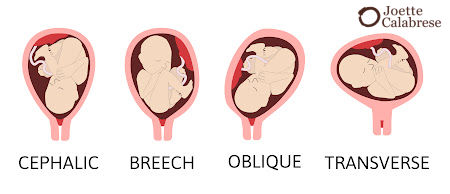
The baby was breech at 35 weeks, but Grandma knew precisely how homeopathy could naturally, gently and politely turn the baby to the correct position for birth.


Joette Calabrese

“My daughter took two dosages of Pulsatilla 200CK in one day, one right before bed. We prayed that God would turn the baby.

 “She was doing exercises to loosen up the pelvic area. She slept with a pillow between the legs as suggested by a YouTuber who was an exercise specialist.

“Her children, ages 7 and 3, both slept an amazing 12 hours. She slept like a rock all night.

 “She awoke and something had changed!! Was it true??

 “She palpated, and probed, and it indeed did seem that baby had flipped while she was asleep.

 “Today, the midwife and sonogram confirmed that baby was anterior and head down and a beautiful healthy specimen!!

 “Joette’s article [see below] … was a great encouragement!!

 “Thank you!! — Peg E.*” Inspirational story, Peg. Well done! Congratulations on your expanding, thriving family.

The article she mentioned was my blog post, Birthing Series Part One: Turning a Breech Baby.

That three-part series (including my responses to reader comments in the comment section) is quite educational for new mothers. The other two articles in the series are:

Birthing Series Part Two: The Premier Remedy for Childbirth and a Few More

Birthing Series Part Three: Baby Is Born, but You’re Not Done Yet! Neither is Homeopathy

I’ve said it so many times, but studying homeopathy can provide you with a relevancy like no other. My adult children still call me for healthcare advice for themselves, their families, their roommates, and even their pets. I have to admit, one of my favorite sounds is hearing a grateful “Thanks, Mom.”

I love being a mother, and I love passing on the good news of homeopathy. How lucky am I that the two fit so seamlessly hand-in-hand! They can for you too. All it takes is a little education.

Last week, I tempted your loved ones to purchase a gift card for you to use for my Gateway to Practical Homeopathy®. You could also use it toward a course, to enjoy a subscription to my Mighty Members, or even as part of your tuition in The Academy of Practical Homeopathy®, which is beginning another academic year in July.

But I know how kids can be. Perhaps they didn’t listen. Instead, you’re enjoying flowers and chocolates. Those are nice, too, but why not buy a more lasting gift for yourself? You deserve it!

Check out my Learning Center to view the available courses. Choose the one that will most benefit your family’s concerns and conditions even if your children are grown because let’s face it … motherhood is a lifetime gig.

For all of you who are mothers, Happy Mother’s Day!

Warmly,

Joette Calabrese

*Lightly edited for clarity.

P.S. You just read my student used Pulsatilla 200CK. If that “CK” designation had you a bit stymied, I encourage you to read my post, C, CH or CK? The Answer Revealed.


A Mother, Her Kids and Aconite


Joette Calabrese, Practical Homeopathy

Mothers come in all shapes, sizes and even species. Yet one thing all mothers have in common is their fierce, protective and nurturing instincts. But instincts can only take us so far. Education is imperative so Mom knows what to do when unexpected health conditions strike.

Preparation preempts panic!

I wrote the Gateway to Practical Homeopathy®: A Guided Study Group Curriculum to give every mom the competence and confidence to treat her family’s ills. So, as you can imagine, nothing gives me more joy than to receive an unsolicited testimonial from one such mom who used her Gateway education to help her kids.

(Oh, did I mention that by her “kids,” she means baby goats?)

Joette Calabrese

“I am writing to share a short but fun story about how Joette’s Gateway 1 Study Group saved a newborn goat this week.

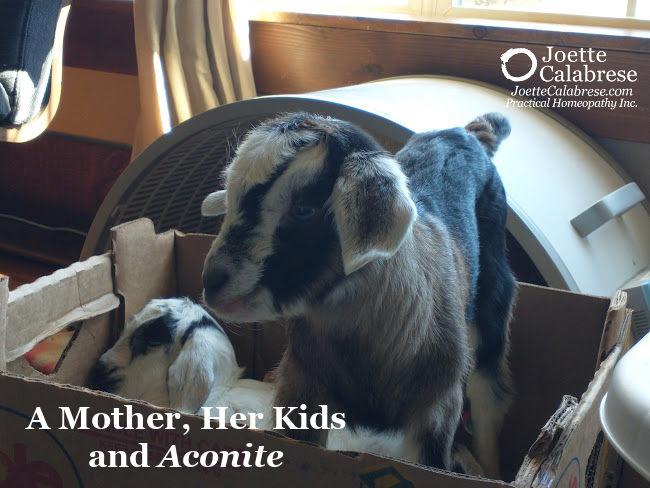
 “Two of my daughters, 15 and 18, wanted to have milk goats this year.  They bought two pregnant does, and both had their babies on the coldest and most blustery day this spring! 

 “All four baby does were bundled up in goat jackets, but when evening came, my daughter Ella carried in a baby they had named Cookie.  Cookie was shaking and refused to eat.  Ella unsuited her and began massaging her body to get her circulation moving and warm her up, but the goat stayed on her side, staring off with glassy eyes.  This is never a good sign with animals.

 “ ‘Mom!’ Ella said with an anguished tone, ‘She’s going to die!’

 “The checklist began to run through my mind… Caused by cold, she seems to be in shock, and what newborn would not feel afraid in such a situation?  

 “I got out our Aconite 200, had the children put a couple of pellets on her tongue, and I said a prayer out loud for her.  Within a couple of minutes, Cookie sat up and everyone felt hope.  We continued to warm her and gave her another dose of Aconite after fifteen minutes, and she improved again, looking around with interest. 

 “We brought all of the ‘kids’ in out of the cold overnight, but Cookie is doing best of all now.  Thank you for the repetitive information about the ABCs of homeopathy in Gateway 1.  Aconite was a game changer for one baby goat and saved my children so much worry and work in caring for her.

 “Sincerely, Linda M.

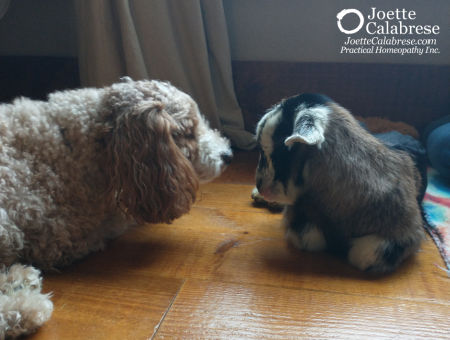
“P.S. I am attaching 2 photos.  One photo [below] is of Cookie with our poodle, Costa, who appointed himself guardian while she recovered that evening.  The second photo [main blog photo] is of Cookie the next morning, strong and ready to get on with the day.”*

Joette Calabrese

Joette Calabrese

Let me take this opportunity to reaffirm that Aconitum should always be used in homeopathically prepared, potentized form — only when there’s a number after it, such as 200C (as demonstrated here). We NEVER utilize Aconitum napellus in mother tincture form.

That said, what an excellent example of the power of Aconitum napellus 200C! Well done, Linda. I’m sure the lesson your daughters learned from your skilled response will forever remain a significant influence in their lives. They witnessed how homeopathy can gently trigger a radical shift.

Think about it. By joining a Gateway to Practical Homeopathy® study group, you’ve set generational health freedom in motion for your entire family.

(And who knows? Maybe your future grandchildren will want “kids” of their own!)

Why am I writing about mothers this week instead of waiting until next weekend’s Mother’s Day? Well, frankly, next week would be too late! I want to give you an opportunity to purchase a unique, meaningful, practical Mother’s Day gift for your family’s matriarch.

Would your mom enjoy the transformative experience of a Gateway to Practical Homeopathy® study group? If so, purchase a customizable gift card from my website. (Our system cannot handle purchasing any product for someone else; you will just be purchasing it for yourself on your account. However, purchasing a gift card allows your recipient to place the order themselves, ensuring their enrollment records and communications are attached to their account instead of yours.)

As of this writing, a $73 gift card should cover the curriculum, shipping and handling. But why not round up?

If you’re feeling generous — and why shouldn’t you; you only have one mom — purchase a higher amount to allow your mom to choose a protocol course she’s had her eye on. Imagine how much fun Mom will have perusing my Learning Center to discover which educational offering suits her fancy.

May is the month for “kids” to honor their moms. You’ve got a week to make it her best Mother’s Day yet. With my easy online gift cards, you don’t even have to leave home. Win-win!

Pass on the good news of homeopathy.

Warmly,

Joette Calabrese


*Lightly edited for clarity.


Leave No Stone Unturned (Tonsil Stone, That Is)

Joette Calabrese, Practical Homeopathy

I’ve received a number of requests to cover tonsil stones. To be honest, I wasn’t sure if this subject would be prevalent enough to interest all my readers.

Indeed, some people are prone to tonsil stones, while others aren’t.

Folks prone to this condition have often experienced repetitive occurrences of tonsillitis, met with repeated antibiotics, of course. That fact alone leads me to ask the question: Could tonsil stones be an iatrogenic disease? Meaning, could drugs of commerce (specifically antibiotics over-prescribed for throat infections) contribute to a seeming predisposition to developing tonsil stones?

I’m not saying it does. I don’t know. However, it’s an interesting question to consider. I am reminded of Dr. William Osler’s instructive quote:

“The person who takes medicine must recover twice, once from the disease and once from the medicine.”

Now, before you dismiss that quote as simply the rumination of some random outlier, keep in mind that Dr. Osler was a founding father of Johns Hopkins! It’s hard to think of a more conventional source to have exposed this consequential principle.

Write it down, my friends, in a place where you’ll see it over and over. It’s that important of a message.

However, whether tonsil stones are iatrogenic or just the “luck of the draw,” they are formed by calcified bacteria and debris within the tonsil folds.

Joette Calabrese

Homeopathy often doesn’t need to identify the etiology. When tonsil stones are discovered (often accompanied by throat or ear pain and halitosis), Hepar sulphuris calcareum (also known as Hepar sulph) is generally employed in the 30th potency, twice daily, until the stones are pretty much gone. Be mindful that the medicine may require an elongated period of time to complete the job.

I know that sounds vague, and I don’t mean to be. It’s just that this condition can sometimes take months to resolve. It’s essential for the sufferer to observe, observe, observe to ensure they have chosen the correct medicine. As long as we observe improvement in any of the three “magic markers,” we know we’re on the right track.

What are the three magic markers, you may ask? Well, I teach more about them in my Gateway to Practical Homeopathy®: A Guided Study Group Curriculum. But in short:

  1. Once the remedy is given, the first marker is that the symptoms appear with less intensity. In other words, on a scale of 1 to 10, what began as an 8 has been reduced to, say, a 6, then to a 4, and so on.
  2. The second magic marker is a shorter duration of the presenting event. For example, if vomiting is the issue, the episodes will not last as long. So, though the person may continue to vomit over the course of a few days, the time actually suffering is shortened.
  3. The third and final magic marker is larger increments of time between each event. For example, if someone is vomiting every hour, then every three hours after taking the remedy, it is considered a noticeable improvement.

For tonsil stones, we would watch for them to get smaller, not be as hard, or simply be easier to release. If we observe any movement toward those goals, we can confidently assume we have determined the correct medicine and continue until very much better. Usually what I witness over time is a complete resolution of the condition. 

Once there’s improvement — even the tiniest bit — the medicine is then given its due time to act fully. Rome wasn’t built in a day, after all.

If a sufferer is considering a tonsillectomy — or as I like to call it, killing a mosquito with a bazooka — I would encourage them to read my blog post, I Want My Body Parts Back, to learn about my experience with tonsils.

It’s one more reason my mission is to pass on the good news of homeopathy!

Warmly,

Joette Calabrese

P.S. Tired of going it alone? Let me connect you with like-minded individuals traveling the same path. Consider becoming one of my Mighty Members. For the price of a fancy coffee, you can have access to a safe, private discussion platform to compare notes with other homeopathy devotees at various places in their education. Some of my Academy of Practical Homeopathy® and Mastery™ graduates are among the ranks, and some folks are brand-new to this paradigm.

You’ll learn from both ends of the spectrum and find your niche.

Plus, you’ll receive a weekly extra blog post in which I can be more candid with my teaching, personal life and humor. You’ll also get a biweekly short video of instruction, a 10% discount on course purchases, the ability to search the Monday Night Live events without joining Facebook and more. Don’t be left out. Click here to learn more.


Homeopathy Hints from Holstein

joette Calabrese

Hi. I’m Holstein.

What? You were expecting a cow? Well, that’s speciesism right there. Do I look like a cow?

Nope, I’m a Fox Terrier, and Joette told me I’m cute as a button. So there.

(Harumph. Cow, indeed.)

Well, anyway … I heard that a very smart dog named Buster used to write blog posts about homeopathy. We all miss Buster very much. But between you and me, I say, anything poodles can do, I can do better. So, let me tell you a little story about how homeopathy saved my life.

I mean, don’t get me wrong … I wasn’t dying of a disease or anything. I was just annoying my owner so much that I was worried he might give me away to a local farmer, which all of us pets know is human-speak for something else entirely. (At least, we think so; we’ve never seen anyone come back from the farm.)

Look, it all started with a ball. Oh my gosh. Have you ever played with a ball? It’s AMAZING! You can run and fetch it, bring it back to your human, and, by sheer force of will, you can make them throw it again.

And again.

And again.

And again.

Okay, maybe I took it too far. Joette’s son (whom I live with) said I was “neurotic.” At first, I thought that meant adorable and fun to play with, but I’m pretty sure I got that wrong.

Turns out, he thought I was out-of-my-mind nuts. Yep, I overheard a very hurtful phone call between him and his mom, Joette, where I learned that apparently, dogs are supposed to stop playing with the ball eventually … or at least take a break. I guess we’re not supposed to keep asking our humans to “throw the ball, throw the ball, throw the ball, throw the ball.”

I say, if you didn’t want us to enjoy playing with the ball, then why did you throw it in the first place? Humans. I’ll never understand them.

Sure, if I was alone, I could rest. But if there was a human nearby, I’d get so excited. I’d want to play! Like, a LOT. Throw the ball, throw the ball, throw the ball. Throw the ball, already!

At any rate, Joette recommended a homeopathic medicine that would make me less of this “neurotic” thing. So, her son put some delicious little pellets of Coffea cruda 200 in my mouth, and he rubbed my little face and throat (which was quite enjoyable) until the pellets melted.

No kidding. Within 10 minutes, I was calm. I didn’t feel that weird compulsion to play with the ball. I just kind of took a break and lay beside my people. It was nice. Joette’s son put his hand on me and said, “Hey, Holstein isn’t vibrating!”

I guess I just had a problem relaxing. I had been a little, well … wound up. When my human would try to hold me (to keep me from annoying our houseguests), I would just scream to get back down. I couldn’t be still. They couldn’t lock me in my room because I’d create such a fuss that they’d worry I was going to tear the room apart. The back of the door now resembles a Jackson Pollock.

All I really wanted was to get back to my ball. Geez. You’d think they’d understand that.

But that Coffea 200 sure calmed me down. I overheard that it also helps humans with their nervousness and overactive thoughts. I think Joette wrote about it once in her blog post, Anxiety: When the Elevator Flies to the Top.

Look, I still like playing with the ball. But now, I can also be a little more in control of myself. I’ve heard them say I’m more fun to be around. (Weird … because I thought throwing the ball to me all day, every day would have been fun for them. But I guess not.)

I just wanted to let you know about this clever Coffea cruda 200 stuff. Maybe you have a four-legged friend who could use a little of it? Or heck, maybe you know a two-legged friend who needs it, too.

Either way, I highly recommend it. (And the face-rubbing part. Don’t forget the face-rubbing part.)

That’s it for me. I think I’ll go lie down a bit and maybe take a nap. This new, calmer life I’m leading definitely has its perks!

Buster

Holstein

P.S. Joette, here. If other mental or emotional conditions interest you, download a free infographic containing the names of a few commonly employed homeopathic medicines for this category of conditions. My course, Mindful Homeopathy: Practical Protocols for Mental and Emotional Conditions, provides more in-depth information that may be just what your family needs.

And remember — all my Mighties (Joette’s Mighty Members) qualify for a 10% discount on course purchases. If you need assistance getting your discount, email [email protected] for more information.