Homeopathy Hacks: 5 Ways to Remember to Take the Remedies


Joette Calabrese, Practical Homeopathy®, Homeopathy Hacks: 5 Ways to Remember to Take the Remedies

Everyone who is passionate about homeopathy endeavors to remember the keynotes of the most utilized homeopathic remedies for common conditions, so they are ready to leap into action when illness or injury strikes.

After all, emergencies don’t make reservations. No one needs to be leafing through a 2,600-page repertory when their child is sick and crying.

In Podcast 162 — Never Forget Remedies With Stories, I discussed how meaningful stories can help with remembering remedies. An impactful, successful story of healing — especially a personal one you’ve witnessed — can sear the medicine and its keynotes into your memory forever.

As another way to remember the remedies, my Mighties Plus members use flashcards that my team and I create for them each month. It’s the same technique that I used when I was learning homeopathy. Granted, I carried little cards around in my apron pocket, and now we’re using modern internet technology, but the principle remains the same. It works.

However, no matter how well you know your remedies or how many of them you have diligently collected for your home inventory, no homeopathic medicine will work unless you actually use it.

Yet, sometimes, in this busy world of ours, we can forget to take our homeopathic medicines. As powerful as these medicines are, merely walking by them on the counter won’t amount to a hill of beans in healing.

5 Ways to Remember to Take the Remedies

H Hacks Remember_INTERNAL 1

1. Duplicates: Own more than one tube of the medicine.

For example, if someone needs to take a remedy three times a day, it would behoove them to own three tubes of those remedies.

They might keep one tube of the remedy by the bed (for the first thing in the morning), one at their desk (because they’re at their desk in the middle of the day), and another one right by the salt and pepper shakers on the dinner table (to remind them to take it after dinner).

(Of course, if they only need to take the remedy twice a day, they’d eliminate that midday tube.)

Visual cues help trigger memory. If one sees the medicine, one is more likely to take the medicine.

H Hacks Remember_INTERNAL 2

Ladies, keep your needed remedies in your purse. If there’s one thing we ladies always know, it’s where our purses are. Am I right?

If you’re in the middle of the grocery store and realize you forgot to take your morning dose of a homeopathic medicine, you can take immediate action. There it is, right in your purse. Pop it in your mouth and go on with your day.

Men, you’ve got pockets! These tiny remedy tubes hardly take up any room at all.

Alternatively, leave a tube of the required homeopathic in your car. That way, you’ll always have it nearby, should you forget.

There’s also a way to turn taking the remedy in the car into part of your routine. For instance, you know that first traffic light that always catches you on your drive to work? Okay, while you’re stopped, take the remedy.

It will become like muscle memory. Now, you won’t have to worry about remembering to take it before you leave the house when you’re in a big hurry. You can accomplish that mission while you’re sitting in the car anyway.

Does heat harm homeopathic medicines?

Now, before you fill up the comment section with worries about excessive heat in the car, let me tell you this: I don’t hesitate to leave my medicines in the car. Yes, I learned differently decades ago in homeopathy school. I was taught that heat could adversely affect the efficacy of the medicines.

Then I went to India.

It’s hot everywhere in India, and fewer than 20% of households have air conditioning. Do their homeopathic medicines still work?

You betcha!

My experience in India taught me that these homeopathics are hardier in hot conditions than they are often given credit for.

I also proved it myself when my son’s tube of Arnica (a staple in his ski jacket pocket in case of on-slope injuries to himself or his brothers) accidentally went through both the washer and the hot dryer.

Silly me, I thought the ca-chunk I heard was just the jacket zipper clanking around, but no. It was a tube of Arnica that emerged, its label half-washed away. As an experiment, the next time we needed Arnica, we used that specific tube. Lo and behold, it was still active. The heat didn’t affect it at all.

Indeed, these are Mighty little pills! Even if it’s warm, keeping them in your car won’t be as great a disservice to your condition as not taking them at all because you don’t have them handy.

Joette Calabrese, Practical Homeopathy®, Schedule a smartphone reminder alarm

3. Schedule a smartphone reminder alarm.

For better or worse, our phones are a ubiquitous accessory. Many of my students report success in remembering to take their remedies by simply setting reminder alarms on their phones. You may feel like one of Pavlov’s dogs, but it works.

Joette Calabrese, Practical Homeopathy®, Stack your tasks

4. Stack your tasks.

Another way to remember to take the remedies is to link them to other habitual tasks.

So, when I brush my hair, I take my remedy. When I do my leg exercises, I take my remedy. When I make the bed, I grab that remedy from my bedside table and pop it in my mouth. When I walk the dog, there’s the remedy sitting right there next to his leash.

That’s “stacking.” It’s simply coordinating two activities to occur simultaneously. You can customize this approach with whatever you do as a matter of course in the morning or evening.

Joette Calabrese, Practical Homeopathy®, Assign the task of remembering to someone else

5. Assign the task of remembering to someone else.

The first year I was in India, I recall that Dr. Prasanta had a skin infection. Because his busy days were filled to the brim with caring for others, he assigned one of his employees to come to his chambers at a specific time to deliver the required homeopathic medicine.

If you don’t have employees, consider your child. We want our children to be a part of this knowledge. Imagine saying to your preteen, “It’s your job to bring the medicine into daddy’s library or office.” “Your job is to give the medicine to your little sister.”

Now you’re teaching them responsibility, orderliness, commitment, and good habits. At the same time, they’ll develop a commitment to their family member.

I can hear them now, as they say with pride, “I take care of my family. I do. All by myself.” (Of course, you’ll be monitoring their performance.)

Another person who would be perfect in this role is the grandmother.

I recently met a grandmother who homeschools her three grandkids in her home every day. So, she would be a perfect candidate. Distributing homeopathic medicine according to a preset schedule would be a small way for Grandma to remain relevant in the family’s daily function. Additionally, it would help keep the grandmother’s brain sharp. (And aren’t we always looking for a way to keep our brains active as we age?)

One caveat:

More often than not, when I begin forgetting to take my chosen remedies, it’s because my condition has resolved to the point that it’s no longer uppermost in my mind. That’s what we would call “very much better,” my friends.

If the condition isn’t raging enough to spur you to remember the medicine, perhaps the medicine has already done its good work.

But if you’re dealing with just garden-variety forgetfulness, then hopefully, one of the hacks will be just the ticket for staying with your schedule until you, too, are very much better.

If you enjoy this content, please share it. Also check out my podcasts, Monday Night Lives, and connect with me on YouTube, Instagram and Facebook, and pass on the good news of Practical Homeopathy®!

Warmly,

Joette Calabrese, Practical Homeopathy®

P.S. New to homeopathy? Used it before with marginal results? Well, thousands of dedicated students have already taken advantage of my Gateway to Practical Homeopathy® I: A Guided Study Group Curriculum. 

This study guide takes you by the hand, allowing you to learn my specific brand of Practical Homeopathy® in a supportive environment surrounded by other like-minded students.

If you’ve already studied Gateway I, don’t stop there. Continue your education! There is so much more to learn in the second part of the series, Gateway to Practical Homeopathy® II.

Continue with your previous study group or start a new one! Either way, you and your family will benefit from your increased competence and confidence.


Intestinal Parasites? 6 Homeopathic Remedies to Consider


Joette Calabrese, Practical Homeopathy®, Intestinal Parasites? 6 Homeopathic Remedies to Consider

My recent Monday Night Live on parasites (January 19, 2026) was unfortunately disrupted by an intermittent internet connection. It’s funny how much we’ve come to depend on miracles of modern technology, such as livestreaming. We tend to forget how many factors must align precisely to achieve our desired outcome.

Because that video turned out to be a little catch-as-catch-can, I wanted to circle back to the topic of parasites because I’m getting lots of interest — lots of questions — about it lately. So, here’s the blog post I promised, containing the information that was in that Monday Night Live.

What’s the number one question?

Does homeopathy address intestinal parasites?

Absolutely, it does. There’s no doubt about it.

However, let me be clear. Homeopathy is not like a vermicide drug that kills the parasites. That’s not its function.

Homeopathy doesn’t kill in this situation any more than it does in other conditions. That’s not the way it works. Instead, I like to think of it this way:

Homeopathy evicts the parasites. It makes the body inhospitable. Then, they leave on their own. Well, they either leave or they don’t propagate.

Consequently, sometimes we may be able to see, for example, pinworms “evicted” rectally.

This is simply one way we can observe that the medicine is acting.

Which parasites are we talking about?

Now, when I talk about parasites, I may not be talking about the ones some people may have in their minds. So, let me make it really clear.

Some people are worried about parasites that live in the brain. However, I’m talking about intestinal parasites: pinworms (sometimes called threadworms), liver flukes, roundworms and other intestinal parasites that live in the gastrointestinal region.

But I’m going to warn you, my friend, that when you look up pinworms, the search results are horrifying if you’re a mother. The precautions against your child acquiring pinworms will freak you out, so don’t even get embroiled in that kind of thinking.

If you really look into it, you’ll find that pinworm eggs are on shopping cart handles and the handles of doors going into stores. They’re seemingly everywhere.

Obviously, we’re going to use a certain amount of intelligent care. We do want to keep the nails and the fingers clean. When we’ve been in the grocery store, we don’t put our fingers in our mouths. We go home and wash our hands. But we need not be paralyzed with fear.

We have a homeopathic medicine, should the need arise.

The standard internet advice on how to deal with pinworms is equally crazy making. Often, these resources require you to follow very specific, outlandish methods, such as scrubbing the heck out of the afflicted child’s fingernails with a brush, boiling the sheets the child slept in, wiping down the floor where the child may have walked to go to the bathroom in the middle of the night, and keeping that child away from other children. I mean, it will drive you out of your mind.

Again, not to worry. Homeopathy offers a powerful — yet gentle — medicine that has rarely failed me in eliminating intestinal parasites in my clinical experience.

1. Cina

In my experience with clients and students over the years — and even with my own family — the answer to parasites is almost always garden-variety Cina.

Cina (sometimes, shown as Cina artemisia or also known as Cina maritima) is the number one homeopathic medicine for intestinal parasites. I would even include it for liver flukes, which are not in the intestines but in the gastrointestinal area.

Additional keynotes for Cina, aside from the mere existence of the intestinal parasites are grinding of the teeth, itching of the nose, itching of the rectum, and there can also be a ravenous appetite.

However, all these keynotes do not need to be present. I want to remind you that you don’t need to have every single keynote to choose this particular homeopathic medicine. You may not even need any additional keynotes. Indeed, all you have to know is that there are worms. That’s it.

You can generally find pinworms yourself; you can actually see them. I won’t go into that here; however, you might want to look it up.

Now, one can use Cina in a mother tincture, and it’s quite effective. One could consider utilizing just a few drops of the mother tincture — two or three drops — diluted in water, twice daily, for three months or so.

However, an herbal mother tincture is generally suspended in alcohol. So, we would not give that to a baby, a pregnant woman or a recovering alcoholic. There’s another way we can use Cina for our babies and pregnant women, and that’s in potentized, pillule form. In my Good Gut, Bad Gut course, students learn to use Cina 6C twice daily, for approximately three months.

In my clinical experience, I have found that Cina is across-the-board amazing.

2. Teucrium marum

Okay. It’s very rare that Cina will not successfully act. However, if after giving it enough time (roughly three months or so), it doesn’t provide the desired results OR if the condition gets worse, let’s talk about the next homeopathic medicine to consider, Teucrium.

Two of Teucrium’s keynotes are rectal itching and chorea.

If you’re not familiar with the term chorea, it means involuntary movements. In this condition, the chorea is almost like a shudder … like an involuntary shiver of the body. However, remember, not all of a medicine’s keynotes need to appear.

Now, the worm-related rectal itching, indicating the need for Teucrium, is intense. It’s not an itch like a rash. It’s so intense; it’s more like what I would describe as a pinch itch, if there is such a thing.

In my practice, some sufferers have utilized Teucrium marum 200C twice daily for several months. (And before you ask, CK is used somewhat interchangeably with C.)

3. Spigelia

Again, our first consideration for intestinal parasites is Cina. However, if Cina hasn’t acted, nor has Teucrium (provided we allow them both their due time), a third consideration could be Spigelia anthelmia 200C, twice daily, for several months.

In all honesty, Spigelia doesn’t stand out much differently in its keynotes for parasites than Cina or Teucrium. However, it is noted to be more specific for worms.

4. Sulphur

If one has used the previous medicines for at least three months without resolution, then consider pivoting to Sulphur 30C, especially when there is itching accompanied by burning. If there’s burning in the nose, burning rectally, burning in the stomach, burning in the bowels, then we know to consider Sulphur 30C, twice daily, for several months.

5. Santonine

I’m going to tell you about one more potential consideration called Santonine (also spelled Santonin or Santoninum). This medicine is only utilized when Cina and the other previously mentioned medicines have failed. In my clinical experience, I’ve actually only needed to pivot to Santonine once. In that case, Santonine 30C was used twice daily for several months until resolution.

6. Chelidonium majus

Now, if the parasite in question has been diagnosed as liver flukes, one might consider adding an additional remedy to the use of Cina.

Chelidonium has historically been recognized for liver conditions, in general. So, adding it to the same schedule as Cina may address liver flukes even more effectively.

Chelidonium 6C would be used twice daily (separated by about 15 minutes from the Cina), for several months until resolution.

While the first homeopathic medicine I mentioned, Cina, will most likely address the parasitic condition effectively, keep these other options in your homeopathic quiver. Should Cina not act as well as desired, read up on them in your materia medica to determine which might be the best consideration.

Joette Calabrese, Practical Homeopathy®, Parasites

My friends, despite the internet’s scare tactics, parasites need not be the end of the world. We have homeopathy. To my way of thinking, the parasites should be the ones who are frightened. After all, we’re serving them with an eviction notice!

Pass on the good news of Practical Homeopathy®.

Warmly,

Joette Calabrese, Practical Homeopathy®

P.S. If you enjoy this content, please share it. Also check out my podcasts, Monday Night Lives, and connect with me on YouTube, Instagram and Facebook.

And remember — all my Mighties (Joette’s Mighty Members) qualify for a 10% discount on course purchases, such as my Good Gut, Bad Gut course. If you need assistance getting your discount, email [email protected] for more information.


Podcast 162 — Never Forget Remedies With Stories: A Closer Look at Arnica


Joette Calabrese, Practical Homeopathy®, Podcast 162 — Never Forget Remedies With Stories: A Closer Look at Arnica

In this podcast, we cover:

01:00   Introduction: Never Forget Remedies With Stories: A Closer Look at Arnica

01:55   The way most people remember their remedies

02:55   The story of the injured bird

04:46   Arnica for longevity, vascular issues and trauma

            Joe De Livera (Joepathy)

05:52   More applications for Arnica

09:17   Remembering the homeopathic medicines through impactful stories

11:30   Closing Advice

Additional resources:

Joette Calabrese on YouTube (Monday Night Lives)

Joette’s Learning Center

The Academy of Practical Homeopathy®

PracticalHomeopathy.com

Gateway to Practical Homeopathy®: A Guided Study Group Curriculum

Joette’s Study Group, Find Your New Study Group Friends

Joette’s Mighty Members

FindAPracticalHomeopath.com

Kate:

This is the Practical Homeopathy® Podcast, episode number 162, with Joette Calabrese.

Joette:

Hi, I’m Joette Calabrese, and I welcome you to our health care movement — yours, mine and the countless men and women across the globe who have retaken control of their families’ health with Practical Homeopathy®.

So, for the next few minutes, let’s link our arms as I demystify homeopathy — what was once considered an esoteric paradigm — into an understandable, reproducible, safe and effective health care solution available to all.

This is the medicine you’ve been searching for — my unique brand of homeopathy, PRACTICAL Homeopathy®.

Introduction: Never Forget Remedies With Stories: A Closer Look at Arnica

Kate: (01:00)

Welcome back to the Practical Homeopathy® Podcast with Joette Calabrese. I’m your co-host, Kate.

If you are looking for ways to remember which homeopathic medicines address specific conditions, today’s podcast is for you. Joette, our Practical Homeopathy® founder and trusted expert, will share her insights to do just that.

But before we jump in, I want to welcome you. You, our listeners. You’re in the right place today if your goal is to become a confident, capable healer in your own family. Or maybe you’re just learning about homeopathy, and you wonder if this could help you or maybe someone that you know. This is the place for you, too.

And this podcast is just one of the many resources Joette offers to help you — wherever you are on your journey.

But let’s get started with today’s podcast. Joette, give us an overview of the topic of our discussion today. It’s a good one.

The way most people remember their remedies

Joette: (01:55)

Okay. So, let’s start with homeopathy being an academic pursuit, but it’s much more than that. And I’m going to give you some insight into that today.

The way most people remember remedies — learning the materia medica — is by taking cases and observing their successes by using homeopathy.

I guarantee — pretty much — you’ll likely never forget when you helped that little girl down the street with hives by using, say, Urtica urens and seeing a big shift.

You’ll never forget the remedy you used when it helped your husband with that horrible pain after that fall.

You might forget the medicine that helped you with your cough. But when it’s touching you on an emotional level — like when you’re helping a family member or a friend or a pet or even an animal from the wild — it’s more likely you’ll not forget it.

So, let me give you an example.

The story of the injured bird

Joette: (02:55)

Let’s say a bird flew into your window. And this has happened to me a couple of times, and I’ll never forget the combination of the medicines that I used.

The first one I thought of, of course, was Arnica because the bird — being that it flew into the window — hit its head. Arnica is one of our best medicines for a head injury.

Now, I did not know whether or not the bird was in pain, and you might not know this either, but we do know that there was a head injury.

And one time, when we had a bird that flew into our window, I gave it Symphytum with Calc phos as a combination. And I did that because the bird’s head was cocked to one side. And I assumed that there may have been an injury to the spine or to the neck or et cetera.

So, I made that connection. Not sure of it, of course, but certainly, we knew Arnica, and then I added Symphytum plus Calc phos.

Arnica: a sweeping medicine

But did you know that Arnica has so many other uses? It is one of our most sweeping homeopathic medicines. And there are many medicines like this in our materia medica, but Arnica, because it is such a well-known medicine, ought to strongly be considered for many other conditions as well.

For example, Arnica’s a great remedy for insomnia, for sleeplessness. I learned that from my own mother, who started to use it. She knew only the name of the medicine, Arnica, when I first started learning homeopathy myself. And she just remembered the name, and a couple of nights she had some insomnia and took Arnica, and it worked! And that was news to me. (This was back in the 80s.)

But it can also be used for jet lag.

Kate:

Joette, that’s very interesting. I know that you have talked about some of the surprising uses of Arnica. It is a very sweeping homeopathic medicine. But give us some examples of those surprising uses that people may not think about.

Arnica for longevity, vascular issues and trauma

Joette: (04:46)

Yeah. Arnica’s been used for Joepathy’s case (Joe De Livera). He believed it brought him longevity. Well into his 90s, he lived, and he took Arnica daily.

Now, he has a specific way of doing it. He put it in water, et cetera, et cetera. And there’s a whole method in the way that he used it. And he took a dose of it daily. He believed it was the longevity remedy.

But it’s also used for vascular issues, which perhaps could be what contributed to his longevity. Because that is an issue — vascular issues and cardiological issues. But it is one of our best medicines for vascular issues, such as spider veins and even varicose veins that are more prominent.

And of course, do I need to go into trauma? We already did that. That is very important, not only just head injuries, but also soft tissue injuries, such as an injury to the thigh or to the arms or a broken bone. It’s one of our best medicines for that, either recent or remote.

And it can also be useful including tumors formed in an area after trauma.

Kate:

I find that so fascinating, isn’t it?

More applications for Arnica

Joette: (05:52)

Isn’t it? Yes.

So, in Robin Murphy’s “Nature’s Materia Medica” and his tome on the use of homeopathic medicines for so many conditions, this is a quote. He says, “Tumors in many parts following injury have been cured by Arnica, including serous tumors of the breast.”

So, it can be used as a medicine, for example, after a mammogram that caused an injury to the breast.

So, how do we know there’s an injury to the breast? Because there’s pain, or there’s swelling, or something like that that leads us to believe that there’s been injury to the breast.

Arnica’s also a great remedy for hemorrhoids.

It’s also a great remedy during labor and postpartum, and before and after an athletic event.

I know skiers — professional skiers — who have used Arnica montana. And when I’ve worked with professional hockey players, we’ve used Arnica montana after their injuries from their athletic pursuits.

And we’ve used it for football players, and those who are injured, even if it’s only a minor injury. And instead, all that remains is — after a rigorous game — is just the feeling of being beaten up because essentially that’s what athletic events often include.

But how about for just someone who’s overusing their muscles or joints? Someone maybe who is elderly and has overused their muscles by going to the gym with too much zeal their first week. And they’re feeling achy and overuse of their muscles and joints and bones, et cetera, and feeling that sense of being beat up.

How about for gout? It’s one of our great remedies for gout.

But let’s not forget Arnica montana for bed sores or even whooping cough.

This keeps going.

I’m going to name some more because this is so extensive. This medicine is so valuable on so many different levels, that’s also used for blood sugar issues. Joe De Livera, Joepathy, often used Arnica montana in his very special Joepathy way (in water) for diabetes.

And then, we’ve also considered it for ailments from stroke or during a stroke.

And then there are also taste disorders.

And these are some more interesting, unusual issues that could come up that could verify the use of — or shore up the argument for the use of — Arnica.

And also, Joe De Livera, Joepathy, used Arnica for hair growth. Ussher, who by the way, was a referenced homeopathic practitioner of the 19th and early 20th century. He actually contributed to the clinical information on certain homeopathic remedies in his practice.

He noted that “the local use of Arnica [meaning local directly on the skin, on the scalp, produced an extraordinary growth of hair on the area that’s in question] produced an extraordinary growth of hair on a limb.”

And this suggested the use of perhaps “an oil mixed with Arnica 1X in a case of baldness, which was followed with marked success.”

Rather interesting.

And so, let’s also consider Joepathy’s method of using Arnica locally on the scalp in liquid form.

Now, I’m not giving the exact formula, but I want to give you these ideas of how Arnica can be used in so many different ways.

Remembering the homeopathic medicines through impactful stories

Kate: (09:17)

Great. Those are very interesting and things that you wouldn’t normally think of, but maybe it’s something you want to look into as you have time.

I want to get back, Joette, to learning how to use homeopathic medicines and how we can remember what conditions might be addressed by what medicines.

Joette:

Yeah. Learning about homeopathic medicines is great. But this is more than just studying them and committing them to memory, such as the symptoms for this particular, that particular condition.

It’s different.

It’s making this a part of every fiber of your life. By doing so, then, you can save someone’s life, or you can soften the suffering that someone is experiencing.

So, I will never forget how quickly my mother responded when she was having a stroke, and we used Aconitum. (And I also used Arnica at that moment as well.) And I will never forget the look on her face.

I’ll never forget also how Stramonium helped relieve night terrors for my young son.

And think about it right now. Think about the stories that you may have that are in your arsenal. And the reason that you remember the medicine is because you have a story associated with it.

That’s how we learn our medicines, my friends. It doesn’t mean that we don’t study, but this is what concretizes our knowledge of the medicines. This is what really holds it into our memory.

But ask me what remedy my husband gave me when I was very sick with relentless vomiting, and I don’t remember, to be honest. I know what the medicine is that I would use for someone else, but I don’t remember what he gave me because I was too sick to remember it.

So, when you are giving of yourself and helping someone else — the little bird that flew into the glass, the mother who was having a vascular event, the husband who had an injury and had extreme pain — that act is bigger than you. And now you will remember that because it’s not only emotionally attached to the suffering of someone that you’re caring for, but your memory will remain most likely very much intact.

Closing advice

Kate: (11:30)

So, Joette, some of us may have those stories already, and some of us may not. Give us the upshot in how we can use this information to help us remember our medicines.

Joette:

Well, the upshot is: Take care of your family and take care of those around you, those you love. Take cases, take care of your family, and you’ll get good at this. That’s what’s missing for people who don’t take homeopathy seriously. It hasn’t stirred them deeply enough yet.

Kate:

Yeah. Once you see the life-changing power of homeopathy, like I have with my daughter in anaphylaxis, right? That will never leave my mind. That use of Apis in that situation … I will never forget that.

So, after that, then you begin to incorporate that into your lifestyle. You see someone else that has anaphylaxis? Now, I know what to do.

Joette:

Yep. Anything in life that’s unfavorable or traumatic is an opportunity to grow. In fact, those who live lives that don’t have suffering don’t have the chance to climb the mountain — because it’s in the climbing of the mountain that all the good comes.

I argue that that’s how you become a good homeopath. It’s about climbing one mountain after another.

It’s my honor to share many lessons on this simple method of using homeopathy for free —without affiliates or advertising — here in my podcasts, but also my blog posts and Monday Night Lives.

But it’s critical that you learn how to use these medicines properly. These podcasts should serve as only the beginning of your training. Peruse JoettesLearningCenter.com to find fun study group opportunities and in-depth courses developed by subject.

So, with the proper training, you can join the thousands of students before you in developing the confidence and competence to protect the health of your family and loved ones with my brand of homeopathy, Practical Homeopathy®.

Kate:

You just listened to a podcast from internationally acclaimed homeopath, public speaker and author, the founder of The Academy of Practical Homeopathy®, Joette Calabrese. Joette’s podcasts are available on all your favorite podcast apps.

To learn more and find out if homeopathy is a good fit for your health strategy, visit PracticalHomeopathy.com.


Little Hearts, Big Feelings: Homeopathy for Depression in Children


Joette Calabrese, Practical Homeopathy®, Little Hearts, Big Feelings: Homeopathy for Depression in Children

Due to the technical difficulties of this week’s Monday Night Live on January 19, 2026, I will present the information on parasites in a blog post — as promised — next week, Sunday, February 1. Stay tuned!

Imagine my surprise when the most-searched-for subject over the Christmas holiday was on homeopathy for depression in children.

Thanks to the miracle of modern technology, my team and I are able to view the most-searched-for topics on my websites. This helps me hone my content messaging to be sure I’m teaching the subjects that are uppermost in your mind.

My friends, I am flummoxed that this search was so popular. I can’t imagine a child being depressed over the holidays. For a child to be depressed in our developed nations is just inconceivable, yet, apparently, here we are.

Depression in general

First of all, let me remind you that a homeopathic medicine or protocol, historically proven to address a specific condition, is the same across the board — whether the sufferer is an adult in their prime, an elderly adult, a child, or an emu. It matters not.

So, the homeopathic medicines we’ve previously discussed here in the blog — while focused on adults — would be equally efficacious for children and our elders. (I’m not sure that an emu gets depressed, but if it did …)

Depending on the situation, one of these blog posts may come in handy for a depressed child:

An extrinsic culprit

I’m happy to say that I have never consulted a depressed child as a client. However, due to the aforementioned heavy search traffic, this is apparently a concern for my readers. So, before we get to another homeopathic consideration, let’s look at a potential common culprit: diet.

The food we put into our bodies is incredibly important. I’m really trying not to evoke the old saw, “You are what you eat,” but it’s true!

Perhaps the depressed child is simply not eating enough nutritional, homemade, genuine food. Keeping in mind that I am not a nutritionist, it seems like common sense that a child with a diet containing sweets may be affected by all that sugar. A sugar high can disguise itself as hyperactivity, and the subsequent sugar crash can masquerade as being down in the dumps.

So, even though they’re ubiquitous, I would personally cut out sweets.

I’d also dump the cereal and skim milk for breakfast, and instead, turn to bacon and eggs. For lunch? No more PB&Js. Instead, think of a lamb burger patty. For dinner, how about roast chicken — skin and all — with a little rice and plenty of butter?

You see, no matter what the trendy diet du jour espouses, foods containing vitamins A, D and E, as well as high-quality saturated fats, help nourish a growing body much more than canned tomato soup and corn chips.

And while we’re at it, limit time on the electronic devices and get the kids out into the fresh air and sunshine.

These little adjustments are worth a try and may very well turn the child’s mood around.

Depression in Children_INTERNAL

Homeopathy for growing children

However, if depression continues to deepen, homeopathy is here to help. If none of the previously mentioned blog posts strike a chord, one might consider a general homeopathic medicine that’s clinically shown to help children who are just “off.”

Yes. I know that “off” is a very undefinable term, but I think mothers and fathers will know what I mean. Is the depressed child’s sleep off? Is their growth off? Is their development just not moving along as expected? Are they worrying excessively? Are they experiencing growth pains (especially in their legs)?

If so, consider Calc phos 6X, twice daily. Read up on the keynotes of this sweeping homeopathic cell salt in a materia medica. (If you’re looking for a foundational, introductory materia medica instead of the professional version, I wrote A Materia Medica: Practical Homeopathy® for Busy Families just for you, in plain language with memorable stories.)

Calc phos 6X has been shown to right the ship of our youngsters’ growing bodies, allowing everything else — even emotional conditions — to fall more easily into place. Again, it’s generally utilized twice daily until a turn is observed. Then, as with any homeopathic medicine, we halt. If needed again later, we can always recommence.

Should your child’s depression be more stubborn, I urge you to consider my course, Mindful Homeopathy: Practical Protocols for Mental and Emotional Conditions. In fact, download my free infographic for a few “tips of the iceberg” in addressing emotional issues.

Let’s let our kids be kids. They’ll be adults soon enough. If we teach them how to use homeopathy now, they’ll be ready for anything life can throw at them when they grow up.

Pass on the good news of Practical Homeopathy®!

If you enjoy this content, please share it. Also check out my podcasts, Monday Night Lives, and connect with me on YouTube, Instagram and Facebook.

Warmly,

Joette Calabrese, Practical Homeopathy®

P.S. Remember, all my Mighties (Joette’s Mighty Members) qualify for a 10% discount on course purchases, such as Mindful Homeopathy. If you need assistance getting your discount, email [email protected] for more information.


Bladder Prolapse (Cystocele): Homeopathy for a Common Pelvic Floor Concern


Joette Calabrese, Practical Homeopathy®, Bladder Prolapse (Cystocele): Homeopathy for a Common Pelvic Floor Concern

Conversations about colds and flu abound during this time of year. Friends compare their allergies in the spring. But there’s one equally common, year-round condition that is rarely discussed in polite company: bladder prolapse (cystocele).

So, ladies, let’s chat.

You’re not alone. Cleveland Clinic states that 50% of women will suffer from this bladder prolapse.1 This condition can range from annoying to downright debilitating.

While not all bladder prolapses lead to incontinence, many women must curb their activities to avoid the constant bathroom trips.

The sensations of pressure and heaviness in the pelvic region can be disconcerting. Insertion of menstrual products can become difficult. Intercourse can become painful, leading to marital strain. And don’t even think about coughing or sneezing!

Joette Calabrese, Practical Homeopathy, Bladder Prolapse (Cystocele): Homeopathy for a Common Pelvic Floor Concern

What’s a girl to do?

While surgery was often conventional medicine’s answer, pessaries (a removable device inserted vaginally to support the prolapsed organ or tissue) are increasingly being utilized, as discussed in my blog post from years ago, Pelvic Organ Prolapse.

However, some women can’t use them because they just don’t stay put. Others don’t want to get fitted for one because the idea scares them. Some don’t believe their condition is that bad, thinking, “Do I have to go that far? Can I nip it in the bud before it gets to that point?”

Homeopathy is often a better place to start, especially before the bladder prolapse gets too severe. In my clinical experience, I have seen that it can help. Honestly, I’ve seen results running the gamut. In some cases, homeopathy has acted spectacularly, while in others, it really hasn’t helped. Some cases have resolved quickly, while others required six months or more.

I would love to say it’s a matter of severity. You know, something like, if it’s really severe, it’s going to work faster, or the younger the woman is, the better. However, those specifics don’t seem to come into play as much as one might think.

I mean, it does to a certain degree, but not nearly as much as one might think.

Let’s cut to the chase: homeopathic Sepia for bladder prolapse

Okay, so which homeopathic medicine(s) are we talking about? The first I consider — also the one that is most highly regarded in the homeopathic repertory for bladder prolapse — is Sepia 200C, preferably purchased in liquid form. Generally, this would be utilized with one dose (according to the bottle’s definition of a dose) every three days for a couple of months.

Then one would reassess to determine whether to continue the medicine (because improvement is observed but the condition has not quite resolved), pivot to another medicine (because there has been no improvement whatsoever), or halt treatment because the condition has sufficiently resolved.

If the condition were to resolve after only a few weeks, one would discontinue the medicine at that point, without waiting the full two months. Remember, we only use homeopathic medicines when needed. When no longer necessary, we halt. We can always pick it up again should the condition return.

Now, before you ask, if you are unable to procure Sepia 200 in liquid form, the next best option would be pillules, which are more readily available.

If you want to learn even more about conditions uniquely affecting women of all ages, take a deep dive into my course, Feminopathy: How You Can Correct Female Ailments Using Safe, Inexpensive and Effective Homeopathy.

Check out my podcasts, Monday Night Lives, and connect with me on YouTube, Instagram and Facebook. And if you enjoy this content, please share it and pass on the good news of Practical Homeopathy®!

Warmly,

Joette Calabrese, Practical Homeopathy®

P.S. Remember — all my Mighties (Joette’s Mighty Members) qualify for a 10% discount on course purchases. If you need assistance getting your discount, email [email protected] for more information.

  1. Cleveland Clinic: Cystocele (Fallen Bladder) — https://tinyurl.com/2b5pwzfr


Podcast 161 — The ‘C’ Remedy for Colic, Cramps and Cysts


Joette Calabrese, Practical Homeopathy, Podcast 161 — The 'C' Remedy for Colic, Cramps and Cysts

In this podcast, we cover:

01:00   Introduction: The ‘C’ Remedy for Colic, Cramps and Cysts

01:59   What is Mighties Plus?

            Mighties Plus

02:49   What are homeopathic medicine keynotes?

03:30   Keynotes of homeopathic Colocynthis

            A Materia Medica: Practical Homeopathy® for Busy Families by Joette Calabrese

08:02   Colocynthis for Colic

10:39   A clinical case study in Colocynthis for abdominal pain

            Colocynthis

15:29   Can Colocynthis also be used for GI pain related to anxiety?

16:07   Closing thoughts

            A Materia Medica: Practical Homeopathy® for Busy Families by Joette Calabrese

            Free online materia medica

Additional resources:

Joette Calabrese on YouTube (Monday Night Lives)

Joette’s Learning Center

The Academy of Practical Homeopathy®

PracticalHomeopathy.com

Gateway to Practical Homeopathy®: A Guided Study Group Curriculum

Joette’s Study Group, Find Your New Study Group Friends

Joette’s Mighties Members

FindAPracticalHomeopath.com

Kate:

This is the Practical Homeopathy® Podcast, episode number 161, with Joette Calabrese.

Joette:

Hi, I’m Joette Calabrese, and I welcome you to our health care movement — yours, mine and the countless men and women across the globe who have retaken control of their families’ health with Practical Homeopathy®.

So, for the next few minutes, let’s link our arms as I demystify homeopathy — what was once considered an esoteric paradigm — into an understandable, reproducible, safe and effective health care solution available to all.

This is the medicine you’ve been searching for — my unique brand of homeopathy, PRACTICAL Homeopathy®.

Introduction: The ‘C’ Remedy for Colic, Cramps and Cysts

Kate: (01:00)

Welcome back to the Practical Homeopathy® Podcast with Joette. I’m your co-host, Kate, and I’m looking forward to today’s topic because we’re diving into a homeopathic medicine that I believe every household should keep close at hand. And in just a moment, Joette, our Practical Homeopathy® founder and trusted expert, will explain exactly why.

But before we jump in, I want to welcome all of you. You are in the right place today. If your goal is to become a confident, capable healer in your own family, this podcast is just one of the many resources Joette offers to do just that.

So, let’s get started. Hi, Joette.

Joette:

Hi, Kate. This is so great. This is a very interesting topic today.

Kate:

It is! What sparked our topic of discussion today is a question from one of your Mighties Plus members.

So, some of our listeners might be asking, what is Mighties Plus? And do you want to explain it to them just a bit, Joette?

What is Mighties Plus?

Joette: (01:59)

Mighties Plus is a virtual group. We meet each month, where I’ll get your questions answered.

And there’s much more because there’s also that community. And so, we also have a special lesson in Mighties Plus for each month, so that members can study.

We have those who have been in Mighties Plus for a little while. We have them give us exciting success stories.

And then, we have Remedy Riddles and all kinds of fun things that keep it alive and interesting. So, it’s not just me answering questions.

Kate:

So, one of those things in your Mighties Plus membership site is the flashcards that give keynotes for various homeopathic medicines. And it’s a great way — for whether it’s adults or even children — to learn the keynotes of the medicines.

For those people who may not know what a keynote is, can you explain that, Joette?

What are homeopathic medicine keynotes?

Joette: (02:49)

Well, each of our homeopathic medicines have sweeping, grand ability. They can touch on so many aspects of human suffering and human health. But there are specific aspects of each of them that rise to the top — certain abilities of these medicines — and we call them keynotes. It’s an appropriate name because these are the key aspects of this particular medicine.

So, for those who only know a little bit about Arnica montana, you would understand that — Arnica montana — one of the keynotes, is elements from an injury. So, soft tissue or hard tissue injury would be met with Arnica. That’s a keynote of Arnica montana.

Keynotes of homeopathic Colocynthis

Kate: (3:30)

So, in our last Mighties Plus live, one of the students — which is what sparked this episode, actually —asked you, “Does the homeopathic medicine Colocynthis work for just GI pain (because that’s what you were talking about) related to bullying? Or would it also help with GI pain related to anxiety?”

So, can you take us through how to think about this question, and why it was a good question.

Joette:

Well, I discussed that moment in Mighties Plus. I was describing a case that I had taken years ago about an adolescent boy who had been bullied and had tremendous GI pain. He was practically unable to go to school most days because of this pain, and it was related to having been bullied.

And those are two keynotes that are related to Colocynthis: being bullied or, actually, maybe indignation. And then, following that indignation, the person has stomach pain.

And so, the person wanted to know — that Mighties Plus member wanted to know — so is it only for bullying or would it also help with a stomach pain that’s related to anxiety?

Now, I could actually say, “Sure.”

But what I want to do is get my followers — and especially my students — to learn how to fish. I don’t want to give her the fish. I want her to learn how to fish.

And so, the next step I encouraged her to do — and I’m going to encourage you listeners today to do — that is to find that answer out not by asking me (so that I can give a yes or no answer), but rather to go to our beloved materia medicas.

Now, materia medica is a book that has the homeopathic medicines listed, and each medicine is described, the keynotes are included, and it gives a very good description. Sometimes, depending on which materia medica one chooses to read and then study, it can be three pages long of information on one particular medicine. Or you can go to, for example, my materia medica that simplifies it, makes it much easier for the beginner or for someone who needs kind of a quick reference.

So, I want that person who’s asking can it be from another cause, such as anxiety … Can stomach pain, that is a result of anxiety that fits the picture of the remedy Colocynthis, be associated?

And I say, “Please go to your materia medica and read up on it. Because indeed Colocynthis is ailments, such as stomach pain from anger, from indignation, from excitement. And anxiety could be certainly excitement, and the person can be also irritable.

So, if I explain this to someone — and I am happy to do so — they will not know enough to go digging deeper. They will not know enough to go into a materia medica and start reading up on this medicine and all of its capabilities and how it’s related to many different kinds of emotional issues.

Kate:

Let’s widen our lens just a bit. Joette, for those who may not know much about the remedy Colocynthis, and it’s spelled C-O-L-O-C-Y-N-T-H-I-S.

For those who don’t know much about this, can you give us a broader picture of what conditions or symptoms might be addressed with Colocynthis?

Joette:

Well, it’s for pain, but a certain kind of pain. It’s usually abdominal pain, or it can be ovarian pain — a cyst that’s in the ovary. It can be from dysmenorrhea from menstrual pain.

But we were talking about how this was affecting a young teenage boy with gastrointestinal colic, basically.

So, did we need to know whether it was the pancreas or the gallbladder or the stomach or the intestines? It would be useful, but, boy, I’ll tell you, the whole abdominal area is often difficult to fine-tune and determine exactly where it’s coming from … which organ it’s coming from. Sometimes we can, but many times we can’t.

So, it is specific for a colicky pain, a pain that can be very severe. It forces the person to double over, to bend double, or to put their hands against their abdomen and then double over.

It’s for muscles that are cramping. It’s for neuralgias — even sciatica with cramping or shooting pains.

These are the gastrointestinal or the abdominal that include also (besides sciatica), it’s all in the abdominal region. For women, it can be in the ovaries or the uterus as well.

Colocynthis for Colic

Kate: (08:02)

One of the things I think of with Colocynthis is when a baby has colic. Do we use it for that?

Joette:

It’s a wonderful remedy for colic. And the way that we notice that the colic is related to Colocynthis is that when I say that someone doubles over and presses against their abdomen, babies don’t do that. Maybe children who are a little older, but a baby …

You might find that you can calm the baby down a little bit. It might not resolve the condition, but you can calm the baby down by putting pressure on the belly.

And how would that occur? Well, you might be holding the baby up so that the baby’s facing behind you, and the baby’s belly is pressed against your shoulder. And that calms the baby down.

Or if it’s much younger, if you put the baby on your arm and it hangs the way with arms and legs on one side and arm and leg on the other side — like a lion hanging from a branch of a tree over your arm, draped over — because there’s pressure that’s being put on the abdomen, that that’s somewhat comforting.

That tells us that it’s not curing it, but we’re looking at what are the symptoms and how are they presenting? And what makes it a little better, what makes it a little worse? What makes it much better, much worse?

And that gives us a clue that this baby is more comforted when there is pressure placed against the abdomen.

Now, the first thing we think of would be Colocynthis. But we would not know that unless we went to a materia medica and read up on this medicine because someone would say, “Well, is it worse from anxiety?”

Well, maybe. Perhaps the baby was anxious the night before because … who knows: There were loud noises; there were thunderstorms; or it was frightened by a big dog that came running in the room after it. And ever since then, the baby now has (or the child or even the person) has abdominal pains that are somewhat softened by pressure.

Kate:

So, does that emotional trigger have to be there in order to use Colocynthis?

Joette:

Well, that’s a great question, and I think that was part of the original question to a certain degree.

It doesn’t have to be there. No.

Or it’s there, but you don’t notice it. You may not have realized it.

And I’ll tell a story about that, a case that I took years ago. But before I do that, let me answer the question as frankly as I can. It doesn’t need to be there. But if it is, it really shores up your argument for using this medicine over another medicine, say Arsenicum album or Nux vomica or Ipecac or something like that.

We really want to be able to shore up our argument as best we can. And if there is an emotional component, yeah, we’ll add that in, and it just builds our argument for using this.

A clinical case study in Colocynthis for abdominal pain

Joette: (10:39)

The case that I’m referring to that I think would be instrumental in understanding was an adolescent boy whose mother brought him to me, and he had tremendous abdominal pains. So severe with these pains that he was missing a great deal of school.

And when he had these pains — and they weren’t all day, but they were a good many hours, every day — he would double over and press against his abdomen. It wasn’t clear that that’s what he was doing in the very beginning, but it became more and more clear that this is what gave him a little bit of comfort.

So, I used a couple of homeopathic medicines. I used one, one time, and then another one, another time, and just, there was no improvement.

And the mother had put an enormous amount of effort into what she was feeding him. She was convinced that it was something that he was eating that was causing this. So, she rearranged her entire kitchen. She rearranged her ideas on what the family should be eating. She read and read and read, tried to find an answer to this, convinced again that it was something that he was eating.

And indeed, that makes sense.

But what didn’t make sense was that he didn’t have this all his life. Instead, it just started happening about six months before she brought him to me.

So, after the second — I think maybe it was the second or the third appointment — I asked. And I had asked before, but perhaps I didn’t ask properly because I didn’t get the answer that I needed. I asked, “What preceded this? Why is it that this boy was fine until six months ago? What happened seven months ago? Was he given an antibiotic? Did you move? Your marriage is still intact, right, Mom? Was there anything that could have shifted emotionally or physically?” (Maybe she started a new vitamin regimen, and it could be some kind of a synthetic vitamin that could be aggravating his abdomen.)

And so, when I asked this question in that way, asking, giving ideas — potential ideas — anything emotional, anything physical, anything extrinsic, the mom and son exchanged glances.

And then she said to him, “May I tell Joette about this?”

And he said, “Sure.”

So, she relayed a story to me that had occurred about seven, eight months ago of a boy in the school who was bullying this boy. And he felt trapped. He loved school; he wanted to be there, but he felt trapped by not being able to go to school comfortably because he was anxious, and I would say, experienced indignation and embarrassment in front of his friends.

So now we’ve got a couple of different emotions here.

So, when the mom told me this, it finally clicked. I said, “Oh my goodness. This is the medicine: Colocynthis. Because when someone has colic, whether it’s gastrointestinal or even ovarian or uterine, that follows an indignation, anger, irritability, excitement, loss of stature in their little community, in their school community, or anger towards them, and following that, there’s colic in the abdomen, et cetera, this is likely a medicine that we need to strongly consider.

His mother described how he bends over when the pain is severe, and he’s got his arms folded in front of himself and pushing down on them. That’s when it was clear to me that this was the need for the remedy Colocynthis.

And so, could we have used this had they never told us this? I might have come to it. But what really struck me was this story that ever since these events seven months ago, this boy has been suffering.

So, we used Colocynthis. We used it, I believe, in a 30th potency, as I recall. It was so long ago. I believe it was a 30th potency, probably, once or twice a day for a few days. And the mom called me and was so grateful that she was teary. She shared that, “My gosh, after the first dose of Colocynthis 30, he fell asleep,” something that was unusual for him.

And after the second dose, he felt steadier, or maybe, I don’t know, more firm in who he was. She said he started to think a little differently.

By three days of using Colocynthis, the pains were gone. He was back to himself and was excited about going back to school and felt resolve in his ability to be able to handle this bully at school.

It completely shifted this boy’s school experience, how he ate. The mother could relax and not have to worry about all the foods that he was eating, how perfect she had to be, how perfect it had to be when they went out to dinner, et cetera.

It relieved not just him, but the whole family, because it is a ricocheting event. When one cog in the wheel is off, the entire family is. It relieved especially him and secondarily his mother. Beautiful medicine, this Colocynthis.

Can Colocynthis also be used for GI pain related to anxiety?

Kate: (15:29)

Yes.

Now, I think I should ask you that question again, which was asked by your Mighties Plus member. Does Colocynthis work for just GI pain related to bullying, as in your story, or would it also help with GI pain related to anxiety?

Joette:

Well, given that Colocynthis is used for bullying, indignation, excitement, being angered, being distraught emotionally, I would say it’s very likely that if the pain is not unlike what I’ve just described, and it follows anxiety, I would say it could be a very good choice. Yeah.

Closing thoughts

Kate: (16:07)

Okay. So, what are our takeaways today, Joette?

Joette:

The takeaway is that before you choose a homeopathic medicine, don’t go by my story alone. Go to your materia medica. Own a couple. If you’re interested in this subject, own a few of them. You can go to my materia medica, which is very simple, quick reference, or there are online materia medica that are free, and I talk about them all the time.

But it behooves you to own the ability to at least have access to one and reach out and read the medicine before asking.

I mean, it’s a great question. I’m glad that she asked this question, but I urge people to ask the question of themselves. When you open up the materia medica, and you look up Colocynthis, you will learn that, indeed, from excitement, ailments from excitement, colic from excitement — whether it’s menstrual colic, whether it’s gastrointestinal colic — colic as a result of excitement.

And so, does anxiety fall into the category of excitement? And I would say, “Of course.”

So, it’s not like if you have strep throat; here’s the medicine, and there you are. You’re done. Bob’s your uncle.

No, my friends. These medicines have broad abilities, sweeping abilities, and you want to know that picture. And once you use this medicine, say, for this person who’s asking about colic following anxiety, you’ll remember this medicine. You’ll never forget it.

I know it’s an unusual word. These homeopathic medicines are all in Latin because it’s the real thing. This is actually made from a plant.

So, I’m sharing my story with you because perhaps you don’t have one yet about how to use Colocynthis. So, this story about the boy with the colic pain is mine to share with you to help you remember this. And as you do this, you’ll have stories. You’ll grow your own collections of homeopathic stories as you treat those around you.

So, I guess the bottom line is it’s all about collecting: collecting knowledge and your collection of assorted stories.

Kate:

Thank you, Joette. This has been so insightful. I appreciate you sharing.

Joette:

My pleasure, Kate.

It’s my honor to share many lessons on this simple method of using homeopathy for free —without affiliates or advertising — here in my podcasts, but also my blog posts and Monday Night Lives.

But it’s critical that you learn how to use these medicines properly. These podcasts should serve as only the beginning of your training. Peruse JoettesLearningCenter.com to find fun study group opportunities and in-depth courses developed by subject.

So, with the proper training, you can join the thousands of students before you in developing the confidence and competence to protect the health of your family and loved ones with my brand of homeopathy, Practical Homeopathy®.

Kate:

You just listened to a podcast from internationally acclaimed homeopath, public speaker and author, the founder of The Academy of Practical Homeopathy®, Joette Calabrese. Joette’s podcasts are available on all your favorite podcast apps.

To learn more and find out if homeopathy is a good fit for your health strategy, visit PracticalHomeopathy.com.


What Is Practical Homeopathy®? (Part 1)


Joette Calabrese, Practical Homeopathy, What Is Practical Homeopathy®? (Part 1)

On the face of it, “Practical Homeopathy®” sounds like an obvious, natural way to describe homeopathy. However, not so long ago, homeopathy wasn’t considered quite as … well … practical.

So, what is Practical Homeopathy®?

First, let’s start with what it is not.

Homeopathy has been practiced with the “classical” approach since the term was coined in the 1970s. A classical homeopath considers the patient’s entire constitution — not just the presenting disease or condition. They rely on the basic tenet of individualization to find the similimum: one all-encompassing homeopathic medicine for that particular patient.

The similimum is determined not only by the symptoms being suffered, but also the individual’s entire physical and mental state, as well as their unique personality traits and personal tastes (likes and dislikes). As you can imagine, determining these factors can only be accomplished through a grueling, abstruse, and lengthy interview with the patient. A typical classical homeopathic consultation takes anywhere from an hour and a half to over two hours! And then comes the equally consuming step of repertorization.

After further research, the classical homeopath will often select a different homeopathic medicine for each individual based on the whole of their unique traits.

It’s a highly variable, customizable and enigmatic process that’s anything but practical. Most importantly, this forced its use to remain in the hands of professional homeopaths only. This meant that it was nearly unused by families.

As I say in my podcasts, homeopathy was once considered by many to be an esoteric paradigm. My mission — and my promise to Dr. Pratip Banerji as well as Joe De Livera — has long been to demystify homeopathy and make it an understandable, reproducible, safe and effective health care solution available to all, especially mothers and their families.

So, what is Practical Homeopathy®?

Well, I confess. We made up the term. We might have called it “Kitchen Table Homeopathy,” or “Family Homeopathy,” or even “Clinical Homeopathy.” However, I decided to use the word “practical” because it befits moms in the kitchen, grandmas in their rocking chairs, children learning personal responsibility, M.D.s in the ER, nurses, naturopaths, veterinarians and farmers. (The applications are endless.)

This unique brand of homeopathy is efficient, scientific, reproducible, and, most importantly, it’s relatively easy for the layperson to learn and soon become the healer in their home. Why? Practical Homeopathy® builds on proven, straightforward protocols developed from the clinical experience of world-class homeopaths.

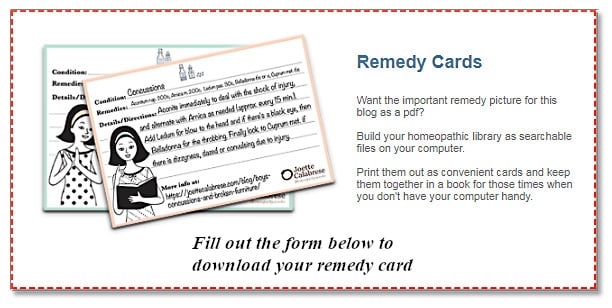
(In this week’s Remedy Card, I give a prime example of a protocol — more specifically, a Banerji Protocol — for the onset of a respiratory illness. Scroll down and download it for free.)

Indeed, protocols eliminate any guesswork or subjectivity, as they are time-tested, reproducible and standardized treatments for specific diseases, injuries and illnesses determined through state-of-the-art diagnosis. Thus, specific medicines, precise potencies, and fixed frequencies are uniformly recommended by the Practical Homeopath™ for specific conditions.

Most likely, you are already familiar with this model, as it closely resembles a conventional doctor’s approach to most medical issues, in which a diagnosis is met with a pharmaceutical prescription.

Protocols and combination medicines made homeopathy much more practical.

By standardizing the practice of the heretofore highly complex system of classical homeopathy, protocols provide practitioners with a collection of specific homeopathic medicines to be prescribed for specific diagnoses without the time-consuming and often enigmatic individualization.

The Drs. Banerji — homeopathic medical doctors in India who created a combined 150-year database of meticulous clinical research and whose clinic treated roughly 1,200 patients a day — explained it perfectly:

“At the clinics of our research foundation, we do not practice classical homeopathy. We have developed a method of treatment in which specific medicines are prescribed for specific diseases. Diseases are diagnosed using modern state-of-the-art scientific methods. This is done because modern diagnostic approaches incorporate and help in the selection of medicines, so that specific medicines can be easily prescribed for specific diseases.

“The use of specific medicines in specific potencies, in fixed dosage patterns, eliminates the necessity for any guesswork on the part of novice practitioners, and is always a tremendous help for even seasoned doctors. Our approach is more diagnostic than individualistic, i.e., more objective than subjective. These protocols are easy to learn, and since the focus is on the diagnostic approach, the case-taking time is shortened. That is why it is easy to disseminate to medical students and the general public. In a short time, more patients can be treated. Consequently, it also makes the treatment affordable to the weaker sections of society, making it the ‘people’s medicine.’ ”

Now, that’s practical!

How my adherence to Practical Homeopathy® developed

I trained for many years in classical homeopathy, and I practiced strictly within its framework. Like many homeopaths, I was immersed in its philosophy, principles, and the deeply held belief in individualization: the idea that each client was unique and that the goal was always to find the one perfect remedy — the similimum — that matched the totality of that individual’s physical, mental and emotional state.

In theory, it sounded elegant. Yet, in practice, it was time-consuming, impractical and even limiting. Remember, classical homeopathy teaches that each sufferer with the same diagnosis may likely require a different remedy (the individualization we discussed), that only one remedy should be given at a time, that remedies should not be combined, and that repetition of the chosen remedy should be minimal, if at all.

However, human suffering is not always that neat and tidy. People don’t arrive with one isolated issue, waiting politely for resolution before developing another. They come with eczema and insomnia. Arthritis and anxiety. Digestive issues and hormonal imbalance. Acute injuries layered on top of chronic disease. Yet the accepted homeopathic dogma at the time insisted that one remedy should encompass it all.

Joette Calabrese, Practical Homeopathy®

After nearly 15 years of full-time classical practice, I began to feel the strain of this approach. Not because homeopathy didn’t work — it did — but not as often or as quickly as I would have liked. The framework I was working within felt increasingly impractical in real life.

I started to notice something else, too: My clients were “cheating.”

Despite my careful, classical instruction to utilize only the single constitutional remedy and nothing else, they would later sheepishly report that they had also incorporated — on their own — additional remedies for other acute issues (a cold, anxiety, a sprain, a headache or sleepless nights).

And you know what? They often felt better. Sometimes much better. Rather than disrupting the action of the constitutional remedy, these additional remedies seemed to enhance their overall progress.

My training had warned that multiple remedies would “muddle the case” or cause suppression. But that’s not what I was seeing.

I was seeing forward movement.

I was seeing relief.

I was seeing results.

Slowly, and somewhat rebelliously (you know me), I began to experiment. I would still use a constitutional remedy, but I would also add an acute remedy when needed. Sometimes, a cell salt. Sometimes, an organ-specific remedy. Before long, I was using multiple remedies in the same schedule — something I and my classical instructors would have strictly forbidden. Something I, too, forbade my clients and students.

Yet, instead of chaos, I saw clarity.

Instead of suppression, I witnessed resolution.

Instead of stagnation, I observed momentum.

Instead of chasing the elusive “perfect” similimum, I focused on what was obvious: the condition and the unique symptoms. I stopped trying to peer into the deepest recesses of personality (remember my earlier description of those esoteric likes and dislikes) and started addressing the main complaint that brought people through my door.

As Detective Joe Friday would say, “Just the facts, Ma’am.”

For example, with the name of the condition and its symptoms,  as well as some conditions peculiar to the case, the Banerjis report that in 80% of the population, this remedy in this potency with this frequency has been shown to act.

If not within that 80%, there’s a second-level protocol. 

After adopting this  and other protocol methods, my success rate increased. By narrowing the focus and using condition-specific remedies, I saw my effectiveness climb from about 50% to closer to 70%, and often higher. More importantly, people felt better faster.

This method was practical. It was not theoretical. It was not philosophical. It was not esoteric. As I used this method more consistently, I confirmed a distinct pattern: The same remedies worked repeatedly for the same conditions in many individuals.

Yet, I felt like I was committing a quiet heresy. I started asking other homeopaths — carefully, almost in a whisper — whether they ever followed set protocols  or combination medicines for specific conditions or used more than one remedy at a time.

Most seasoned homeopaths — from Holland, Ireland, Colombia, Pakistan and India — said yes. They were all doing it. They just weren’t talking about it.

I thought, “Wait a minute. Why is this a secret? Why are we not being told this? Why are we being told that we can only use one medicine — that there’s only one medicine that will attend to the whole of the individual’s suffering?”

That’s when I realized something important: classical homeopathy, as it is taught, is not always how homeopathy is actually practiced. And that realization changed everything for me.

Protocols, the use of more than one medicine per schedule and combination medicines make more practical sense. I can assure you, if Practical Homeopathy® weren’t efficacious — if it didn’t act, if it didn’t work — I’d head right back to my classical training.

But it does work — and it works better because it takes much of the mystery out of homeopathy.

And then something even more significant dawned on me:

I realized I could teach this more accessible method to others, just like you

Joette Calabrese, The Academy of Practical Homeopathy®

Early on, I was teaching homeopathy in a college nursing program. When I taught classical theory, students struggled. They were overwhelmed by the complexity, the endless variables, and the years of study required before they could hope to help someone. Many simply gave up. I watched potential practitioners walk away because the system felt unattainable.

But when I began teaching what I was actually doing in practice — addressing the chief complaint, using specific protocols for specific conditions, repeating when needed, combining when appropriate, utilizing combinations — something shifted.

Suddenly, my students could often comparatively help people. Quickly. Confidently. Successfully.

This was the beginning of what would become Practical Homeopathy® — the paradigm I teach in my blogs, podcasts, courses, and The Academy of Practical Homeopathy®.

Now, does this mean I have completely abandoned my original training? No, if none of the available protocols act sufficiently, of course, I happily jump to my repertory and consider all other available options. (Just as I taught my Mighty Members how to do in last week’s Memo to Mighty Members. Join them now, and you can read all 293 extra blog posts in the Memo archive*, including #293, which addresses how to choose a homeopathic medicine when we don’t have a protocol.)

However, my more practical thinking was further solidified a few years later  after searching countless books that included protocols of old and culminated further when I met Drs. Prasanta and Pratip Banerji. Their methods neatly tied up all the observations I had just touched upon myself.

But that’s a story for another day.

In an upcoming post, I’ll share how I synthesized my clinical observations, my work with the Banerji doctors in India, the French protocols, Joe De Livera’s “Joepathy,” and a full measure of repertorization into a fully realized system — Practical Homeopathy®. I believe this simplified method is not only practical but also essential for the future of homeopathy.

Pass on the good news, my friends. This is the medicine you’ve been searching for — my unique brand of homeopathy, PRACTICAL Homeopathy®.

Warmly,

Joette Calabrese, Practical Homeopathy®

P.S. Want to learn more? The perfect place to step onto the path of Practical Homeopathy® is through the Gateway — The Gateway to Practical Homeopathy®: A Guided Study Group Curriculum. Using the same methods I used when I first learned homeopathy, you can gain a foundational understanding of how Practical Homeopathy® works and how to integrate it into your family’s health.

Join other curious, like-minded folks just like you — mothers, grandmothers and others — who want health freedom for their families.

If you enjoy this content, please share it. Also check out my podcasts, Monday Night Lives, and connect with me on YouTube, Instagram and Facebook.


A Is for Anxiety: Coping with the New Year


Joette Calabrese, Practical Homeopathy®, A Is for Anxiety

When a New Year dawns, we’re awash in resolutions and aspirations — some new and some left over (unaccomplished) from last year. Indeed, we put a lot of pressure on ourselves, as though a new calendar has magical powers to change our status quo.

If that isn’t enough to cause anxiety, I don’t know what is.

Believe it or not, my plan is always to keep these blog posts short — not short on information, but rather short in length so that I don’t take up too much of your busy day as mothers, grandmothers and fathers (or now, even health care professionals).

So here you go … short:

A is for anxiety.


Well, despite my best intentions, I can’t make this post quite that short. However, I do think I’ve landed on a quick and easy way to remember the homeopathic medicines that can help with anxiety, angst and even anguish.

The letter A is the linchpin because all of those “A” conditions are ameliorated by medicines that also begin with the letter A.

Joette Calabrese, Practical Homeopathy®, Aconitum napellus for anxiety

Aconitum napellus for the mind that fears.

Our first homeopathic mainstay for anxiety, angst and anguish is Aconitum napellus (or Aconite, for short). Aconite is the first-line remedy for shocking events.

By their very nature, we can’t predict when something shocking will occur, so it’s best to be prepared at all times by always keeping Aconitum close at hand. In fact, I keep it with me at all times, as discussed in Emergency Remedy Series: Aconite in My Purse.

Aconite stops the uncontrollable anxiety experienced right after a trauma and brings the person back to themselves. In acute cases (emergencies), Aconitum 200C is generally used as needed, every four hours or so, then less often as improvement ensues. 

Additionally, this remedy may also be utilized days after a stressful event has occurred, when the full physical or emotional manifestation of the anxiety develops.

After the holidays, many folks experience a delayed-onset meltdown from the stress of planning and implementing family occasions, dinners, parties, shopping, travel, dealing with argumentative relatives, and …

Oh, my. Just thinking about it is enough to raise one’s blood pressure.

Joette Calabrese, Practical Homeopathy®, Arsenicum album and anxiety

Arsenicum album for the mind that overthinks

Details, details, details. The details that we all must keep sorted during the holidays can weigh heavily on the mind. Whether it’s travel details, packing away the Christmas decorations, going back to work, or even for the kids going back to school, Arsenicum album has us all covered.

As I mentioned in ‘Are We There Yet?’ Travel Anxiety Meets Its Match With Homeopathy, the antidote to this chaotic internal voice driving an almost overwhelming urge for meticulous organization is Arsenicum album 30C, generally employed twice daily, until very much better.

Joette Calabrese, Practical Homeopathy®, Argentum nitricum for anxiety

Argentum nitricum for the mind that’s apprehensive

In Podcast 129 — Overcoming Anxiety and Panic Attacks with Practical Homeopathy®, I discussed anxiety that arises because of external triggers, such as fear of going over bridges, fear of heights or claustrophobia. Apprehension … we’ve all experienced it, and some of us may even feel apprehensive about a new year.

Generally, Argentum nitricum 200C, used twice a day for a few days, will help return the panicked sufferer to a state of calm. (Listen to that podcast for more specifics.)

Joette Calabrese, Practical Homeopathy®, Aurum metallicum for anxiety

Aurum metallicum for the mind in angst

The holidays often stir up loneliness, loss, anxiety or frankly, depression for some. In my experience, men, especially those self-pressured to overachieve, frequently benefit from Aurum metallicum. However, women with those same traits may also benefit.

I discussed this homeopathic medicine on a well-known Catholic-centric podcast. It is republished (with gracious permission, of course) on my website as Podcast 140 — Joette Interviewed on ‘Trending With Timmerie.’ (The original title, appropriate to our topic here, is Depression & Anxiety: Alternative Treatment.)

For this condition, consider Aurum metallicum 200C, utilized every three days until very much better. Then halt. If the condition returns, the medicine may be restarted until very much better once again.

Now, there is one more I must mention: an outlier. A medicine that’s been kicked out of the club because it doesn’t begin with an A. But, my friends, it’s equally important.

Joette Calabrese, Practical Homeopathy®, Ignatia amara for anquish

Ignatia amara for the mind that worries or is in anguish

Certain minds run and rerun scenarios, causing worry and anxiety. I wrote about it in The Chatter in My Head.

Ignatia amara 200C is a first-rate medicine for when there’s a conflict in your life, and it’s taking up too much space in your brain. Generally, utilizing this effective medicine twice daily will do the trick.

Additionally, grief surrounding the holidays is more common than we’d like to think. Indeed, December 25, 26 and January 1 are often cited as the most common days for death. (What a terrible statistic.)

So, the holidays can dredge up anguish. I speak more about it in a video I made in collaboration with Boiron. You can find it here: Homeopathy Tip — Stress and Sleep.

In this case, Ignatia amara 200C would also be taken twice daily, or perhaps even more often according to severity, as Ignatia is our premier medicine for grief.

Well, harrumph. There goes my attempt to keep this blog post short! But I hope that by remembering “A is for Anxiety,” you will remember the homeopathic medicines that can soothe the internal difficulties often felt at this time of year.

If you enjoy this content, please share it. Also check out my podcasts, Monday Night Lives, and connect with me on YouTube, Instagram and Facebook, specifically my reel on tension.

Pass on the good news of Practical Homeopathy®!

Warmly,

Joette Calabrese, Practical Homeopathy®

P.S. If these emotional conditions are not readily improved through these generally utilized homeopathic medicines, it’s likely time for a deeper dive into the topic. My course, Mindful Homeopathy: Practical Protocols for Mental and Emotional Conditions, will provide just that.

If you’re interested, download a free infographic that includes other medicines you will learn about in the course. There’s no need to suffer in the new year. Practical Homeopathy® is here for you.


Podcast 160 — Practical Professionals: Real-World Integration of Practical Homeopathy® and Conventional Care

Joette Calabrese, Podcast 160 — Practical Professionals: Real-World Integration of Practical Homeopathy® and Conventional Care

In this podcast, we cover:

00:58   Introduction: Real-World Integration of Practical Homeopathy® and Conventional Care

01:56   Health care professionals seeking to incorporate both allopathy and homeopathy

            Boiron

04:40   Is homeopathy the same as “home remedies?”

            The Academy of Practical Homeopathy®

06:07   A day in the life of a “combination” practice

11:28   Attention, health care workers: Stay at your post!

13:24   Homeopathy and/or pharmaceuticals

17:02   Success Story: Osteoporosis

            Watch Out for Dem’ Bones

18:07   Success Story: Depression

            Homeopathy Can Spoil a Girl

            JoetteCalabrese.com

Additional resources:

Joette Calabrese on YouTube (Monday Night Lives)

Joette’s Learning Center

Gateway to Practical Homeopathy®: A Guided Study Group Curriculum

Joette’s Study Group, Find Your New Study Group Friends

Joette’s Mighty Members

FindAPracticalHomeopath.com

Kate:

This is the Practical Homeopathy® Podcast, episode number 160.

Joette:

Hi, I’m Joette Calabrese, and I welcome you to our health care movement — yours, mine and the countless men and women across the globe who have retaken control of their families’ health with Practical Homeopathy®.

So, for the next few minutes, let’s link our arms as I demystify homeopathy — what was once considered an esoteric paradigm — into an understandable, reproducible, safe and effective health care solution available to all.

This is the medicine you’ve been searching for — my unique brand of homeopathy, PRACTICAL Homeopathy®.

Real-World Integration of Practical Homeopathy® and Conventional Care

Kate: (00:58)

Welcome back to the Practical Homeopathy® Podcast. I’m Kate, and today’s guest is going to talk about how she integrates homeopathy into her existing health practice without abandoning the credentials, training and experience as a medical professional.

I’m thrilled to be joined by someone who embodies this balance beautifully. Michelle is a nurse and a homeopath who works alongside her physician-husband. She’s also gone through The Academy of Practical Homeopathy® and is now finishing the second year, which is the Mastery program.

So today, she’s here to talk about how to introduce homeopathy to people steeped in the allopathic world. Michelle, welcome to the podcast.

Michelle:

Thank you, Kate. It’s good to be with you today.

Kate:

I’m so glad you’re here. You have a very unique and exciting perspective, and I’m thrilled for you to be able to share with the listeners.

Michelle:

Thank you. I’m glad to be here as well.

Health care professionals seeking to incorporate both allopathy and homeopathy

Kate: (01:56)

So, tell me about what you’ve noticed. When we talked earlier, you said some things about nurses who are giving up their positions and their licenses because they’re wanting to go into homeopathy, and they’re not really sure how to incorporate both of those paradigms. Can you talk to us about that?

Michelle:

Yeah, especially through the last several months and getting to meet everyone, and there’s so many RNs. And I would say other health care professionals, too, that I’ve met along the way in my study groups, as well as the broader sense of the school, that so many of them seem to feel like they have to give up their nursing license or their doctor or physical therapy license in order to practice homeopathy because of the scope of practice.

And I don’t know the laws in every state. However, I’m in Florida. Florida’s pretty friendly with combining those. And I just find that for us in our private practice, I find it very beneficial to have one foot in the allopathic world, as I call it, and one foot in the homeopathic world — in the sense that there’s so many things, especially that you can teach patients or clients, that they can take something homeopathically and not have side effects.

Oftentimes, when they’ll come into our office, I have lots of remedies right in our office. And they can see those, and they will ask me questions about them. And we usually start with simple things like heartburn, or if they’re having issues with sleep, or as a woman with menopausal symptoms.

And Boiron does a beautiful job of making remedies sort of “shelf attractive” to people that are used to more Big Pharma over-the-counter type things. And so, I educate them on some of their choices so that they don’t have to be on more Big Pharma medicines. And the reason not to be is that there’s so many side effects with the synthetic drugs in our world today.

So, I feel like I can win more people over to homeopathy, and ultimately, it’s better for the person. A lot of people just don’t know. They’ve never heard of homeopathy, or that they misunderstand it.

They think that it is natural or herbal, and they aren’t sure. Functional medicine, I think, has come into play and confused waters even more. So, it does take some explaining. Once they see that something works for them and we have a small win, they’re ready to hear more.

Is homeopathy the same as “home remedies?”

Kate: (04:40)

When you said earlier, they think it’s natural. I want to just clear that up for a bit.

It is natural. However, I think what you were trying to say was they just think it’s a broad category of natural medicine, like herbs, and essential oils and all of that.

Michelle:

Home remedy.

Kate:

Yeah, home remedy. That’s what they think.

Michelle:

Right. Yeah. That’s what I meant by “natural” is, like, they think home remedy and homeopathy are the same thing.

Kate:

I think most people don’t really know that homeopathic medicines are regulated by the FDA. There’s the homeopathic pharmacopoeia that the pharmacies go by. So, these medicines are manufactured in pharmacies, according to strict standards. It’s very regulated. So, I just think that’s a fact that people don’t usually know.

Michelle:

And through The Academy, we’ve had the opportunity to see many interviews with the different pharmaceutical companies.

In The Academy, I was blown away by the homeopathic pharmacies that Joette actually interviewed, but we listened. And the regulations that they have to go through was unbelievable scrutiny.

I’ve never interviewed another pharmacy, but it just seemed to me like it was over the top — how much that they go through and how particular they are, and making certain that the medicines that we use homeopathically are exactly what they say they are.

A day in the life of a “combination” practice

Kate: (06:07)

Michelle, can you explain to me what happens in your private practice?

So, a patient is scheduled; they come into your office. How does that usually work as far as the balance between your husband and yourself, and the allopathic world and homeopathic?

Michelle:

Of course. We’ve been in practice for 30 years-plus now, and a lot of our patients are very well known to us. We still do have new patients, but most of them have been with us for quite some time.

And my husband has always been a minimalist as far as drugs and things. But as a physician in this world, his tools have always been pharmaceuticals from drug companies. And since learning homeopathy, we now feel so blessed because we have more tools to use.

And so, a patient comes into our office, they first come to my station — which is the nursing station — and I do the typical intake of what is currently going on with them, along with their vital signs and what they currently are taking for vitamin supplements and medications, et cetera.

They sit in the chair and right in front of them, up on my wall, I have several homeopathic remedies, specifically combination remedies for acute illnesses and things like that that we can use.

And so that oftentimes brings up lots of questions from them of something like, for example, the Acidil®, if they’re having heartburn. “Oh, is that what that’s for?”

And then we have a conversation and then go through some things, and it just puts some ideas into their mind of some things that they can take that don’t have side effects. So, that starts a discussion.

They go back to see Dr. D. He and I have an exchange of what’s going on with the patient. He goes in, sits down with the patient. He always says the patient will tell you what exactly is wrong with them if you listen.

I think this is an important lesson — as simple as it may seem to anyone working in health care, whether you’re a homeopath, a nurse or a doctor — that the symptoms that the person is describing leads us to the right remedies.

So, he will make his assessment. And as I said before, he’s a minimalist as far as drugs are concerned and tries to take people off of things that they don’t need to be on.

He will come out to me and discuss if there’s something that he thinks that we can do for them homeopathically. If so, many of those that are common that he has become very familiar with, he will go ahead and send them back to me for a homeopathic consult. And at that point, then we continue with that.

It’s not to say that we don’t believe there is not a place for allopathic medicine, especially in the diagnostics. That is especially where my husband shines, and he is very much a diagnostician, and we need him for those skills that he was well-trained and has great experience in … as well as Western medicine. We believe it’s great for a trauma situation.

Clearly, we need hospitals, and we need emergency trauma care. But other than that — and surgery — we believe that real health comes from diet and exercise, discipline, sunshine, homeopathy.

So, there is a place for both. And I think that that’s where we’re a little bit unique in that we don’t want to abandon where we came from. I think that it can add to where we’re going with a practice that is both somewhat in Western medicine as well as our tools — as much as we possibly can — have switched to homeopathy.

Kate:

I have a question. When the patients come in, and they are maybe needing a homeopathic remedy — it would be great for this situation — do they just get the homeopathic medicine (the box) from you, or does your husband write it on his prescription pad? Or how does that work?

Michelle:

So no, he does not write it. That’s when he turns it over to me, and then I guide them through the process.

If it’s new to them — which many of them now, it is not new to them — they have a pharmacy that they pick. I go through about three or four different pharmacies. I explain to them the advantages and disadvantages of some of them, whether they’re stateside or there’s one we use in the U.K.

If it’s a chronic, I try to go and help them out a little bit with that as far as one that they would need to have a more quantity from. So that’s where I guide them.

I have my own script pad, and from that point, then I write down the instructions for them, and they go forward with that. Then, when they come and return for a follow-up, the follow-up is with one or both of us.

Attention, health care workers: Stay at your post!

Kate: (11:28)

That’s great. All right. Thanks for explaining that.

So, you’ve been passionate about encouraging nurses and other health care workers to stay in their roles. Talk about why that’s so important. You talked about this a little bit earlier, but if you could share a little bit more about that.

Michelle:

There’s one person who was in my study group, our first year of APH, who is an ER physician. And she’s done very similarly to myself in being able to offer the patient an option.

It’s never forced upon them, but many of them come in very timid or leery about what might be given to them or their child if it’s in a pediatric situation, and they are asking and seeking an alternative, if you will.

Although in the homeopathic, we would tend to think we are the original, and the synthetic version of pharma is the alternative.

But what I’m saying is when you remain in the system, if you will, of our hospitals and urgent cares or physician’s offices or in places where you can meet people and present an option to them of homeopathy, I feel very passionate about it. And I feel that the more people that can learn today that we do have options that perhaps people have just never heard of.

I think it’s important that some of us can stay and perform in that role, whether it’s physical therapy or chiropractic or emergency medicine or primary care.

Homeopathy and/or pharmaceuticals

Kate: (13:24)

One of the things we were talking about earlier was when you were saying that some older patients are on many medications at a time, and sometimes, they’ve been on them for many years. And you had mentioned a couple of conditions and how they may not have been improving on those medications, yet they’re still on them. Can you talk a little bit about that?

Michelle:

So, perhaps something about the years I’ve spent in the allopathic-dominant world of health care and how I often see that when patients go on pharmaceuticals, they’re on them for the rest of their lives. And those medicines, they will make them better in the short term, but they are literally on them forever.

So, it’s not curing them, rather it’s something that they must take the rest of their lives.

And, for example, thyroid or cardiac meds. Whereas in homeopathy, we have remedies that are intended to uproot the conditions that we suffer from. And eventually, hopefully, we would not require the homeopathic medicine any longer. And so, the conditions that we suffer from, and eventually we would not require any medicine, whether allopathic or homeopathic.

And that is something that I see in our practice that homeopathy is helping. It’s completely uprooting. I have many clients that I have gotten off of synthetic thyroid medications with the help of my husband, who is a physician.

So, as I give them the remedies homeopathically to correct their thyroid imbalances, then, he titrates down on the synthetic medicine to the point where we’re off completely. And then they continue for a short period of time on the homeopathy medications, and then they’re off.

And we have a person that no longer has symptoms of thyroid issues, whether hypo or hyper.

Kate:

Isn’t that exciting? I bet they are thrilled.

Michelle:

Correct. Correct. And also, takes a little bit longer and maybe a little bit more balancing, but we’re doing the same things with blood pressure and some cardiac issues as well.

So, to not be on — not only financially to be on medicines — Big Pharma medicines for the rest of your life, but also, and more importantly, for the health of your body.

Kate:

Wonderful. Exciting stories. And with acute conditions, I think you were mentioning that you usually see results more quickly.

Michelle:

Yes. I mean, it’s an acute and a shorter fix than from chronics. And I do find that when we have acute illnesses, and I can help the person feel better homeopathically, then they’re a little bit more willing to come out and say, “Hey, what do you think about this?”

And it might be a chronic problem that they’re having or suffering symptoms from.

“Is there anything available for that?”

And so again, I find it exciting to be in the position that I’m in that I can offer them some hope with their chronics as well.

Kate:

And I just want to add that we’re not saying that you alone should get off any medications. You should always work with your doctor, and that’s what Michelle is saying, that her and her husband worked together as a team in this effort.

Before we wrap up today, can you share a couple of success stories with us?

Success Story: Osteoporosis

Michelle: (17:02)

Oh gosh, yes. I have lots of them. Let me think of some of my favorite ones.

Chronically, osteoporosis, especially with women. And it might be just our practice, but I think a lot of times women end up getting diagnosed more with osteoporosis, whether it’s the years of nursing babies, having babies and things like that. They end up going for bone density scans more often than men.

But we have a beautiful protocol homeopathically that I’ve been using, and many women, their osteoporosis scores have improved. They have had falls where they don’t have a broken bone, especially our elderly women who maybe are falling a little more frequently.

You can look the protocol up. I think Joette has a blog called Dem, D-E-M, Bones, Dem Bones. “Joette Calabrese and osteoporosis.” If you even Google that into your search finder, and that’s the protocol that I follow.

Success Story: Depression

Michelle: (18:07)

Another one is depression.

We have a lot of depression within … whether it’s aging, whether anxiety leading to depression … with some of our younger people, both male and female. Again, Joette has a great blog on depression, and those are the protocols that we’ve been using homeopathically, and we’ve seen such great success with those.

Kate:

The podcast [blog post], if you want to look that up, is Homeopathy Can Spoil a Girl, and it’s medicine for depression. So, if you even — in the search bar at the top right corner of JoetteCalabrese.com — click on the search button and then type in “depression.” And you’ll see the blog posts that have to deal with depression or any other podcasts or anything.

In fact, if you want to go there and search for any condition, you can just click that search button and type in the condition or on your search engine, type in “Joette Calabrese,” and then the condition, and you’ll see all of the articles that come up about that condition.

Michelle, this has been such an encouraging conversation and enlightening.

So, your message was clear. You don’t have to abandon your license, your training, and your profession to practice homeopathy. Of course, look at the regulations, like you said, in your state, but you can stay in the field, serve your patients and gently introduce them to an alternative and let them choose.

So, I appreciate your time today, your wisdom and sharing your experience with us.

Michelle:

Absolutely. And thanks for having me, Kate.

Kate:

And thank you to the listeners for joining us today. If you are a health care professional wondering how to integrate homeopathy into your work, I hope today’s episode gives you some confidence and clarity, and we’ll see you next time.

Joette:

It’s my honor to share many lessons on this simple method of using homeopathy for free —without affiliates or advertising — here in my podcasts, but also my blog posts and Monday Night Lives.

But it’s critical that you learn how to use these medicines properly. These podcasts should serve as only the beginning of your training. Peruse JoettesLearningCenter.com to find fun study group opportunities and in-depth courses developed by subject.

So, with the proper training, you can join the thousands of students before you in developing the confidence and competence to protect the health of your family and loved ones with my brand of homeopathy, Practical Homeopathy®.

Kate:

You just listened to a podcast from internationally acclaimed homeopath, public speaker and author, the founder of The Academy of Practical Homeopathy®, Joette Calabrese. Joette’s podcasts are available on all your favorite podcast apps.

To learn more and find out if homeopathy is a good fit for your health strategy, visit PracticalHomeopathy.com.


2025: Our Outstanding Year in Review


Joette Calabrese, Practical Homepathy®, 2025: Our Outstanding Year in Review

As I pack up my Christmas decorations, I’m also taking a moment to reflect on our accomplishments this year … “the year in review,” you might say. In every way — by every metric — this has been an outstanding year for homeopathy.

And when I say “our” accomplishments, my friends, I mean precisely that. Together, we have brought Practical Homeopathy® into the lives of more families than ever before.

You may recall that in August 2017, I revealed my goal in the blog post, Taking Stock: Where We’ve Been and Where We’re Going: to reach 100,000 households by 2020. I found a thin, narrow rock on the beach and wrote this goal in chalk. I kept that rock on my desk and focused on it.

One year later, during Thanksgiving 2018, I announced in the blog post Giving Thanks that we had reached our goal of 100,000 households.

Did we stop there? Absolutely not!

In The 2020 Twenty, I affirmed that we were aiming to reach 200,000 families, and I asked for your help. I said, “If each and every one of you were to introduce homeopathy to two friends, we could increase the number of homeopathic families in this country exponentially.”

Indeed, you shared the good news of homeopathy with people in your sphere of influence every day, and those people touched others, and those people touched others, and so on and so forth.

You did it! Since 2020, our messaging has surpassed that new goal — well over 200,000 households are now familiar with Practical Homeopathy.

2025: The year in review

Let’s let the numbers speak for themselves, shall we?

(Are you sitting down?)

We receive about 21,000 visitors (real people, excluding bots and AI) to the http://joettecalabrese.com/ website each week. EACH WEEK!!! The cumulative math on that is mind-bending.

Over 159,000 people have listened to our podcasts (almost 128,000 in the past year alone).

On average, roughly 3,000 people listen to my Monday Night Live presentations* each week, and we have nearly 160,000 dedicated followers across all of our social media platforms.

Joette Calabrese, Practical Homeopathy®

And listen to this statistic: On Facebook, we’ve officially recorded reaching over 1,223,000 people with our content during a single 28-day span. Yes, you read that right. Within a single month this summer, we reached well over a million people — twelve times my original goal. And all of this I’ve mentioned so far is free content.

As of this writing, 2,114 of you have become Mighty Members. Mighties benefit from an extra blog post every week, semi-weekly videos, searchable archives of Monday Night Lives, with an exclusive weekly meeting with me after each event, and so much more.

Over 20,000 people have taken Gateway to Practical Homeopathy®, and that number is increasing at an even faster clip through our Ambassador and Advocate programs.

The Academy of Practical Homeopathy® and Mastery have enrolled roughly 1,500 students. And just look at the list of practicing Practical Homeopaths™ who are spreading the good news of homeopathy through their work with their own students and clients.

Executives from Boiron and the National Center for Homeopathy attended our most recent annual Academy Celebration: Igniting the Flame of the Future (a weekend, in-person gathering held in Florida). They later told me that they were blown away by the enthusiasm, energy, determination and motivation of the 160 attendees. The executives left our celebration invigorated by the belief that the future of homeopathy was bright.

Joette Calabrese, Practical Homeopathy®

So, do we need to set a new numerical goal for 2026? I don’t think so. Why limit ourselves to a specific number? Let’s reach for the stars. With the impressive scope you have helped Practical Homeopathy® achieve, there is no doubt in my mind that growth will now become exponential.

That’s how power in numbers works. Perhaps soon, EVERY HOUSEHOLD IN THE WORLD WILL BE ACQUAINTED WITH PRACTICAL HOMEOPATHY®. Just think of the global health freedom we can provide to those still mired in pain and suffering, having no concept of how to get off the conventional medical conveyor belt.

Together, we can come to the aid of the globe.

Wishing you and your family a very Happy New Year. Thank you for everything you have done thus far to bring homeopathic comfort to the suffering. I hope you’ll continue to pass on the good news of Practical Homeopathy®!

Warmly,

Joette Calabrese, Practical Homeopathy®

*Public links for Monday Night Lives:

Joette Calabrese Facebook page —https://www.facebook.com/joettecalabrese/
YouTube — https://www.youtube.com/channel/UCiXT-flHnKZ8r_CRPZ_vKmA
X (formerly Twitter) — https://x.com/JoetteCalabrese
Rumble — https://rumble.com/user/JoetteCalabrese
Instagram — https://www.instagram.com/joette_calabrese/