
The mission of Practical Homeopathy® — my mission — is to demystify homeopathy and make it an understandable, reproducible, safe and effective healthcare solution available to all, especially mothers and their families.
However, I face a conundrum as I write these weekly blog posts. You see, when writing for the general public, I’m addressing a broad audience.
One reader might be brand-spanking-new to homeopathy with no foundational information whatsoever. Zip, zero, zilch. They may not even know how to pronounce the word. For them, I must constrain myself to providing simple guidelines they can follow.
Another reader could have decades of experience with this paradigm. Maybe they were using the classical methodology and are coming over from that. Maybe they’ve been in Gateway study groups and taken a few of my courses. Maybe they’re graduates of The Academy of Practical Homeopathy® who still want to read everything they can get their hands on.
I always endeavor to strike that balance. This is a heavy task when you think about it — trying to get this information out in the simplest way possible.
What is a homeopathic protocol?
I use the term “protocol” quite often. However, it recently came to my attention that not everyone has a firm grasp on exactly what that means.
Homeopathic protocols are clinically proven methods of treatment stipulating specific homeopathic medicines, with specific potencies and frequencies, to address specific conditions and symptoms.
Being considered a protocol also means it has a history behind it. Established homeopathic protocols are based on data accumulated over decades, if not centuries. For instance, the French Protocols were developed in the mid-20th century. The Banerji Protocols have been proven over the last 150 years.
Protocols are well-documented, data-driven formulas developed by practicing homeopaths around the world. When followed precisely, their results are historically shown to be reproducible.
That means no tinkering, my friend. If the protocol says to use the medicine twice a day, we use the medicine twice a day. If the protocol calls for the medicine to be in liquid, we purchase the remedy in liquid from a reputable pharmacy. If the protocol says use a 200, we use a 200. Not a 6. Not a 30. Not a 1M.
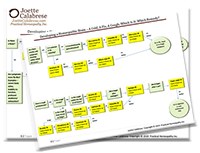
When we follow established protocols exactly as outlined, we can expect the same results. (Download your free Remedy Card below, which details one of our most trusted protocols for the onset of colds and flu.)

Are protocols the only choice for a condition?
The Banerji Protocols have an astonishing success rate: 80-85% of cases will respond to the first-line Banerji protocol (the most highly recommended). So, by utilizing a protocol, healing can often be that simple.
Yet, the beauty of homeopathy is there is often more than one way to butter a biscuit. I may teach additional medicines or alternative combinations of remedies in The Academy, Mastery and even my Protocol Courses. I will even point out that there are protocols with established variations.
So, a serious student should always rely on what they learned in class, understanding that information in blogs and other free lessons must be distilled down into the simplest, easiest-to-follow information. Other alternatives in my formal classes are designed for those with a deeper foundational education in case management.
Just because a medicine acts doesn’t make it a protocol
I’ve had students tell me that they’ve come up with their own protocol. While indeed they may have found an effective medicine choice that works in their particular setting, they have not developed a protocol as such.
There are many instances in which a particular remedy works splendidly for a sufferer, but success alone does not a protocol make.
Remember: A protocol is a standardized remedy choice proven over years of repetition and clinical observation. Skilled homeopathic experts have made that choice formulaic, giving us the name of the condition, the medicine that's been most successfully used, the potency in which we use it, and the frequency with which we use it.
To learn more about protocols, listen to Podcast 146 regarding my Gateway to Practical Homeopathy® study groups. If you’ve not yet been a member of a study group, that is the next step to learning foundational information and protocols that your family may most commonly need.
Tens of thousands of folks just like you have stepped through my Gateway to become the healers in their family. Many of those students move on to a deeper education to gain the skills to meet almost any condition — whether there is an existing protocol or not.
This method — my method — of practicing homeopathy, including protocols, is not esoteric. It’s not quixotic. It’s practical. Practical Homeopathy®.
Warmly,
P.S. If you enjoy this content, please share it. Also check out my podcasts, Monday Night Lives, and connect with me on YouTube, Instagram and Facebook.
And remember — all my Mighties (Joette’s Mighty Members) qualify for a 10% discount on course purchases. If you need assistance getting your discount, email [email protected] for more information.
Disclaimer: Joette is not a physician, and the relationship between Joette and her clients, students and followers is not that of prescriber and patient, but that of educator and learner. It is fully the learner’s choice whether or not to take advantage of the information Joette presents. Homeopathy doesn’t “treat” an illness; it addresses the entire person as a matter of wholeness that is an educational process, not a medical one. To be treated or diagnosed, Joette believes that the advice of a holistic physician is in order.
Claims based on traditional homeopathic practice, not accepted medical evidence. Not FDA evaluated.